
 Worksheets
SE Asian History Review
Total questions: 50
Worksheet time: 4hrs 10mins

After WWII, North Korea was occupied by the ____________ and had a ____________ government.
U.S.S.R./Communist
U.S.S.R./Democratic
U.S.A./Communist
U.S.A./Democratic

After WWII, South Korea was occupied by ____________ and had a ____________ government.
U.S.S.R./Communist
U.S.S.R./Democratic
U.S.A./Communist
U.S.A./Democratic


What were the results of the Korean War?
The two sections of Korea reunited
North Korea & South Korea remained divided
The Soviet Union took control of both sections of Korea
China set up a communist government
Who was the leader of the Communist party?
Mao Zedong
Deng Xiaoping
George W. Bush
Emperor Hirohito
What was the name of the economic plan that the Chinese government developed in order to boost China’s economy?
Great Leap Forward
The Cultural Revolution
China's Betterment Plan
Chinese Economic Plan for that moolah
What is the name of the army of young students that Mao used to enforce policies in the 1960's?
The Red Guard
Hitler Youth
The Youth for Communism
The great Collective
In China there was a time when Mao wanted to eliminate anyone that criticized his government. What is this time called?
Long March
The Middle Way
The Great Leap Forward
The Cultural Revolution
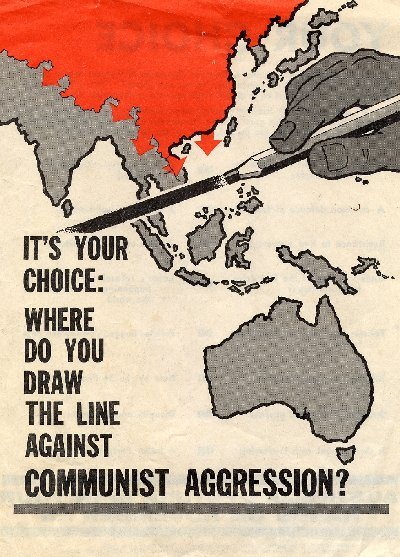
The U.S. got involved in Korea and Vietnam because of what foreign policy?
containment
Good Neighbor policy
isolationism
Roosevelt Corollary

Who was the Communist leader of North Vietnam?
Ho Chi Minh
Mao Zedong
Kim Il Sung
Douglas MacArthur


True or False: The Great Leap forward in China was a huge success, helping the economy grow.
True
False

Which conflict happened first?
the Korean War
the Vietnam War

Which conflict lasted longer?
the Korean War
the Vietnam War
How did China change when Mao Zedong's Communist Party took control?
Businesses and farms came under state ownership
All schools closed
The Red Guard opened special detention camps
Businesses and property were returned to original owners
What was one result of the Great Leap Forward that Mao promoted in China?
Millions of people died of starvation
More farm machinery was purchased to elevate production
Fewer people moved to the countryside for agricultural work
More people moved into cities to work in larger factories
What was the role of the Red Guard during the Cultural Revolution?
Attack and punish those who disagreed with Mao's vision of communism
Reward those who spoke out against corruption in China
Fight against the Soviet Union in China
Fight against the United States in North Korea.
During the Cultural Revolution Mao wanted to transform China into a classless society of _____________ and ____________.
farmers
workers
landowners
scholars
The protests in Tiananmen Square in 1989 turned violent as the Chinese Government pushed back against calls for
democracy
nationalism
communism
socialism
Why did poor peasants support the Chinese Communist Party?
They wanted to work in communes
It promised them food and a better quality of life
They had no other option
Mao Zedong said he would give them money
What was the biggest consequence of the Great Leap Forward?
Famine, 20 million people died
The economy was boosted
China became a player in the international setting
Chinese citizens were given more freedoms.
When Mao died in 1976, who became the leader of China?
Hirohito
Sun Yixian
Ho Chi Minh
Den Xiaoping
Which country was China’s key ally throughout the mid-1900s
Japan
India
The U.K.
Soviet Union

India wanted ______ from the British.
Independence
Diamonds
Crops
Money
What country ruled over colonial India?
Britain
France
Spain
Portugal
Who became leader of the Indian National Congress and Indian independence in 1920?
Jawaharlal Nehru
Mahatma Gandhi
King George
Indira Gandhi

The majority of India's population is made up of...
Christians
Buddhists
Hindus
Muslims
When did Japan attack the United States at Pearl Harbor, Hawaii?
Dec. 7, 1940
Dec. 7, 1941
Dec. 7, 1942
Dec. 7, 1943
What military strategy was used in order to take control of Japanese territories in Asia during WWII?
Scorched Earth
Slash and Burn
Island Hopping
Trench Warfare
Which Japanese city was bombed first with an atomic bomb?
Hiroshima
Nagasaki
Tokyo
Honshu
Which Japanese city was bombed second with an atomic bomb?
Hiroshima
Nagasaki
Tokyo
Honshu
Which American general helped establish the Japanese constitution?
George Patton
Omar Bradley
Ulysses Grant
Douglas MacArthur
The United State occupied Japan from 1945 to ____.
1951
1952
1953
1954
What type of government was established in Japan after WWII?
Presidential Democracy
Parliamentary Democracy
Absolute Monarchy
Constitutional Monarchy
Today, Japan is a very ______ country economically.
Poor
Disastrous
Successful
Underachieving
The British set up the East India Trade Company in India in which century?
1600s
1700s
1800s
1900s
Indians fought for the British in WWI.
True
False
After studying law in England, Gandhi lived in worked in which African country before moving to India?
Egypt
Algeria
South Africa
Kenya
Gandhi used ______ ways to protest the British government's unjust laws.
Violent
Nonviolent
The Republic of India was established in which year?
1944
1945
1946
1947
After India was split, which country was created for the Muslims who lived in India at the time?
Afghanistan
Pakistan
Turkmenistan
Bangladesh

