
 Worksheets
CHAPTER 11 section 2 and 3
Total questions: 19
Worksheet time: 10mins
The change from a solid directly to a gas is called
Evaporation
boiling
melting
sublimation
Name a change of state process that is endothermic
(a)
Name a state change that is an exothermic process
(a)
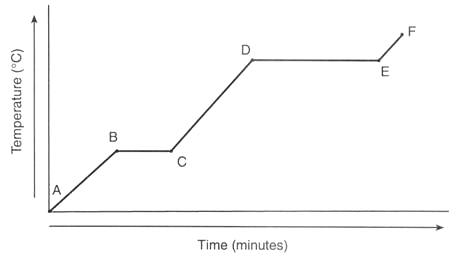
Is the substance gaining or losing energy?
Gaining
Losing
The process when a solid turns into a liquid
Evaporation
Sublimation
Freezing
Melting
The process when a gas turns into a liquid
Condensation
Sublimation
Freezing
Evaporation
The process when a liquid turns into a gas
Evaporation
Melting
Condensation
Deposition
The process when a solid turns into a gas
Sublimation
Deposition
Evaporation
Melting
What is the term given to the temperature at which a solid turns into a liquid?
Boiling point
Melting point
Freezing point
Heating point
What is the term given to the temperature at which a liquid changes to a solid?
Melting point
Boiling point
Sublimation point
Freezing point
True/False: Evaporation and condensation are opposite processes.
FALSE
TRUE
True/False: Melting and boiling are opposite processes.
FALSE
TRUE
All matter is made up of particles called:
Atoms and molecules
Electrics, protectics, and neutrectics
Solids, liquids, gases
Electromagnetic particles
The temperature of an object is related to the:
speed of the particles' motion
temperature of the atmosphere
number of atoms and molecules it has
type of matter it is
What is required to change a solid to a liquid?
freezing
nothing
energy
condensation
Which two temperatures are the same?
freezing point and melting point
condensation point and melting point
evaporation point and sublimation point
none of the above
What is sublimation?
When a substance changes directly from a gas to a solid
When a substance evaporates
When a substance changes directly from a solid to a gas
When a substance freezes
Compared to ice, how do molecules of water behave?
They move less freely
They are locked into a crystal lattice
They move more freely
They bounce off one another randomly
What's the easiest way to add energy to matter?
Heating it
Cooling it
Decreasing pressure
Decreasing temperature

