
 Worksheets
Chemical Reactions
Total questions: 131
Worksheet time: 3hrs 46mins

change of odor
precipitate formation
The process by which atoms are rearranged to produce new substances.
Chemical Process
Reactant
Chemical Reaction
During a ________, the bonds that hold atoms together may be formed or broken.
Chemical formula
Chemical equation
Chemical reaction
A change of properties is a sign that a chemical reaction has happened.
True
False
Chemical formula uses the chemical symbols and numbers to represent a given substance.
True
False
Uses chemical symbols and numbers to represent a given substance.
chemical reaction
Chemical symbols
chemical substance
chemical formula
What does the number 3 represent in 4NH3?
Subscript
Superscript
Coefficient
Which of the following is a chemical formula?
What is a chemical equation?
Describes the number of elements in a compound.
One or two letters that represent the elements on the periodic table.
The number to the lower right of an element that shows the number of atoms bonded.
A written description of a chemical reaction.

Identify the number in blue.
Product
Reactant
Coefficient
Subscript

A_________is an expression that uses symbols to show the relationship between the starting substances and the substances that are produced by a chemical reaction.
Chemical formula
chemical change
chemical reaction
chemical equation
Are the substances that participate in a chemical reaction. There chemical formulas are written on the left.
Products
Reactants
Yield Sign
They are the substances formed in a reaction. Their chemical formulas are written on the right.
Product
Reactants
Yield sign
H2 + O --> H2O
Evidence of a chemical change
A color change
A change in odor
Precipitate formation
Gas bubbles
transformation
When writing a chemical equation:
You must be sure that the reactants and products contain different number of atoms of each element.
You must be sure that the reactants and products contain the same number of atoms of each element.
When writing a chemical equation.....
Balance the equation
Change the numbers
Change the equation
Which formulas below have coefficients of 4? Check all that apply.
4CO2
4CH4
4H2O2
4Br3

Which chemical formula below matches the image shown here?
2H2O
H2O2
4H2O
2HO
3H2O
Which image below matches this chemical formula?


_______ and ________ release energy when they react to form water.
Nitrogen, Oxygen
Hydrogen, Oxygen
Arsenic, Sodium

What is the substance present at the END of a reaction called?
Product
Exponent
Integer
Reactant

How do you know baking a cake is a chemical reaction?
It tastes yummy.
A new substance is formed.
You mixed it together.
It has ingredients.

In ENDOTHERMIC reactions, energy is _____ by the reaction system from the surroundings.
Absorbed
Released
Eliminated
Obliterated

In EXOTHERMIC reactions, energy is _____ from the reaction to the surroundings.
Absorbed
Released
Eliminated
Evaporated

What usually happens to TEMPERATURE in an ENDOthermic reaction?
Increases
Decreases
Stays the same

Temperature usually _____ in EXOthermic reactions.
Stays the same
Increases
Decreases

Photosynthesis is an _____ reaction.
EXOthermic
ENDOthermic

Cooking and baking are _____ reactions.
EXOthermic
ENDOthermic

Fireworks are an _____ reaction.
EXOthermic
ENDOthermic

The starting temperature of a reaction was 21 degrees Celsius and the ending temperature was 44 degrees Celsius. What type of reaction occurred?
EXOthermic
ENDOthermic
Which of the following categories of reactions can be used to classify both physical and chemical changes? (Multiple Response-MR)
endergonic
endothermic
exergonic
exothermic
Which of the following 2 are chemical reactions?
sugar dissolving in water
water turning into steam
burning wood
mixing baking soda and vinegar
tearing paper
Which of the following is a common sign that a chemical change has occurred?
A chemical has turned a different color, bubbled, and/or changed temperature.
A chemical has changed to a different state of matter, such as a liquid to a solid.
A chemical has changed size.
A chemical has become a different shape.
When we investigate the rate of reaction we are looking at the...
amount of product formed
speed of reaction
concentration of reacting particles
combining reactants with products
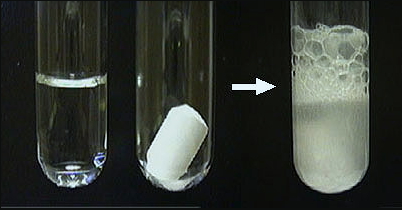
How could we make this reaction happen more quickly?
Decrease the concentration of the acid
crush the chalk to increase the surface area
Put the test tube in an ice bath
As the frequency of ______________ increases, the rate of reaction increases.
Time
Reactions
Collisions
Reactants

Icing sugar has a greater ______ _____ than a solid cube of
sugar.
Surface Area
Catalyst
Temperature
What is the main capacity of Carbon?
To make short compound chains.
To make unstable bonds with other carbon atoms.
To make stable bonds/links with other carbon atoms .
What is the name of this bond C=C?
single bond
double bond
triple bond
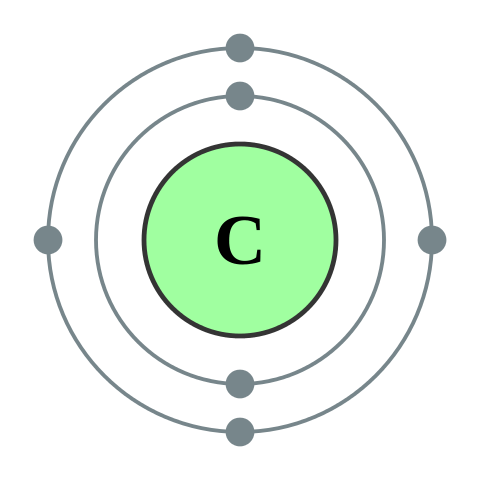
How many valence electrons does carbon have?
4
5
6
7
The secret to carbon's ability to form a wide variety of molecules lies in the arrangement of its electrons
True
False
Bonds between two atoms always form in pairs of electrons.
True
False
What is the main capacity of Carbon?
To make short compound chains.
To make unstable bonds with other carbon atoms.
To make stable bonds/links with other carbon atoms .
Chemical formulas contain:
Types of atoms in the molecule
Carbs in an atom
Number of atoms in each molecule
This ability to form bonds with other carbon atoms makes it possible for long chains of carbon atoms to form.
True
False
Where are organic compounds found?
In living things
in nonliving things
carbon
a structural formula
The numbers in a chemical formula identifies the types of atoms in the molecule
True
False
Types of structural formulas:
Full Structural formula
Polymers
Organic Compound
Simplified Structural Formula
Full Structural Formula
shows all of the bonds between the molecules and the cells
shows all of the bonds between the atoms of a molecule
does not show every bond
Simplified Structural formula
shows all of the bonds between the molecules and the cells
shows all of the bonds between the atoms of a molecule
does not show every bond

Identify
Simplified Structural Formula
Full Structural formula

organic compound is a chemical compound that is composed of:
hydrogen
other elements

animals
plants
trees
all of the above
Organic compounds provide energy and structure for living things to grow and change.
True
False
Organic compounds are usually composed of mostly carbon and nitrogen.
True
False
They are composed of carbon, hydrogen and some other elements are fluorine, chlorine, oxygen, phosphorus, nitrogen, and sulphur.
Nitrogen is found in the nucleic acids that make up DNA.
True
False
Three clases of organic compounds:
Carbohydrates
Carbon
Hydrocarbons
Organic Acids
What other structures can organic compound form?
Rings: a change of carbon atoms curled around and attach to form a ring
Polymers: molecules composed of the same repeating small groups joined together in long chains.
a neutral organic compound containing carbon, hydrogen, and oxygen atom.
Which picture is a monomer?


A ________ is an organic compound that contains only carbon atoms and hydrogen atoms.
hydrocarbon
carbohydrate
organic acids
Most long-chain hydrocarbons are found in oils and waxes, their high energy content makes the ideal fuels.
True
False
A________ is a neutral organic compound containing carbon, hydrogen, and oxygen.
carbohydrate
hydrocarbon
organic acid
Carbohydrates are one of nature's energy storages; living things break down carbohydrates and use the energy released to grow and reproduce.
True
False
An ______ is an organic compound that has acidic properties.
organic acid
carbohydrate
hydrocarbon
Organic acids are not identified by a group called a carboxyl.
True
False
Organic acids are identified by a group called carboxyl.
In a carboxyl group, one oxygen atom is double-bonded to a carbon atom.
True
False
In a carboxyl group, one oxygen atom is single-bonded to a carbon atom.
Choose the correct aromatic compounds
lavinzine
fanzine
vanillin
aspirin
Carbohydrates contain 2H for each O.
True
False
Are carbohydrates difficult and complex?
YES
NO
OH= acid
YES
NO
Organic acids contain carbon, hydrogen and oxygen.
TRUE
FALSE
What is a nuclear reaction?
Is a change that affects the nucleus.
Is a change in which an unstable nucleus can give off energy and sometimes, particles.
What happens during a nuclear reaction?
some mass changes to energy
nucleus changes
everything around it explodes
atoms are rearranged

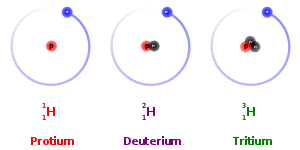
An atom with same number of protons but different amounts of neutrons
E= mc2 is equal to......
( 3.000 × 10⁸ m/s)
( 4.000 × 10⁶ m/s)
( 3.000 × 10⁸ m/h)
Gamma rays are positively charged.
True
False
Gamma rays have
no mass
a huge mass
a small mass
an average mass
___________ is a nuclear reaction in which an unstable nucleus can give off energy and sometimes, particles.
radioactive decay
nuclear fission
nuclear fusion
Beta decay contains particles of positrons and electrons.
True
False
Gamma rays are released during gamma rays.
True
False
Gamma decay alone does not change the number of particles in the nucleus; therefore, it does not form a different element or isotope.
True
False
Some of the energy released during alpha decay and beta decay is in the form of gamma rays.
True
False
Some of the energy absorbed during alpha decay and beta decay is in the form of gamma rays.
There are two types of beta particles: _____ and _______.
electrons and positrons
protons and neutrons
electrons and protons
Positrons have a charge of -1 and electrons have a charge of -2.
True
False
A proton can break apart into a neutron and a positron that is released.
True
False
Beta decay does not change a nucleus into that of a different element.
True
False
The atomic number increases when electrons are released.
True
False
The atomic number decreases when positrons are released.
True
False
What are the effects of too much exposure to radiation?
Fatigue
Vomiting
Hair Loss
Increases the risk of cancer
Define nuclear fusion.
Nuclear fusion – small atoms combine to form a new, more massive nucleus.
Nuclear fusion – splitting lighter atoms to make heavier ones – is what makes it possible.
Nuclear fusion – combining heavier atoms to make lighter ones – is what makes it possible.
Nuclear fusion – splitting heavier atoms to make lighter ones – is what makes it possible.
This process, called nuclear fusion, is the energy source of all __________.
There may be more than one answer for this questions.
planets
suns
stars
plants
Powerful radiation that can cause biological damage.
beta particle
alpha particle
gamma ray
carbon dating
Who was the first woman to win a Nobel Prize for her work with radioactivity?
Lise Meitner
Marie Curie
Jane Goodall
Judy Blume
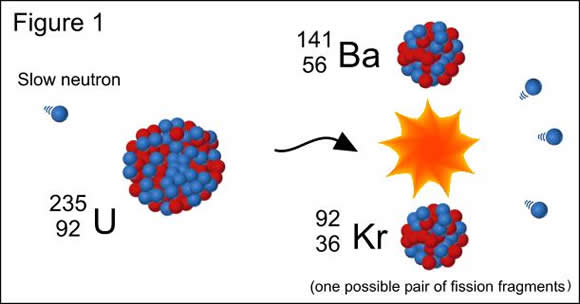
Uranium 23s
How can we evaluate power from fusion?
By its challenges
By its potential benefits
By its bonding purposes
By its level of uranium
Nuclear fission advantages
A lot of energy for a little fuel
Cheaper than fossil fuels
Doesn't produce pollution
It is radioactive
Nuclear Fission disadvantages
Extremely dangerous
Not renewable
Produces radioactive waste
Its turns to radioactive soil
Goal of Nuclear Reactions is to develop a source of clean and unlimited energy
True
False
What is produced by a hydrogen-oxygen fuel cell?
Water and Carbon Dioxide
Carbon Dioxide
Water

