
NEW
Font size
 Worksheets
Atoms Ions Isotopes
Total questions: 25
Worksheet time: 18mins
Adding or subtracting neutrons changes the atom into an...

What is the charge on a lithium atom that loses 1 electron?

Is the Bohr model shown representing at atom or an ion?
ion

Is the Helium model shown representing an atom or an ion?
ion
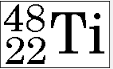
How many protons does this isotope of titanium have?
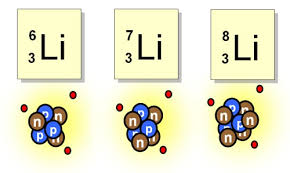
Which isotope has 4 neutrons?

Carbon has an atomic number of 6 and an atomic mass of 12. Which elements are considered isotopes of carbon-12?
What charge does an atom have when it GAINS electrons?
Positive
Negative
Neutral

How many neutrons does this bromine atom have?
35
45
80

How many electrons does this magnesium ion have?
24
12
10
14

How many protons, neutrons, and electrons?
proton = 16, neutron = 8, electron = 10
proton = 8, neutron = 16, electron = 8
proton = 8, neutron = 8, electron = 10
proton = 6, neutron = 2, electron = 6
Atoms of the same element that have different mass than expected because they have a different number of neutrons.
Neutral Atom
Ion
Isotope
Cation
What changes when an atom becomes an ion?
The number of electrons
The number of protons
The number of neutrons
Both the number of neutrons and electrons

What happened to this Magnesium atom to make it an ion?
It LOST electrons
It GAINED electrons
It GAINED protons
It LOST protons
A positively charged ion that has lost electrons to satisfy the octet rule (metals do this)
Anion
Cation
Neutral Atom
Isotope
A negatively charged ion that has gained electrons to satisfy the octet rule (nonmetals do this)
Anion
Cation
Neutral Atom
Isotope
If an atom has 9 protons and 10 electrons it has a charge of ____.
0
-1
+1
-2
If an atom has 4 protons and 2 electrons it has a charge of ____.
0
-2
+2
+1
If an atom has a charge of -2 and an atomic number of 16 it should have _______ electrons.
14
16
18
20
If an atom has a charge of 0 (neutral) and an atomic number of 8 it should have ____ electrons.
0
8
7
9

