wayground logo

Free Printable Worksheets

Font size

S
M
L
XL
Worksheets

Cells UNIT ASSESSMENT 2024

Total questions: 40

Worksheet time: 20mins

Name
Class
Date
1.

The following list represents characteristics of a living thing :

a)

made of cells, has lungs, can reproduce

b)

grows and develops, responds to surroundings, can move

c)

has similar chemicals, makes noises, made of cells

d)

made of cells, grows and develops, uses energy

2.

When you step out into the cold, your body shivers in order to keep its temperature at 98.6F. Which characteristic of life does this represent?

a)

All living things use energy

b)

All living things contain cells

c)

All living things maintain homeostasis

d)

All living things grow

3.

Over three years, Tim's height has increased from 5'4" to 5'11". Which characteristic of life does this represent?

a)

All living things contain cells

b)

All living things maintain homeostasis

c)

All living things use energy

d)

All living things grow

4.
Means smaller images made bigger
a)
Magnification
b)
Resolution
5.
If this is higher, you can see more detail in the image
a)
Magnification
b)
Resolution
6.
Uses beams of electrons to make an image
a)
Magnifying glass
b)

Compound, light Microscope

c)
Electron Microscope
7.
Focus light through lenses to make an image
a)
Magnifying glass
b)

Compound, light Microscope

c)
Electron Microscope
8.
Why are microscopes important when studying most cells?
a)
Most cells are very large.
b)
Most cells are very small.  
c)
Most cells move very quickly.
d)
Most cells are dead.  
9.
Which of the following is NOT one of the basic points of Cell Theory?
a)
All living things are made of cells.
b)
The cell is the smallest living thing that can perform all the functions of life.
c)
Cells are too small to see without a microscope.  
d)
All cells must come from pre-existing cells.
10.
Which scientist did NOT contribute to the cell theory?
a)
Anton Van Leeuwenhoek
b)

Robert Hooke
c)
Albert Einstein 
d)

Matthias Schleiden
11.
Who looked at cork and named the cell?
a)
Robert Hooke
b)

Anton van Leeuwenhoek

c)

Albert Einstein

d)

Theodor Schwann

12.

In what organelle is the genetic material found inside?

a)

Endoplasmic Reticulum

b)

Golgi Complex

c)

Lysosomes

d)

Nucleus

13.

What organelle is called the "powerhouse" of a cell?

a)

Endoplasmic Reticulum

b)

Nucleus

c)

Mitochondria

d)

Golgi Apparatus

14.

In what organelle does photosynthesis occur?

a)

mitochondria

b)

nucleus

c)

ribosomes

d)

chloroplast

15.

I store water in both plant and animal cells. What organelle am I?

a)

cytoplasm

b)

ribosomes

c)

vacuole

d)

lysosomes

16.

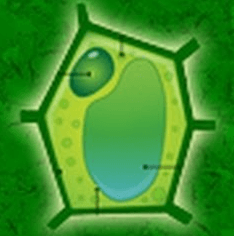
I make proteins for the cell. What organelle am I?
a)
ribosome
b)
mitochondria
c)
chloroplast
d)
lysosome
17.

A rigid layer that lies outside the cell's membrane is...

a)

Nucleus

b)

Cytoplasm

c)

Cell Wall

d)

Endoplasmic Reticulum

18.
Jelly-like substance that holds other substances and is between the cell membrane and nucleus.
a)

ribosomes

b)
cytoplasm
c)
nucleus
d)
mitochondria
19.

The Golgi apparatus _____.

a)

packages cell products for export

b)

eliminates waste

c)

stores DNA

d)

makes energy

20.
In passive transport, molecules move from an area of __________ concentration to an area of __________ concentraiton
a)
high, low
b)
low, high
c)
water, salt
d)
active, passive
21.
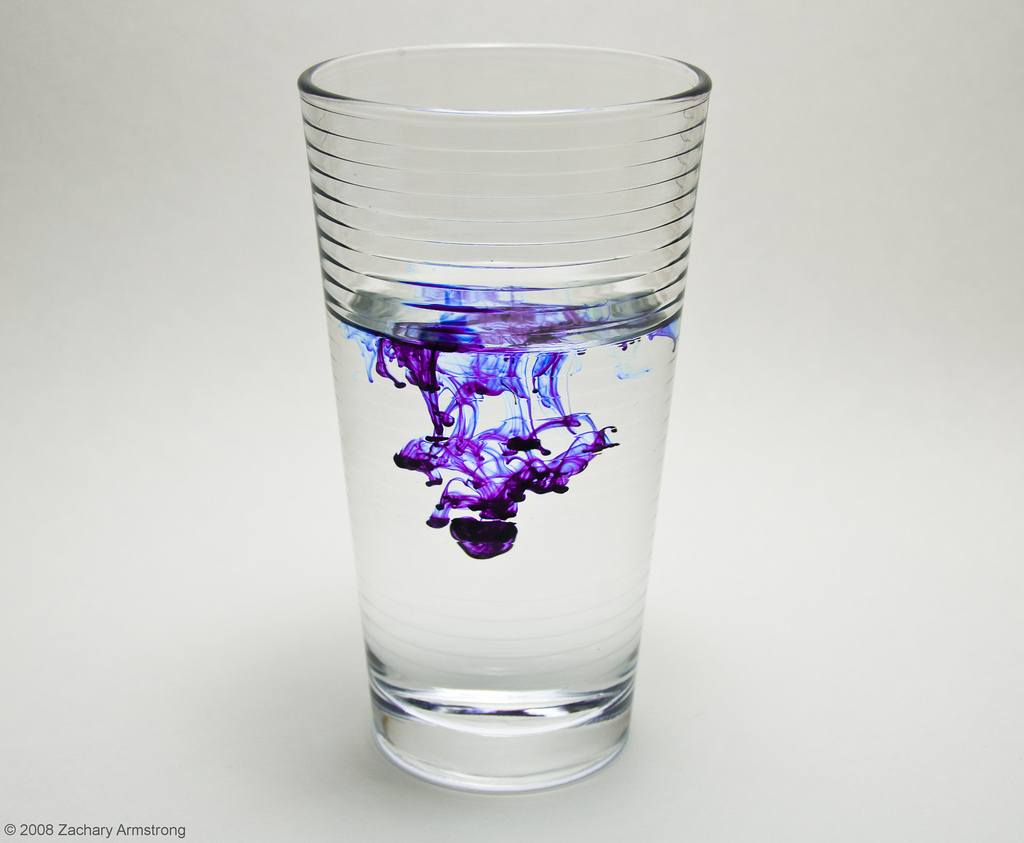
Where is there a low concentration of dye?
a)
at the bottom of cup
b)
in the color
c)
at the top of cup 
d)
no concentration gradient
22.
Osmosis is the movement of _____ across a membrane.
a)
food
b)
energy
c)
oxygen
d)
water
23.
Which type of transport requires an input of energy?
a)
Passive Transport
b)
Osmosis
c)
Simple Diffusion
d)
Active Transport
24.
What is diffusion?
a)
when molecules move 
b)
when molecules move from a high concentration to a low.
c)

when there is no movement 

d)

when molecules move everywhere

25.
The purpose of cellular respiration is to produce ?
a)
energy
b)
oxygen
c)
sugar
d)
protein
26.
What is the energy molecule?
a)
DNA
b)
ATP
c)
RNA
d)
AAA
27.
Lactic acid fermentation occurs in your muscles after a workout because your cells are struggling to get...
a)
Glucose
b)
Sunlight
c)
Oxygen
d)
Water
28.
What is the pigment in chloroplasts that performs photosynthesis?
a)

Cytoplasm

b)
Chlorophyll
c)

ATP

29.
Plants need ________ for photosynthesis
a)
oxygen
b)
soil
c)
carbon dioxide
d)
sugar
30.
Which part of the Cell Cycle takes the longest?
a)
Interphase
b)
Mitosis
c)
Prophase
d)
Cytokinesis
31.
What part of the cell cycle results in the splitting of the new cells?
a)
Interphase
b)
Mitosis
c)
Metaphase
d)
Cytokinesis
32.
In what phase do the chromosomes line up in the middle of the cell?
a)
Cytokinesis
b)
Metaphase
c)
Prophase
d)
Telophase
33.
In what phase do the chromosomes get pulled apart into sister chromatid to opposite sides of the cell?
a)
Prophase
b)
Interphase
c)
Metaphase
d)
Anaphase
34.

Which of the following shows the levels of organization in order from simple to complex?

a)

1. Cell

2. Tissue

3. Organ

4. Organ System

5. Organism

b)

1. Cell

2. Tissue

3. Organelle

4. Organ

5. Organ System

c)

1. Tissue

2. Organelle

3. Cell

4. Organ

5. Organism

d)

1. Organ

2. Tissue

3. Cell

4. Organism

5. Organ System

35.

The heart contains different types of tissue. What level of organization is the heart?

a)
cell
b)
organ system
c)
organ
d)
tissue
36.

Which level of organization is the smallest and simplest?

a)

Cell

b)

Tissue

c)

Organ

d)

Organ System

e)

Organisms

37.

What is a group of cells that are alike and work together?

a)

organism

b)

a tissue

c)

organ system

d)

organ

38.
Which of the following are NOT found in animal cells
a)
chloroplasts and cytoplasm
b)
chloroplasts and cell wall
c)
cell wall and cell membrane
d)
mitochondria and nucleus
39.
Multicellular Organisms
a)
Made of 1 cell
b)
Made of more than 1 cell
40.

Is composed of a single cell

a)

Unicellular

b)

Multicellular

c)

Both