
 Worksheets
Year 8 Cooking and Nutrition End of Unit Quiz
Total questions: 43
Worksheet time: 21mins

What things should you do before you start cooking?
Wash your hands
Make sure benches and equipment are clean
Tie back long hair/put on hair net
All of the above
What should you use to take something out of a hot oven?
Tea towel
Dry oven gloves
Your apron or sleeve
Wet oven gloves
What should you use to stir hot foods?
Spatula
Metal spoons
Wooden spoon
Ladle
The following are signs and symptoms of someone suffering from food poisoning except…….
Joint pain
Nausea
Fever
Headache
Tina is cooking chicken wrap with vegetables. She has to use:
Different chopping boards for raw food and cooked food.
The same chopping board.
She does not need a chopping board she can cut everything on a plate.

Store raw food;
On the top shelf of the fridge.
In the middle shelf of the fridge.
On the bottom shelf of the fridge.
What temperature range is the danger zone?
37 to 65C
5 to 63C
0 to 5C
-18 to 0C
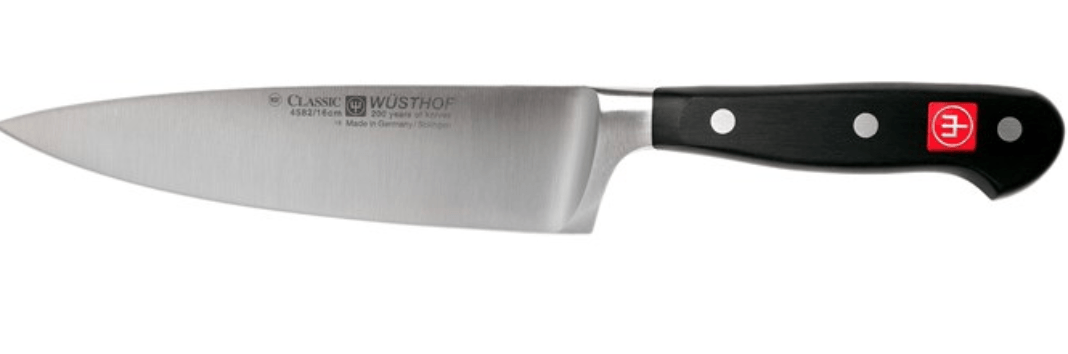
Chef's Knives are mostly used for..
slicing tomatoes and soft foods
Chopping, Dicing, and mincing
Small items like fruits and vegetables
removing bones from fish
A _____ knife is a safe knife.
Dull
Small
Large
Sharp
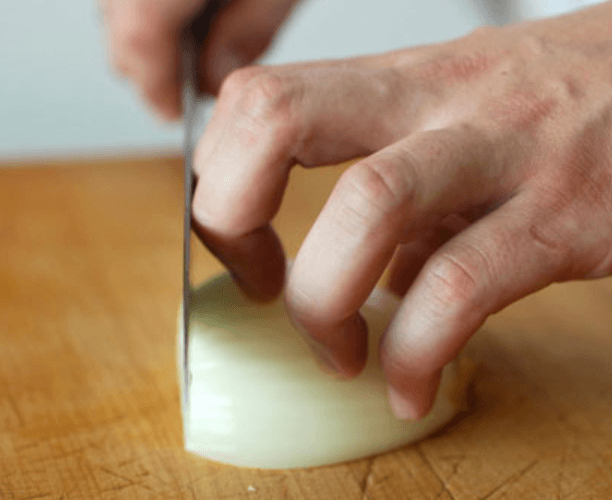
use the _________ technique to protect fingers while cutting foods.
Claw grip
flat fingers
Nuckle grip
Palm grip
What size is a minced food?
Large, irregular sized pieces
Medium, irregular sized pieces
Small, irregular sized pieces
Use a serrated knife on this
garnishes
raw meat
breads
vegetables
Do this after cutting lettuce after cutting raw meat
Dip the knife in sanitizer
Run the knife through the dishwasher
Wash and sanitize the knife separately
Wash the knife with other dishes
Why should you NOT use a dull knife
Accidental cuts are less likely
Accidental cuts are more likely
Requires less pressure to slice vegetables
Uses less time for sharpening
Why is the bridge-claw technique important when cutting?
Keeps fingers from cramping
Prevents strain on wrist
Keeps food sanitary
Guides food and prevents cuts
This cut resembles a matchstick
Julienne
Chiffonade
Diagonal
Mince
Similar to Julienne but larger
Brunoise
Diagonal
Battonnet
Tournee
Cutting boards must be cleaned after each use to avoid cross-contamination?
True
False
Which knife is designed to cut away skin and peel, also useful for cutting intricate garnishes and other detail work?
Chef knife
Utility
Serrated knife
Paring knife
How should you wash your knives?
Leave knives in sink to clean later
Wash, rinse, dry, and put away. Do not place the knife in the sink.
Damp towel
Which is the correct position for fingers while cutting?


How should you pass a knife to another person?
Put knife on counter with handle away from you
Put knife on counter with blade away from you
Near edge of counter
How should you carry a knife through the kitchen?
In front of you
Pointing down, holding the handle, by the side of your leg
With both hands
Which of the following does not have to be put onto the food label of a product?
Name of the food
List of ingredients
Traffic light labelling
Weight or volume
Which statements describes a 'use by date' best?
It is not safe to eat after this date
It if safe to eat but the quality might not be as good
They are found on fresh food products only
You must throw the product away
Which two of the following best describes a 'use-by' date?
Foods are not safe to eat after this date
They are found mostly on perishable foods
They are about quality, not safety
They are found mostly on frozen, dried and canned foods
What develops gluten in the dough?
Shaping it
Kneading
Refrigerating it

To press the dough with the heel of the hands, fold it, turn it (same direction) and repeat until the dough is smooth and elastic.
pushing
kneading
mixing
What temperature does yeast need for the bread to rise effectively?
Around 37C
Around 20C
Around 50C
Around 75C

