
 Worksheets
Art Vocab
Total questions: 95
Worksheet time: 32mins
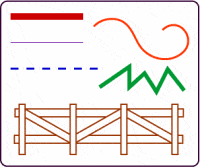
An element of art that can make a mark by a pencil, brush, or pen; a moving point through space.
Shape
Space
Line
Texture
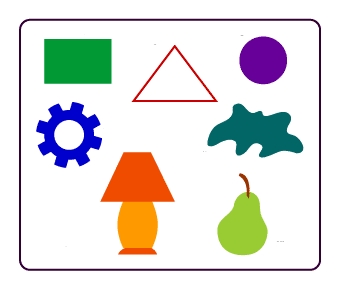
An element of art that is flat, enclosed area that had two dimensions; length and width. They can be geometric or organic.
Form
Color
Space
Shape
An element of art that has objects that are three-dimensional. They have hight, width, and depth. They can be viewed from all sides. They can take up space and volume.
Texture
Form
Line
Organic Shape
An element of art that is derived from reflected light. It has three properties: Hue, Value, and Intensity.
Color
Line
Space
Geometric Shapes
The element of art that has lightness or darkness of a color causing contrast within a work of art.
Color
Form
Value
Shape
The element of art that describes the feel of an actual surface. The surface quality of an object; can be real or implied.
Texture
Hue
Value
Geometric Shape
An element of art that Is used to create an illusion of depth. It can be two-dimensional, three-dimensional, positive or negative.
Intensity
Line
Space
Hue
Circles, squares, and triangles are all what kind of shapes in the elements of art?
Organic Shapes
Geometric Shapes
Texture
Hue
These shapes are found in nature: flower, clouds, animals. Also, they can be abstract.
Intensity
Geometric Shapes
Texture
Organic Shapes
Another name for color
Intensity
Value
Hue
Form
The brightness or dullness of a color
Intensity
Line
Value
Texture
A visual illusion in art, especially as used to trick the eye into perceiving a painted detail as a three-dimensional object
Texture
Trompe l'oeil
Organic Shapes
Color

color



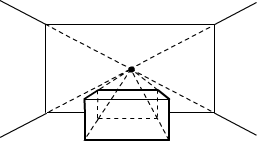
Linear Perspective
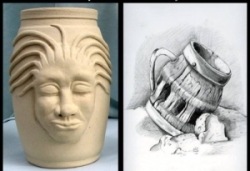
adding shifts in value – as well as eliminating contour lines – creates more 3D looking forms
landscapes
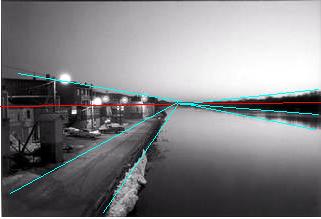
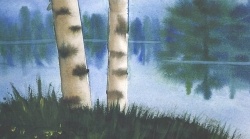
The use of set vanishing point(s) set against a horizon line to depict linear aspects of depth with parallel and perpendicular forms.)
buildings
Vanishing Point
Two or more lines that get closer and closer
x marks the spot
the point at which something that has been growing smaller or increasingly faint disappears altogether
A form of drawing and painting in which parallel lines are represented as coming together to give the illusion of near and far.
Horizon Line is
the sunset
the sunrise
is a horizontal line that runs across the paper or canvas to represent the viewer's eye level, or seperates where the sky meets the ground.
A form of drawing and painting in which parallel lines are represented as coming together to give the illusion of near and far
one point perspective has
1 vanishing point
2 vanishing points
3 vanishing points
4 vanishing points
2 point perspective
has 6 points on the horizon line
has 1 point on the horizon line
has 2 points on the horizon line
has 5 points on the horizon line

______________ is a technique used to represent 3D forms on a flat, 2D surface; uses horizon lines, vanishing points and converging lines to depict forms.
atmospheric perspective
one-point perspective
two-point perspective
linear perspective

___________________is a method that illustrates how objects appear to get smaller as they recede into space when viewed from the front and using a single vanishing point.
linear perspective
atmospheric perspective
one point perspective
two point perspective

________________is a method that illustrates how objects appear to get smaller as they reced into space when viewed from the corner and using two vanishing points.
linear perspective
atmospheric perspective
one-point perspective
two-point perspective

The _______________in a perspective drawing is the line that appears at eye level and can be implied.
horizon line
converging line
eye level line
linear perspective

A ____________________ is the point(s) on the horizon line where the lines of the objects eventually converge.
horizontal lines
converging lines
parallel lines
vanishing point

_______________ are a set of two or more lines that get closer and closer together as they approach the vanishing point(s).
horizontal lines
converging lines
parallel lines
vanishing points


ASSEMBLAGE is the ART of placing & grouping unrelated found objects.
True
False

Louise Nevelson used mostly what materials in her large scale projects?
Plastics & pipes
Found wood objects
Steel & metals
Paper & paint

Who created this piece of art in 1917?
Marcel Duchamp
Louise Nevelson
Béatrice Coron
Alberto Giacometti

Who created this sculpture?
Marcel Duchamp
Louise Nevelson
Béatrice Coron
Alberto Giacometti


scribble/scrumble
hatching
cross hatching

A contour line defines the outline of a form, as well as interior structure, without the use of shading
True
False

When an artist sketches a blind contour drawing , the most important rule is
Erase lines
Lift pencil off paper
Don't look at your paper
Look at your paper

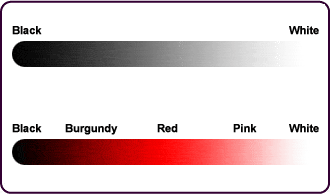
A scale showing a gradual change from the lightest value white to the darkest value black.
Value Scale
Color Scale
Line Scale
Music Scale
Collage is the artistic process of gluing and __________ various materials to a flat surface.
Taping
Assembling
Collaging
Rearranging
What does Origami mean??
folding laundry
folding paper
cutting paper
gluing paper
Collage
a picture made by gluing different materials - like paper and fabric shapes - onto a flat background.
where you go to school after high school.
a picture made by drawing with a pencil.
Op Art is art that deals with ____________________.
religious symbols
optical illusions
cultural aspects
expressing emotion


What do you do when you're finished with a paintbrush?
Throw it in the sink
Put it in the brush cup
Rinse it and then put it bristles-down in the brush cup
Wash it out until the water runs clear, then put it bristles-up in the brush cup.
Who is responsible for cleaning up at the end of art class?
Me
The custodians.
Every student.
Nobody.

What are complementary colors?
Colors that are nice to each other
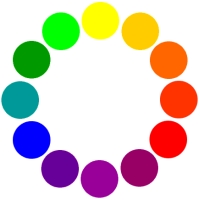
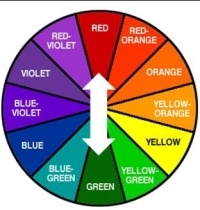
Opposites on the color wheel
Next to each other on the color wheel
All answers

Which of the following are NOT complementary colors?
Blue and green
Red and green
Yellow and purple
Orange and blue

What happens when you mix complementary colors?
You get a vibrant color
You get white
You get a greenish brownish color
All answers

What happens when you put complementary colors side by side?
They make friends
They turn dull
They stand out more.

What is a tint?
Hair color
What you get when you add white to a color.
Black
all answers

What is a shade in painting?
Dark glasses
Sun protection
Darker value of a color
All answers

How do you make a shade?
A small dab of brown or a complementary mix with color
Mix all the colors together
A dab of white mixed with color

How do you check to be sure your paint brush is clean?
Smell it
Wipe it on a friend
Wipe it on yourself
Swipe in on a paper towel to see if it wipes clean

What happens to brushes with acrylic paint on them that are not thoroughly cleaned?
The brush is ruined and must be thrown in the trash.
They disappear into the void.
They are soft and ready to use

Which artist created both of these self portraits?
Rembrandt van Rijn
Chuck Close
Claude Monet
Paul Gauguin

What artist created the painting "The Scream"
Vincent Van Gogh
Edvard Munch
Pablo Picasso
Johannes Vermeer
Leonardo da Vinci
Having your cell phone out all the time can come across as rude.
yes
no
My cell phone should be _______ during class
In my hands the entire time
On my desk.
Turned off and put away.
Playing videos or music.
My art teacher's name is
Miss
Mom
Captain Fantastic
Mrs. Doty

