
 Worksheets
IGCSE Science Review B6-10
Total questions: 24
Worksheet time: 24mins

When the forces of cohesion and adhesion work together, water can move up the plant against the force of gravity by....
Phototropism
Geotropism
Photosynthesis
Capillary Action
Which statement is correct?
The xylem carries water, while the phloem carries glucose.
The xylem carries glucose, while the phloem carries water.
The xylem carries oxygen, while the phloem carries carbon dioxide.
The xylem carries carbon dioxide, while the phloem carries oxygen.

What is it called when a plant grows in response to light?
Geotropism
Phototropism
Thigmotropism

What plant process occurs in the chloroplasts (located in the leaf) and allows a plant to make its own food?
Respiration
Photosynthesis
Transpiration
Capillary Action
Identify the molecule that is a major source of energy for both plants and animals.
oxygen
protein
glucose
DNA
What are the products of aerobic respiration?
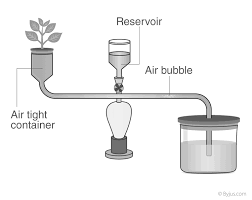
What happens to the movement of air bubble if apparatus is kept in front of a fan
Air bubble does not move
Air bubble moves very little
Air bubble does not change its position
Air bubble moves very fast
The rate of transpiration increases with
High atmospheric CO2 level
Low water content of leaf
Shedding of leaves
Dry air
Blood leaves the heart in two vessels, namely the:
Aorta and pulmonary vein
Pulmonary artery and aorta
Aorta and venae cavae
Pulmonary artery and pulmonary vein
One of the three functions of the circulatory system is:
Carries waste away from our cells
Helps regulate body temperature
Delivers needed substances to the cells
All of the above
What makes up around 55% of the blood?
Plasma
Red Blood Cells
White Blood Cells
Platelets
What causes the blood to be the distinct red colour?
Haemoglobin
Glucose
Hormones
Oxygen
What is the function (job) of the platelets?
To form clots (i.e. scabs) when you have cuts and grazes.
To transport oxygen to the muscles
To carry dissolved sugars.
To produce antibodies

Gas exchange is needed to supply _____________ to cells and remove __________________
carbon dioxide; oxygen
oxygen; food
oxygen; carbon dioxide
carbon dioxide; water
I. High surface area
II. Thin walls
III. Dry surfaces
Which of the following shows the correct sequence of air passage into the lungs?
trachea → larynx → air sacs → bronchi
larynx → trachea → bronchi → air sacs
air sacs → larynx → trachea → bronchi
larynx → bronchi → trachea → air sacs

Trace the path that pollen takes:
Anther --> Stigma --> Style --> Ovary
Ovary --> Stigma --> Anther --> Stamen
Anther --> Ovary --> Stamen --> Stigma

What substance goes milky if CO2 is present?
Limewater
Hydrocholric acid
Blood
Sodium Hydroxide

The way gases move between the capillaries and alveoli is called...?
Osmosis
Diffusion
Atmosphere
Pressure
The thin skeletal muscle that sits at the base of the chest and separates the abdomen from the chest. It contracts and flattens when you inhale.
Intercostal
Diaphragm
Epiglottis
Larynx

