
 Worksheets
communism
Total questions: 206
Worksheet time: 2hrs 7mins
Which one of these is not a basic ideal of communism?
Government controls all means of production.
Abolishment of private property
Income tax only on the upper class
Classless utopian society
Who helped Karl Marx write the "Communist Manifesto"
Niels Meyer
Prince Hans
Wilhelm Klein
Fredrich Engels
What group did Lenin lead?
Bolsheviks
The Dvar Party
Blestyashchiye
The Archontes
Which of these adjectives best describes Joseph Stalin
Ruthless
Calm
Weak
Capitalist
Which of these countries was not in the Soviet Union
Ukraine
Russia
Vietnam
Italy
Which of these titles did Fidel Castro not hold at one point.
Prime Minister of the Republic of Cuba
President of the Republic of Cuba
Cuban Representative to the Soviet Union
First Secretary of the Communist Party of Cuba
Which of these events happens first
Soviet economy crashes
Gorbachev becomes head of the Soviet Union
Russia adopts a pro-democracy view
Ukraine leaves the Soviet Union
Which of these countries leave the Soviet Union first?
Baltic States
Kazakhstan
Ukraine
The Kremlin
Which of these do not impact
post-commmunist regions today
Poverty
No fair elections
No participation in politics
Economic Booms
What other book did Karl Marx write?
Labor for All (труд для всех)
Capitalism is Bad
(Капитализм это плохо)
Das Capital
Davas Shindler
This system promotes a classless society without private ownership of property and businesses.
Communism
Capitalism
Democracy
Authoritarianism
How did China change when Mao Zedong's Communist Party took control?
Businesses and farms came under state ownership
All schools closed
The Red Guard opened special detention camps
Businesses and property were returned to original owners
What was one result of the Great Leap Forward that Mao promoted in China?
Millions of people died of starvation
More farm machinery was purchased to elevate production
Fewer people moved to the countryside for agricultural work
More people moved into cities to work in larger factories
What was the role of the Red Guard during the Cultural Revolution?
Attack and punish those who disagreed with Mao's vision of communism
Reward those who spoke out against corruption in China
Fight against the Soviet Union in China
Fight against the United States in North Korea.
Political party that opposed influence from outside of China and became the ruling party of the People's Republic of China
Chinese Communist Party
Chinese Socialist Party
Chinese Democratic Party
Soviet Communist Party
Revolutionary leader and founder of the Chinese Communist Party.
Mao Zedong
Harry Truman
Kim Il Sung
Joseph Stalin
Name of the 6,000 mile long march lead by Mao to avoid capture.
The Long March
The Patriotic March
The Red March
The Soviet Voyage
Government controlled land/farms worked by groups of citizens.
collectives
communities
factories
soviets
During the Cultural Revolution Mao wanted to transform China into a classless society of _____________ and ____________.
farmers
workers
landowners
scholars
The protests in Tiananmen Square in 1989 turned violent as the Chinese Government pushed back against calls for
democracy
nationalism
communism
socialism

In a communist society...
the government controls the means of production
the individual owns the means of production
wealth is distributed evenly amongst society
there is no wealth or private property
One problem with socialism is...
the rich will continue to get richer.
people will only work as hard as they need to.
those that don't work hard enough do not reap the benefits.
the government keeps all of the wealth.
Which group supported Vietnam's independence from France?
Vietcong
Vietminh
NATO
South Vietnamese gov't
Which word best describes Ngo Dinh Diem's government?
Effective
Incompetent
Brutal
Open-minded
Congress granted LBJ power to go to war with North Vietnam by passing the __________.
Great Society
War Powers Act
26th Amendment
Gulf of Tonkin Resolution
Which was a chemical that took the leaves off trees?
Agent Orange
Napalm
How did American citizens react to the Tet Offensive?
They were discouraged
They became more committed to the war
They were indifferent
The "New Frontier" was _____________'s social agenda
Franklin Roosevelt
John F. Kennedy
Lyndon B. Johnson
Richard Nixon
In response to the Soviets removing missiles from Cuba, the U.S. removed missiles from:
West Germany
India
Turkey
Alaska
LBJ's "Great Society" included all of the following EXCEPT:
The Federal Reserve
Medicare
Title IX
Expansion of welfare programs
LBJ feared a full-scale invasion of North Vietnam might cause ______ to enter the war.
the USSR
China
Japan
North Korea
How did a South Vietnamese monk protest Diem's persecution of Buddhists?
Set himself on fire
Chained himself to the White House fence
Hanged himself in public
Set off a bomb in Saigon
What was the goal of "Vietnamization"?
Hand South Vietnam over to the communists
Keep peace with the Soviet Union
Retake territory lost during the Tet Offensive
Force South Vietnam to take over more of the fighting
Which event did the Cuban Missile Crisis lead to?
Nikita Khrushchev's replacement as Soviet dictator
Fall of the Berlin Wall
Election of Richard Nixon
Mai Lai Massacre
Alan Shepherd was the first American to...
Fly in space
Orbit earth
Land on the moon
Die in a rocket accident
The Gulf of Tonkin Resolution led to...
American withdrawal from Vietnam
Public disapproval of the war
Escalation of the war
What was the effect of the "Living Room War"?
Americans supported the war effort
Americans turned against the war effort
American troops gained a combat advantage
Which law required the president to gain congressional approval for long-term troop deployments?
24th Amendment
Tonkin Gulf Resolution
War Powers Act
Which was a chemical that took the leaves off trees?
Agent Orange
Napalm
How did American citizens react to the Tet Offensive?
They were discouraged
They became more committed to the war
They were indifferent
In response to the Soviets removing missiles from Cuba, the U.S. removed missiles from:
West Germany
India
Turkey
Alaska
What was the effect of the "Living Room War"?
Americans supported the war effort
Americans turned against the war effort
American troops gained a combat advantage
The ratification of the 26th amendment which lowered the voting age to 18 was a result of the
Fear of communism
reporting Watergate
reaction to Sputnik
participation in Vietnam War
One reason the USA was involved in the Vietnam War was to
prevent the spread of communism in Indochina
reduce French influence in Vietnam
stop china from seizing Vietnam
support the government of North Vietnam
Protests against the USA involvement in Vietnam grew in the late 1960's and early 1970's mainly because many Americans
Believed war was unjust
objected to college students getting drafted
feared nuclear war
opposed participation in conflicts involving the United Nations
The Kent State protest reflected student disapproval of
lack of civil rights
unequal status of American women
college tuition
Vietnam War
One way in which the Korean War, the Vietnam War, and the Persian Gulf War are similar is that in all three wars
the goal was to defeat the Soviet Union
the USA was primarily interested in protecting oil supplies
The United States was fighting with out allies
no formal declaration of war was made by Congress


Which worked mainly to improve conditions for women?
United Nations (UN)
North Atlantic Treaty Organization (NATO)
National Association for the Advancement of Colored People (NAACP)
National Organization for Women (NOW)
Farm worker, labor leader, and civil-rights activist who helped form the National Farm Workers Association, later the United Farm Workers.
MLK
Thurgood Marshall
Cesar Chavez
JFK

What was the name of the Act that required many employers to pay men and women equal salaries for the same work?
Women Need Equal Act
Equal Opportunity Act
1963 Equal Pay Act

The Civil Rights Movement is mostly characterized by-
non-violent civil disobedience
violence and riots
economic prosperity
political corruption

Growth in economic and political chances for minority citizens was achieved by civil disobedience methods like-
Marches, Freedom Rides, and Sit-ins
Riots, Boycotts, and Guerilla Warfare
Protests, Sit-ins, and Riots

Challenged the federal government to enforce Supreme Court rulings against discrimination in interstate transportation
Freedom Rides
Sit-ins
Marches
Boycotts

Which article would most likely quote this excerpt?
“Embedding Journalists in Combat during the Korean War”
“The Role of the Office of War Information during World War II”
“Improvements in Media Production during the Persian Gulf War”
“The Role of the Media during the Vietnam War”
The Gulf of Tonkin Resolution increased the power of the executive branch by —
allowing the president to use military force without a declaration of war by Congress
authorizing the president to choose the Senate Majority Leader
allowing the president to introduce bills to Congress
expanding the president’s right to executive privilege
Which box lists characteristics of the 1960s?


Which of the following is the best title for this list?
Protests Against the Vietnam War
Opposition to the Arms Race
Support for Gender Equality
Demands to Stop Dumping Chemical Waste
As part of the Nixon administration’s policy of Vietnamization, the U.S. military —
trained South Vietnamese forces to take over combat responsibilities from U.S. troops
shared military technology with North Vietnam
imposed martial law in North Vietnam
installed a puppet government in South Vietnam

The demonstration described in this article was most likely prompted by —
renewed diplomatic relations with communist China
escalated deployment of military forces to Vietnam
the signing of the Strategic Arms Limitation Treaty
the formation of the North Atlantic Treaty Organization
The primary reason given by U.S. leaders to justify military involvement in Vietnam was that it would —
promote reconstruction after World War II
maintain the policy of détente
fulfill prior United Nations obligations
keep communism from spreading throughout the region
Which of these best explains why worldwide reactions to U.S. involvement in Vietnam grew increasingly hostile during the late 1960s and early 1970s?
The United States was viewed as appeasing a brutal dictator.
The United States demanded the unconditional surrender of Ho Chi Minh.
The United States was viewed as an aggressor invading an underdeveloped nation.
The United States ignored a United Nations Security Council resolution to cease hostilities.
How did press coverage of events during the Vietnam War affect the United States?
Film footage from the front lines increased congressional support for the war.
Reporting on military setbacks contributed to public disillusionment with the war.
Increased U.S. media presence overseas resulted in overwhelming international support for U.S. intervention.
Live presidential press conferences led to a decline in partisan politics in Congress.
What prompted Congress to pass the War Powers Resolution?
Rulings issued by the Supreme Court that banned deployment of U.S. combat forces without a declaration of war
Fears that renewed conflict in the Middle East would require the United States to defend Israel
Decisions made by the executive branch during the Korean and Vietnam Wars
Limits on the authority of the chief executive imposed by an international tribunal
The domino theory, which provided the basis for U.S. entry into the Vietnam War, was the belief that intervention was necessary to prevent —
the expansion of communism across Southeast Asia
the inclusion of Taiwan in the Warsaw Pact
the loss of UN military bases in Asia
the rise of China as a dominant economic power
During the mid-1960s, U.S. participation in the Vietnam War resulted in —
public support for an expanded military draft
mandatory rationing of consumer goods
mass demonstrations by groups protesting the war
national attention for a third-party presidential candidate

The event described in this headline resulted in —
decreased federal funding of student loans
increased support for the antiwar movement
the reinstatement of the draft
an end to federal investigations of student organizations
Which constitutional issue was debated after the release of the Pentagon Papers?
Freedom of religion
The right to a jury trial
Freedom of the press
The right to peaceful assembly
During the time between the passage of the Gulf of Tonkin Resolution and the start of the Tet offensive, what happened in the Vietnam War?
All U.S. civilians were evacuated from Vietnam.
Peace talks between South Vietnam and North Vietnam were conducted in Paris.
The U.S. government deployed more troops to Vietnam.
South Vietnam surrendered to North Vietnam.

What happened as a direct result of these recommendations?
North Vietnamese leaders appealed for a ceasefire.
U.S military involvement in Vietnam escalated.
South Vietnamese leaders rejected military assistance.
Soviet ground troops were deployed to Vietnam.
What was the overall goal of U.S. military intervention in Vietnam from 1964–1973?
Eliminating trade barriers between the United States and Southeast Asia
Isolating the Soviet Union by improving Chinese relations with the United States
Promoting economic growth in the Pacific region
Preventing communism from spreading throughout Southeast Asia

Which similarity completes this Venn diagram?
Included debate over the use of line-item veto
Violated the principle of due process
Involved debate over the extent of executive and legislative authority
Deemed unconstitutional by the judicial branch

Which option completes this diagram?
President Richard Nixon’s involvement in Watergate
The proposed ratification of the Equal Rights Amendment
President Jimmy Carter’s negotiation of the Camp David Accords
The introduction of the Marshall Plan as official foreign policy
Use the excerpt below to answer the question.
FINDINGS AND CONCLUSIONS1. There is no question but that a tragedy of major proportions involving unarmed Vietnamese, not in uniform, occurred at My Lai 4 on March 16, 1968, as a result of military operations of units of the Americal Division.
—“Report of the Armed Services Investigating Subcommittee of the Committee on Armed Services,” July 15, 1970
What was one result of the investigation described in the excerpt?
Media coverage of the Vietnam War decreased.
Public support for the war in Vietnam declined.
The government stopped sending troops to Vietnam.
The defense budget for the military in Vietnam decreased.
What was the MAIN reason for the student protests at Kent State in the early 1970s?
to end the conflict in Vietnam
to protect local manufacturing jobs
to promote environmental conservation
to promote relations with communist China
Gulf of Tonkin Resolution, 1964
To promote the maintenance of international peace and security in southeast Asia.
Whereas naval units of the Communist regime in Vietnam, in violation of the principles of the Charter of the United Nations and of international law, have deliberately and repeatedly attacked United States naval vessels lawfully present in international waters, and have thereby created a serious threat to international peace; and
Whereas these attackers are part of deliberate and systematic campaign of aggression that the Communist regime in North Vietnam has been waging against its neighbors . . . and
Whereas the United States is assisting the peoples of southeast Asia to protest their freedom and has no territorial, military or political ambitions in that area . . . Now, therefore be it
Resolved . . . That the Congress approves and supports the determination of the President, as Commander in Chief, to take all necessary measures to repel any armed attack against the forces of the United States and to prevent further aggression.
Courtesy of The Avalon Project at Yale Law School
How did the Gulf of Tonkin Resolution bypass the system of checks and balances in the U.S. Constitution?
The Gulf of Tonkin Resolution allowed the president to wage war without congressional oversight.
The Gulf of Tonkin Resolution allowed the president to negotiate treaties without congressional approval.
The Gulf of Tonkin Resolution allowed the president to issue executive orders without congressional approval.
The Gulf of Tonkin Resolution allowed the president to utilize soft diplomacy without congressional oversight.
ead the information and answer the question.
In 1970, the Supreme Court heard New York Times v. United States, a case that involved the publication of information about U.S. military actions in Vietnam. President Richard Nixon wanted to prevent The New York Times from publishing the information, while The New York Times argued that publishing the information served the public good. The Court ruled 6-3 in favor of The New York Times.
Which statement BEST describes the principles in conflict in this case?
domestic issues and foreign policy
freedom of speech and national security
freedom of speech and national security
private property and government authority
Use the excerpt below to answer the question.
In early August 1964, two U.S. destroyers stationed in the Gulf of Tonkin in Vietnam radioed that they had been fired upon by North Vietnamese forces.—“U.S. Involvement in the Vietnam War,” Office of the Historian, U.S. Department of State
How did President Lyndon B. Johnson respond to this event?
by ordering a bombing raid on Saigon
by asking the Soviet government for assistance
by requesting a meeting with the North Vietnamese leader
by requesting the expansion of military involvement in Vietnam
Use the list below to answer the question.
•1969—Vietnamization policy to withdraw U.S. forces in Vietnam was announced.•1972—President Richard Nixon cut U.S. troop levels by 70,000 troops.•1973—Paris Peace Accords was signed, requiring immediate ceasefire.
What was one effect of these events?
.
The South Vietnamese launched an invasion of Hanoi.
The North Vietnamese deserted the northern regions.
The resettlement to South Vietnam increased.
The city of Saigon was captured by North Vietnam.
Which policy during the presidency of Lyndon B. Johnson was influenced by the domino theory?
changes in immigration quotas
the enforcement of the Civil Rights Act
escalation of the war in Vietnam
the space exploration program
Which situation was President Eisenhower describing with this analogy?
You have a row of dominoes set up, you knock over the first one, and what will happen to the last one is the certainty that it will go over very quickly. So you could have a beginning of a disintegration that would have the most profound influences.—President Dwight D. Eisenhower, 1954
possible communist takeover of Vietnam
rise of totalitarianism in Spain
increase of social revolutions in Latin America
establishment of the Jewish state of Israel
Which group did President Richard Nixon appeal to in response to the growing antiwar movement of the Vietnam era?
Baby Boomers
National Organization of Women
Silent Majority
Students for a Democratic Society
Which international agreement was used to justify the United States’ involvement in Vietnam?
North Atlantic Treaty Organization
Southeast Asia Treaty Organization
Central Treaty Organization
World Trade Organization
For which action did President Nixon ask for support in his “Silent Majority speech?”
increasing the production of nuclear weapons
increasing taxes to reduce the budget deficit
instating an embargo against Cuba
slow withdrawal of American troops from Vietnam
Use the excerpt below to answer the question.
The situation in Vietnam is deteriorating, and without new U.S. action defeat appears inevitable. . . . There is still time to turn it around, but not much.—Memorandum to President Lyndon B. Johnson, February 7, 1965
What was one way the U.S. government responded to this concern?
It ordered the withdrawal of U.S. forces.
It petitioned the United Nations for military support.
It expanded the draft to increase the size of the U.S. military.
It began negotiations with the United Nations to end the conflict.
Why was the Tet Offensive a major turning point in the Vietnam War?
It proved that the United States could win the war.
It forced the French government to increase troop levels.
It led to political negotiations with Ho Chi Minh’s government.
It changed the minds of many war supporters in the United States.
An effect of the War Powers Act of 1973 was that
the North Atlantic Treaty Organization (NATO) became more involved in world conflicts
the authority of the president as commander in chief was limited
congressional approval was not needed when appropriating funds for the military
women were prevented from serving in combat roles during wartime
the North Atlantic Treaty Organization (NATO) became more involved in world conflicts
Which statement BEST completes the diagram?
CAUSE: Many Americans below the minimum voting age are drafted into the US military
EFFECT: ??
Richard Nixon resigned as president
Supreme Court overturned segregation
States ratified the 26th Amendment
Newspapers showed photos of battle sites
How did the War Powers Act of 1973 change the relationship between the executive and legislative branches?
The U.S. Constitution divides the war powers of the national government between the executive and legislative branches: the President is Commander-in-Chief of the armed forces while Congress has the power to declare war, and to raise and support the armed forces.—Library of Congress
Congress must pass a declaration of war before military forces are deployed.
Cabinet members must assure Congress that peaceful options have been exhausted before military actions are authorized.
The president can collect intelligence support of a United Nations resolution without congressional approval.
The president must consult with Congress before sending any troops into hostile situations.
Which of the following is NOT a CAUSE of the Vietnam War
European Imperialism
Containment of Communism- Domino Theory
Desire for Vietnam independence
The establishment of the North Atlantic Treaty Organization
In what ways did Americans who did not agree with US involvement in Vietnam make their opinions known to the government & leaders?
Give 2 specific examples:
Where is the headquarter of the WTO?
New York
Washington DC
Geneva
London
When did Vietnam join The WTO?
11/1/2007
11/2/2007
12/1/2007
11/1/2008

What position does she currently hold at the WTO?
Director-General
Secretary
Chief economist
Consultant
Which is not the objective of the WTO?
Negotiating trade rules
Settling disputes
Maintaining open trade
To improve the Balance of Payment situation of the member countries
Opportunity of Vietnam when joining WTO:
Expand the product consumption market
Approach and learn advanced technologies.
Improve people's living standards
All of the above are correct
Which is the function of The WTO?
Building Trade Capacity
Dispute Settlement
Trade Negotiations
All of the above are correct
Are least developed countries discriminated against in The WTO?
True
False
Which is the challenge of Viet Nam when joining the WTO?
More competition with other countries.
Create more jobs
Vietnamese people have more choices of goods and services.
Improve Vietnam's relations with other countries
How many functions of the wto in our group presentation? ( cho câu hỏi cuối cùng)
3
4
5
6
How many members does the WTO currently have?
163
164
165
166
The following landscapes of Vietnam are recognized by UNESCO


President Ho Chi Minh was recognized by UNESCO as National Liberation Hero, Great Cultural House In
1990
1991
1993
1995
What is the logo of World Health Organization ( WHO)


WHO is an international organization that takes _________ of human health care.
Responsibility
Charge
Care
Ability

The headquarters of the World Health Organization is at
London
Geneva
Paris
Washington

The WHO has mentioned that"Being vaccinated does not mean that we can throw caution to the wind and put ourselves and others at risk"
True
False

The mission of World Wildlife Fund is
Against terrorist organizations
Take charge of human health
Help children
Protect animal

The United Nation Women advocates women __________.
Impartiality
Inequality
Discrimination
Movement

The World Trade Organization was established aiming _________ reducing tariffs for the facilitation of global trade.
To
In
Off
At

He is the representative (Stand) (a) in for Organization for Economic Co-operation and Development.

He dedicated all his life ___________ maintaining global peace.
To
With
For
On

Which of the following organizations will protect and help these children?


UNICEF ________ supports and funds for the most disadvantaged children.
Advocates
Provides
Relieves
Locates

Different organizations have their own missions and responsibilities that do not help each other in protecting the earth and people.
True
False

If you had a position in WHO,UNICEF,... what would you do for a better world?


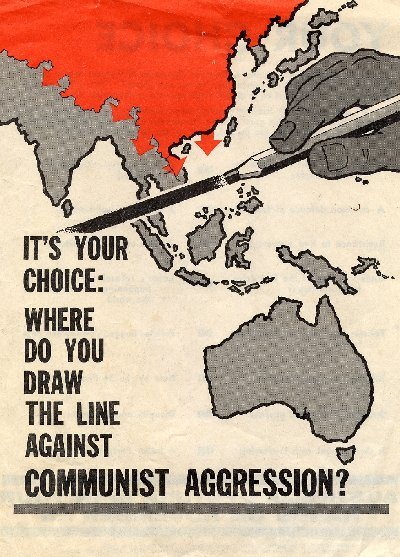
The U.S. got involved in Korea and Vietnam because of what foreign policy?
containment
Good Neighbor policy
isolationism
Roosevelt Corollary

After WWII, North Korea was occupied by the ____________ and had a ____________ government.
U.S.S.R./Communist
U.S.S.R./Democratic
U.S.A./Communist
U.S.A./Democratic

What is the USSR named today?
Russia
Ukraine
China
the United Kingdom

After WWII, South Korea was occupied by ____________ and had a ____________ government.
U.S.S.R./Communist
U.S.S.R./Democratic
U.S.A./Communist
U.S.A./Democratic


What peacekeeping organization voted to aid South Korea?
League of Nations
NATO
United Nations
Warsaw Pact

Who was North Korean leader who led the invasion of South Korea in 1950?
Kim Il Sung
Kim Jong-il
Kim Jong-un

What were the results of the Korean War?
The two sections of Korea reunited
North Korea & South Korea remained divided
The Soviet Union took control of both sections of Korea
China set up a communist government


Who was the Communist leader of North Vietnam?
Ho Chi Minh
Mao Zedong
Kim Il Sung
Douglas MacArthur

One major reason for why the Vietnam War was so unpopular was the draft. What is a military draft?
required military service
a type of airplane
government rule by a few people

What type of government does Vietnam have today?
Communism
Democracy
Dictatorship

[Select all that apply] Which of the following are means of production?
farms
machines
factories
railroads

What is "a government and economic system where the government owns the means of production"?
Communism
Capitalism
Democracy
Socialism

What is "an economic system where citizens own businesses and property"?
Capitalism
Communism
Socialism
Democracy

What is "a government where citizens vote on laws and leaders"?
Democracy
Capitalism
Socialism
Communism

What is "a government where one person has all the power"?
Dictatorship
Commuism
Socialism
Democracy

Who is a citizen?
a person who has the right to participate in the government
all the people who live in a country
everyone who is born in that country
everyone who speaks the national language

What was the name of the North Vietnamese army?
Việt Cộng
Lộc Ninh
Trần Văn Trà
Nguyễn Huệ

Which conflict happened first?
the Korean War
the Vietnam War

Which conflict lasted longer?
the Korean War
the Vietnam War

