
 Worksheets
Earth Science Test
Total questions: 50
Worksheet time: 41mins
Why is the inner core solid if the outer core is liquid?
It is made of solid rock
it is located directly below the mantle
it is affected by pressure from the layers above it
Which layer of the Earth is believed to be composed primarily of liquid iron and nickel?
Crust
Mantle
Outer Core
Inner Core
What type of heat transfer occurs in the mantle of the Earth?
Conduction
Convection
Radiation
Which layers makes up 1% of the Earth's weight?
crust
mantle
inner core
outer core

Which best describes the mantle?
molten metal
dense, solid metal ball
hot but not completely solid rock
dry land and ocean floor
The idea that continents were once part of a single landmass that broke apart and
moved
Continental Drift
Tectonic Plates
Transform
Forms where plates are moving away from each other
Divergent-
Convergent-
Transform-
Formed where two sections of Earth’s crust are colliding
Divergent-
Convergent-
Transform-
The land mass where all of the continents were once together in one large continent is called ________________.
Laurasia.
Pangaea.
Eurasia.
Gondwana.
Tectonic plates consist of
continental crust.
mesosphere.
both continental and oceanic crust.
oceanic crust.
The fact that similar fossils are found on both sides of the ocean is evidence of
magnetic reversal.
global positioning.
continental drift.
oceanic drift.
The movement of the tectonic plates is caused by
the rotation of the Earth.
convection currents in the Asthenosphere
the gravity of the iron-nickel core.
the Moho discontinuity.
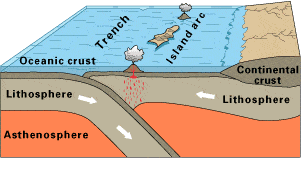
Observe this diagram of a plate boundary. One statement BEST describes what is happening. It is that
the oceanic crust is melting.
the denser oceanic crust is subducting under the less dense oceanic crust
volcanic islands are forming.
the tectonic plates are moving away from each other.
The solid, but bendable layer of Earth. Tectonic plates move on top of this layer.
Inner Core
Asthensophere
Lithosphere
Outer Core

The Earth's lithosphere contains
The upper mantle
The oceanic crust
The continental crust
All are correct

What is the name of layer R?
lithosphere
inner core
outer core
asthenosphere
mesosphere
What is the name of layer Q?
lithosphere
inner core
outer core
asthenosphere
mesosphere
What is the name of layer Z?
crust
mantle
outer core
inner core
core
If the most abundant substances in the earth are silicon and oxygen, which part would you expect these elements to be found?
crust
mantle
outer core
inner core
core
Where is heat and pressure the greatest in the Earth?
crust
mantle
outer core
inner core
Which of the following is not a method for heat transfer
Radiation
Insulation
Conduction
Convection
How does heat energy reach the Earth from the Sun
Convection
Radiation
Conduction
Insulation
Which is the best surface for reflecting heat radiation?
Shiny white
Dull white
Shiny black
Dull black
Which is the best surface for absorbing heat radiation?
Shiny white
Dull white
Shiny black
Dull black

Conduction
Convection
Radiation

Conduction
Convection
Radiation
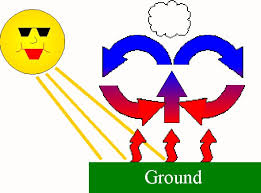
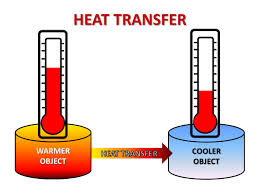
Hot coffee is stirred with a spoon, the spoon gets hot due to ...
Conduction
Radiation
Convection
A chair is placed several feet from a fire in a fireplace. The fire has a glass screen. The side of the chair facing the fireplace gets warm because of ...
Conduction
Radiation
Convection
Near the ceiling of a room the air is warmer. The warm air rises because of ...
Conduction
Radiation
Convection
One end of a copper rod is placed in a flame of a Bunsen burner. Small pieces of wax placed along the rod melt a progressively larger distance from the flame. Heat is transferred through the rod by ...
Conduction
Radiation
Convection
P waves are also called
pushing waves
pulling waves
primary waves
primordial waves
S waves
are slower than P waves
Faster than P waves
compression waves
faster waves

The diagram shows a
S wave
P wave

The diagram shows a
S wave
P wave


Which picture correctly shows how S waves travel through the layers of the Earth?
A
B
Which picture correctly shows how P waves travel through the layers of the Earth?
A
B

Which diagram below correctly shows the shadow zone for S waves.
A
B

