
 Worksheets
10 Marine Science Review
Total questions: 44
Worksheet time: 24mins

Sharks, Skates, and Rays are a unique group of fish because
they are easily trained and kept as pets
they have no jaws
they have no bones
they have cartilage instead of bone in their skeletons

Is the following a structural, functional or behavioural adaptation? The streamlined shape of a dolphin.
Structural
Functional
Behavioural

Is the following a structural, functional or behavioural adaptation? Octopus changing colour
Structural
Functional
Behavioural
What is radial symmetry?
When you can 'cut' an organism into perfect halves
When an organism cannot be 'cut' into equal pieces
When an organism can be 'cut' into equal pieces
When an organism can be 'cut' into twelve equal pieces
Which life stage of cnidaria settles on substrate?
Medusa
Eggs
Polyp
Larvae
In all cnidarians, the gastrovascular cavity is a digestive system
complete with a mouth and an anus
incomplete with only a mouth
incomplete with one opening acting as the mouth and anus
incomplete with one opening, all waste is recycled
The medusa stage of anthozoans
Is free swimming, carried by ocean currents
Is capable of moving against ocean currents
Is free swimming, but too heavy to be moved great distances
Is capable of moving, but only with the help of other medusa
The symbiotic relationship shared between corals and zooxanthellae is referred to as
Commensalism
Mutualism
Parasitism
Predation
What is symbiosis?
A relationship where only one organism benefits
A relationship where both organisms benefit
A relationship shared between two different organisms
A relationship where one organism preys on another

Name this body type.
Medusa
Polyp
When corals expel their zooxanthellae, what happens to their colour?
Nothing, the zooxanthellae do not contribute to the colour scheme of corals
The corals become slightly discoloured, moreso attributed to shock rather than the loss of zooxanthellae
The corals brighten in colour, as they receive more nutrients from filter-feeding planktons then living with corals
The colouration disappears, leaving the coral temporarily colourless until the zooxanthellae return
Animals in the phylum Cnidaria do not have brains. Instead, they have ________ _______ that conduct signals throughout their bodies.
nerve nets
nerve maps
nerve pathways
nerve roads

Coral Anatomy: Identify A
Tentacles
Nematocysts
Zooxanthellae
Gastro Cavity
Why would corals need to control the levels of photosynthesis conducted by zooxanthellae
Too much oxygen could be shared with competitive corals
Too much oxygen could cause poisoning within the organism
Too much oxygen could attract predators such as Parrotfish
Too much oxygen could cause the host to explode, as it is a gas formed underwater
The _______________ is where the barb and thread are stored until the cnidocyte is triggered.
nematocyst
cnidocil
operculum
overture
Coral Anatomy: Identify B
Tentacles
Nematocysts
Zooxanthellae
Gastro Cavity
Coral Anatomy: Identify C
Tentacles
Nematocysts
Zooxanthellae
Gastro Cavity
Coral Anatomy: Identify D
Tentacles
Nematocysts
Zooxanthellae
Gastro Cavity
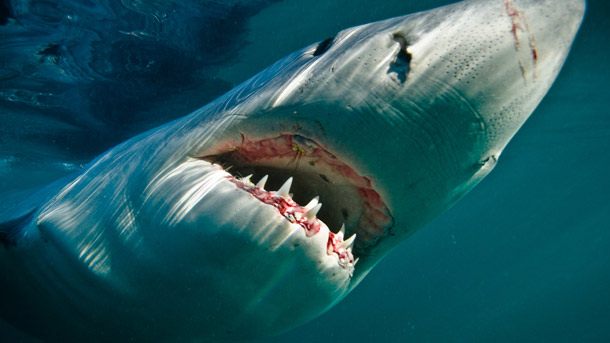
Why is losing a tooth not a problem for a shark?
When a shark loses a tooth, another tooth takes its place.
Sharks don't get old enough to use teeth.
Sharks teeth never fall out.
Sharks die if a tooth is lost.
Breathing holes located on the dorsal side behind each set of eyes are called
Gills
Ventricles
Spiracles
None of these
Countershading (dark backs, silver sides, and white bellies) is a common form of camouflage in ______fishes.
coral reef
eel grass bed
pelagic (open ocean)
deep sea
The tail fin of a fish is also known as the __________ fin.
Pectoral
Pelvic
Dorsal
Caudal
The bony plates covering a bony fish's gills:
Operculum
Caudal fin
Dorsal fin
Lateral line
What is the name of the internal structure that controls a bony fish's depth in the water?
Liver
Air Pocket
Lung Bladder
Swim Bladder

Which mouth type is A
Superior
Inferior
Terminal
Serminal

The structure labeled #5 is the
dorsal fin.
gill filament.
operculum.
lateral line.

The structure labeled #9 is called the
pectoral fin.
operculum.
pelvic fin.
jaw.
The structure labeled #3 is called the
pectoral fin.
operculum.
pelvic fin.
jaw.

Which mouth type is B
Superior
Inferior
Terminal
Serminal

Whales can be divided into two groups. They are ____ and ____
toothed and baleen
brown and black
hot and cold
big and little
Whales migrating along the coast is a
Structural adaptation
behavioural adaptation
Functional Adaptation
Physical adaptation
Counter current heat exchange is
veins and arteries carrying blood
arteries carrying blood away from the heart
veins next to arteries reducing temperature loss
whirlpools created by currents
Where is the peduncle
tail
fin
mouth
Blow hole
Whales communicate through sounds this is a _____________ adaptation
structural
physical
functional
Behavioural
What is the purpose of blubber on an Orca?
To Prevent Heat Loss
To Protect the Orca from attacks
To convert into Oil
To Prevent the Orca from getting too hot.
What are the special overlapping fibers that whales use to filter out zooplankton?
baleen
pegs
scaleen
cross-hatched gills
When a whale jumps completely out of water it is a __________ adaptation
functional
behavioural
physical
emotional
A whales fluke pattern is...
the same as other whales
like a human fingerprint - unique to only one whale
easy to see
like a cool painting
Reproduction differs between sharks and bony fish. Sharks reproduce by (a) and bony fish by (b):
(a) external fertilization of their eggs, (b) internal fertilization of their eggs.
(a) Viviparity, (b) Sexual reproduction.
(a) Internal fertilisation of their eggs, (b) external fertilisation of their eggs.
(a) Mass spawning, (b) Live birth.

