
 Worksheets
Ecology and Human Impact Practice TEST
Total questions: 40
Worksheet time: 1hrs 13mins
What is an invasive species?
An organism that is new to an environment that has positive effects on the environment.
An organism that is native to an environment that has negative effects on the environment.
An organism that is new to an environment that has negative effects on the environment.
An organism that is native to an environment that has positive effects on the environment.


If the amount of food or resources available increases, the carrying capacity for an animal.....
Stays the same
Increases
Decreases
Fluctuates

This is the largest number of individuals of a population that the environment can support...
carrying capacity
population crash
lag phase
mutualism

In a forest ecosystem, which of the following is the best example of a limiting factor for a rabbit population?
The squirrel population
The amount of sunlight
Amount of grass available
Rabbits have no limiting factors

Water, sunlight, shelter, and space are resources that are often........
abiotic limiting factors
biotic limiting factors
non-limiting factors
exponetial factors

According to the graph, what is causing the deer population to decrease
They got sick
The wolf population is decreasing
The wolf population increased
They ran out of food

Predator population lags behind prey population because......
Increase in predators leads to decrease in prey
Increase in predators leads to increase in prey
Increase in predators leads to decrease in producers
Increase in producers leads to increase in prey
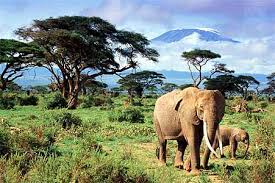

Barnacles are animals that cannot move. In order to get food, they attach to whales and catch any floating plankton in the water. The whale is neither helped nor harmed in the interaction. What type of symbiosis is this?
Mutualism
Commensalism
Parasitism
Neutralism


A producer__________________________.
must eat other organisms for food/energy ex: shark
Makes their own food ex: trees
get their energy from consuming dead things
A consumer __________________________.
must eat other organisms for food/energy ex: shark
Makes their own food ex: trees
get their energy from consuming dead things
A detritivore/ decomposer __________________________.
must eat other organisms for food/energy ex: shark
Makes their own food ex: trees
get their energy from consuming dead things
What happens to the other 90% of energy when it is passed up the food chain?
it is found in the dirt
it is used for metabolic processes or given off to the environment as heat
it us used for swimming
it is used to make a Krabby Patty
The end result of ecological succession is usually a(n)
A.land biome.
B.aquatic biome.
C.unstable community.
D.climax community.
Which of the following is not a possible cause of ecological succession?
A. fire
B. flood
C. earthquake
D. change of season
. Which of the following is an example of primary succession?
A.lichens growing on rocks following a volcanic eruption
B.grasses growing after a forest fire
C.oak trees replacing pine trees in a forest
D. non-native species introduced into a climax community
Which of these organisms would you most expect to find on a small island that formed as a result of a volcanic two years prior?
A.climbing vines
B.hardwood tree
C.monkey
D.lichen
How is primary succession different from secondary succession?
Primary succession starts with soil.
Secondary succession start with bare rock.
Primary succession starts with bare rock, with lichens and moss.
Fire is an example of primary succession.
Which of the following best
describes biodiversity
A. a diverse Biology class
B. variety of all life on earth
C. a variety of plants
D. a variety of animals



