
 Worksheets
BIOLOGY Cell Communication Test Review Quizizz
Total questions: 44
Worksheet time: 31mins
What is the point of a feedback loop?
To provide the body with more energy
To provide the body with more food
To make sure the conditions in the body are always changing
To make sure the conditions in the body remain stable
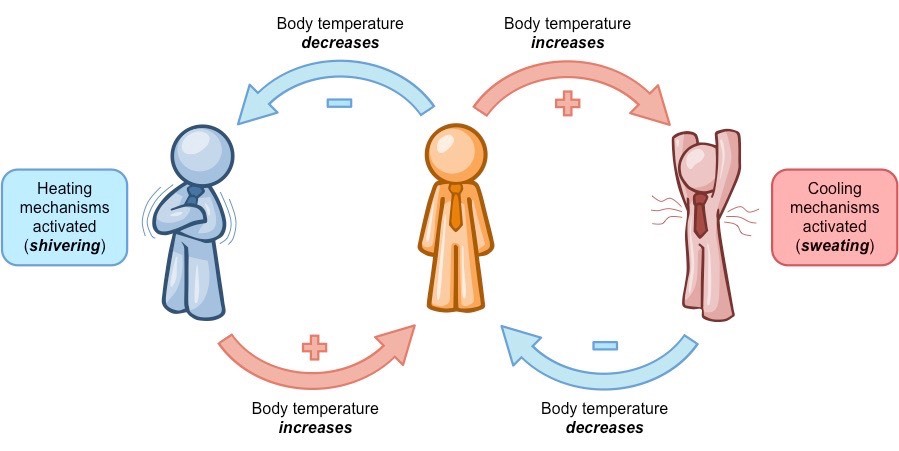
In this body temperature feedback loop, predict what would happen if cooling mechanisms were NOT activated?
The body would not warm up.
The body would not cool down.
Your body would get colder and colder.
Your body would release lots of heat.
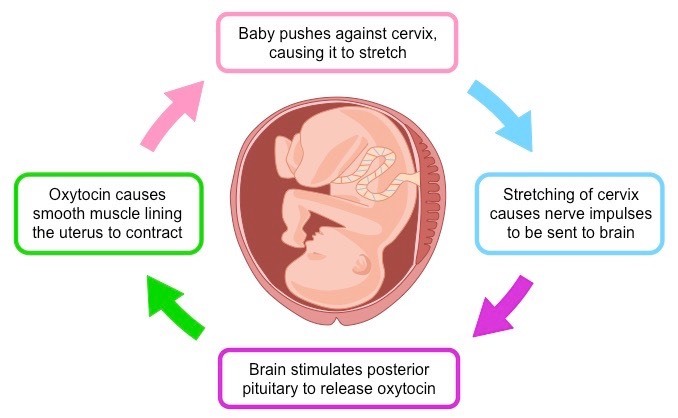
What type of feedback loop is shown?
negative
neutral
positive
The ultimate cause of death
Over Heating
Diabetes
Bad Hair
Loss of Homeostasis
Which step would be the final step in a signal transduction pathway?
phophorylation of proteins
activation of protein
change in gene expression
binding a ligand to a receptor
Which step would be the first step in a signal transduction pathway?
phophorylation of proteins
activation of protein
change in gene expression
binding a ligand to a receptor
What is the role of protein kinase in a signal transduction pathway?
activates a molecule by adding a phosphate to the target molecule
deactivate a molecule by removing a phosphate from the target molecule
activates a molecule by removing a phosphate from the target molecule
deactivate a molecule by adding a phosphate to the target molecule
What is the purpose of transduction?
send a signal to a target cell
receive a signal from another cell
respond to a signal pass along internally
pass along a signal through the cell to the location where the cell response will occur.
Once a cell responses to a signal, what would need to occur to stop the response?
activate the relay proteins
deactivate the relay proteins
destroy the cell
genetically modify the DNA of the cell
Phosphorylation is the process by which a ____ is added to a protein to activate it.
acetyl
sulfate
phosphate
nitrate
What class of enzymes performs phosphorylation?
catalases
phosphatases
kinases
amplifases
What is the advantage to amplification of a signal inside of a cell?
moderates the signal so it is not to quick
stops a signal from being transducted
increases the cell response to a signal
increases the reception of signal
What class of enzymes removes phosphate from proteins to deactivate them?
catalases
phosphatases
kinases
amplifases
What are the three parts of signal transduction pathway?
reception, transduction, response
confirmation, transduction, transcription
reception, amplification, transcription
confirmation, amplification, response
Transduction step traditionally amplifies the signal, which of the following are NOT involved with transduction?
secondary messengers
protein modification
phosphorylation cascade
ligands
Which of the following is NOT a response by the cell from a signal transduction pathway?
cell growth
gene expression
secretion of molecules
all of the above are responses
Describe what occurs when the ligand binds to the receptor.
confirmation change in shape of receptor
phosphorylation of ligand
ligand passes through the membrane
receptor binds additional ligands
___________ are nerve endings that send signals to the nervous system when stimulated.
Cells
Sensory receptors
Organ systems
Brain
Right now, neurons in your body are communicating in order for you to read this question. What is the ligand, or signal molecule, for a neuron to communicate with another neuron?
neurotransmitter
Na+
K+
hormones

Based on the diagram in the photo, what is the ligand, or signal molecule, for this pathway?
insulin
insulin receptor
glucose
GLUT4

Responses are what occurs as a result of a signal or stimulus. Based on the diagram, what can be synthesized using this pathway?
glycogen
proteins
ATP
All of these can be synthesized.

An example of DIRECT cell communication is:
White blood cells bumping into each other sharing antigen info
Neurons communicating across a synapse
Hormones traveling through the blood stream to target tissues
An example of LONG-DISTANCE cell communication is:
White blood cells bumping into each other sharing antigen info
Neurons communicating across a synapse
Hormones traveling through the bloodstream to target tissues

what type of cell communication is being shown in the image?
Paracrine
Endocrine
Juxtacrine
Autocrine
What answer best describes the cell communication Autocrine?
Cell responding to its own chemical message
Cell responding to a neighboring cell
Cell responding to hormones circulating in the blood
Cells responding to signals sent by direct contact
What is the name of the signaling molecule in cell communication?
ligand
receptor
operon
inhibitor
All signals and receptors are the same in all cells.
True
False
All cells have the same response to the same signal.
True
False
Long distance signals involving hormones are ________ signals.
paracrine
synaptic
endocrine
Adrenaline is released from your adrenal glands to affect various systems in the body. This is an example of ____ signaling.
synaptic
endocrine
paracrine
autocrine

What type of signaling is shown here?
autocrine
synaptic
endocrine
paracrine
Many cancer cells signal themselves to grow and divide. This is an example of ______ signaling.
long distance
autocrine
paracrine
hormone
After a cellular response, how is it terminated?
separate the ligand and receptor
block the transduction pathway
it will keep responding
send out a different signal

Communication between neighboring/touching cells is common in plants.
True
False

