
 Worksheets
Q 1 Unit Quiz (Part 1)
Total questions: 90
Worksheet time: 3595secs

“We hold these truths to be self-evident, that all men are created equal, that they are endowed by their Creator with certain unalienable Rights, that among these are Life, Liberty and the pursuit of Happiness. — That to secure these rights, Governments are instituted among Men, deriving their just powers from the consent of the governed”
According to this passage, what is the principal role of government?
Which of the following best completes this excerpt?
The excerpt above is taken from the -
The Articles of Confederation created .......
A unified strong national government
A league of friendship among the 13 states
an ordinance abolishing slavery
a government that could collect national taxes and raise a national army
The Virginia Plan wanted to establish a legislative government that
operated in three houses
was based upon equal representation among all states.
was based upon the population of each state.
that operated as a direct democracy.
The New Jersey plan would have created
a bicameral legislation
a legislation with three houses
a legislation based upon equal representation of each state.
a legislation based upon the population of each state.
The Articles of Confederation created .......
A unified strong national government
A league of friendship among the 13 states
an ordinance abolishing slavery
a government that could collect national taxes and raise a national army


1. Case is filed in a federal district court.
2. ???
3. Case is appealed to the US Supreme Court, which does one of the following:
a. Allows the lower court ruling to stand.
b. Sends the case back to the lower court for reconsideration.
c. Decides to try the case.
How are federal judges selected?
Named by the President, confirmed by the Senate.
Named by the President.
They are elected.
Named by the previous judge.
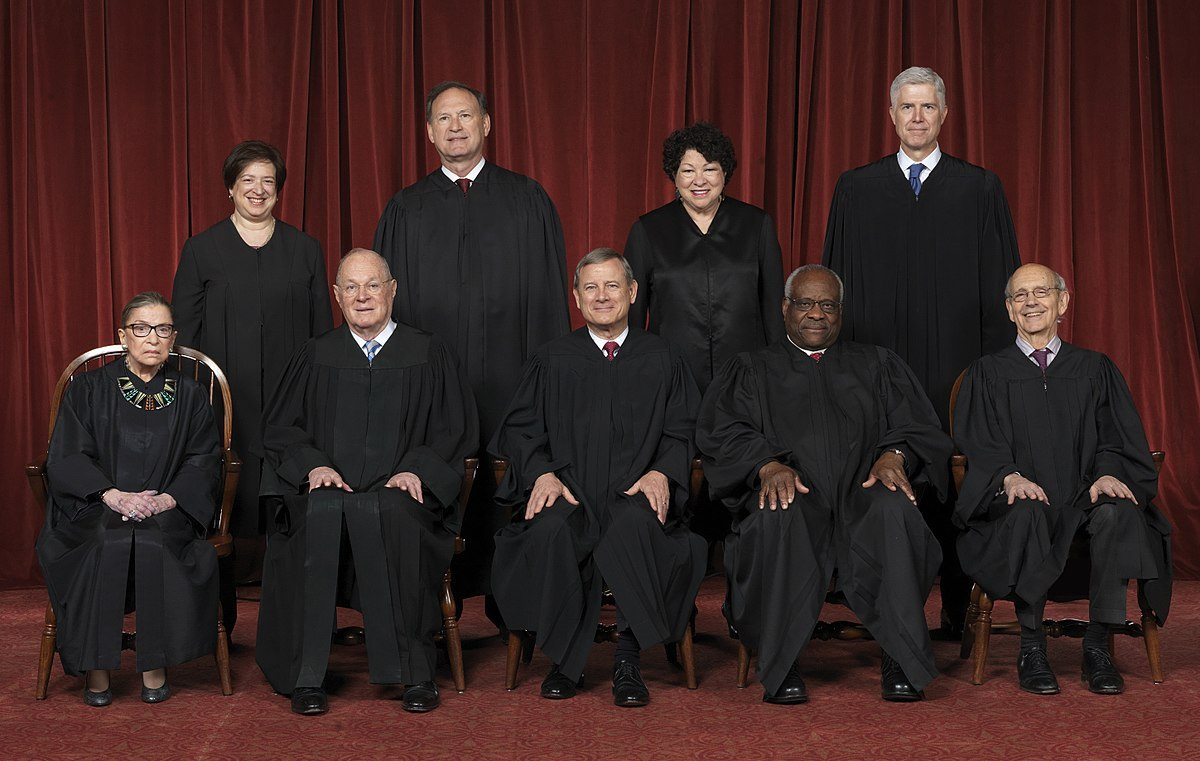
How many Supreme Court Justices sit on the Supreme Court?
7
9
5
12

The Democratic Party nominated____________________ to run for President.
Adam Sandler
Oprah Winfrey
Joe Biden
Donald Trump
The Republican Party nominated____________________ to run for President.
Joe Biden
Rebel Wilson
Donald Trump
Theodore Roosevelt

Which word in the statement above describes this process the BEST?
primary election
party platform
general election
winner-take-all
How can a presidential candidate win the election without winning the majority of all the individual votes in the United States?
If the presidential candidate who won the majority of the votes resigns before his or her term begins.
If he or she wins the majority of votes in the senate.
If he or she wins the majority of the votes from the Electoral College.
If he or she wins the majority of the votes in the House of Representatives.
How is the total number of 538 Electoral College voters determined?
10 voters from each state plus 38 from the District of Columbia.
The number of voters is equal to the number of senators, members of the house, plus 3 for the District of Columbia.
The number of voters is equal to the number of members of the house plus 3 for the District of Columbia.
The number of voters is equal to the number of senators plus 3 for the District of Columbia.
Why was the Electoral College created?
So that the states with the most people can choose who wins the presidential election.
So that only the senate and the house can decide who will win the presidential election.
So that the states with the most people will not be able to decide who wins the presidential election.
So that the only people who can vote are those who know a lot about politics.
Where is information regarding the president found in the Constitution?
Article I
Article II
Article III
Article IV
Which of the following is a true statement about the President?
Every employee of the federal government reports directly to him
He is the head of the legislative branch of the federal government
He is the head of the executive branch of the federal government
He is the head of the judicial branch of the federal government
If the President was having trouble coming up with a new economic policy, what action would he most likely take?
Ask the Supreme Court to decide what the policy should be
Ask one of the economics experts in his cabinet for guidance
Allow Congress to come up with an economic policy on its own
Ignore economic policy altogether and focus on foreign policy
A public school principal smells smoke in the hallway, and believes it is coming from the girls’ bathroom. She walks into the bathroom and Susan standing by the sink. She suspects Susan has been smoking, and demands to search her purse for cigarettes or other evidence of smoking.
(Pick If it is a violation or not and the amendment that applies)
No violation
Violation
4th Amendment
5th Amendment
6th Amendment
A man suspected of a violent crime is brought in to the police station. He alleged victim picks him out of a lineup as the man who attacked her. Police inform him that he has the right to refuse to answer questions, but they do not offer to let him speak to a lawyer. After being questioned for two hours, the man admits the crime.
(Pick If it is a violation or not and the amendment that applies)
No violation
Violation
9 th Amendment
10 th Amendment
5th Amendment
John, a fourteen year old public school student, wears a shirt to school that says “Be happy, not gay” to express his belief that homosexuality is wrong. His dean tells him he must change his shirt or be suspended from school. John refuses, and is suspended for a week.
Pick If it is a violation or not and the amendment that applies
No violation
Violation
9th Amendment
1 st Amendment
5th Amendment
Thirteen year old Marianne is a freshman in high school. She is an honor student and wants to sing in the choir. When she arrives at choir practice, the teacher tells her she must take a drug test if she wants to participate in any extra-curricular activities. Marianne refuses and is kicked out of choir.
(Pick If it is a violation or not and the amendment that applies)
No violation
Violation
9th Amendment
1 st Amendment
5th Amendment
Brett’s science teacher asks the class to exchange papers to correct last night’s homework. Brett refuses to let anyone except the teacher see his homework paper, and is sent to the principal.
Pick If it is a violation or not and the amendment that applies.
No violation
Violation
2nd Amendment
1 st Amendment
4th Amendment
Congress wants to find ways to cut costs because of the soaring budget deficit. Congress passes a law to require American citizens to house US soldiers in their homes during peacetime.
Pick If it is a violation or not and the amendment that applies
No violation
Violation
2nd Amendment
3rd Amendment
4th Amendment
Carolyn is arrested for shoplifting a candy bar from a grocery store. At trial, she is found guilty. The judge decides that the right punishment is to cut off Carolyn’s hands so she will not be able to shoplift again.
No violation
Violation
2nd Amendment
3rd Amendment
8th Amendment
Susette bought a house and spent years restoring it. She loves her home. One day, she gets a notice that the local government is going to take her property in order to turn her land over to a private company. e local government says it can take Susette’s home because the new jobs and tax revenue created by the company will benefit the public.
Pick If it is a violation or not and the amendment that applies
No violation
Violation
2nd Amendment
3rd Amendment
5 th Amendment
Gennie, an eighteen year old college student, is arrested for stealing a classmate’s designer sweater and selling it on eBay. When Gennie appears before the judge, she asks for a lawyer to help defend her. The judge tells Gennie that if she is smart enough to be in college, she knows enough to defend herself. Besides, she is not charged with a felony, so the stakes are not very high.
No violation
Violation
2nd Amendment
3rd Amendment
5 th Amendment
A woman is being tried for murder. The prosecuting attorney forces her to take the stand and testify.
IS a violation of the woman’s Fifth Amendment right protecting herself from self-incrimination.
IS a violation of the woman’s 4th Amendment right protecting herself from self-incrimination.
IS a violation of the woman’s 3rd Amendment right protecting herself from self-incrimination.
IS a violation of the woman’s 22nd Amendment right protecting herself from self-incrimination.
A group of teenagers gather quietly on a street corner. Neighbors complain and ask the police to arrest them for getting together as a group. The police refuse.
IS a violation. The police should do as requested because the group was may blocking access to a store or house.
IS NOT a violation. The police were upholding the teenagers First Amendment right to assemble when they refused to arrest the teenagers for standing on the street corner. However, if the group was blocking access to a store or house, police have the right to remove them.
IS NOT a violation of the First Amendment. This type of zoning law is constitutional. Local governments have the right to enact reasonable zoning ordinances.
A young woman is being tried for treason. She is accused of selling plans for building a nuclear weapon to Iran. The judge believes it would be dangerous to let the public hear her ideas. He refuses to allow anyone to view the trial.
IS a violation. The 6th Amendment guarantees the right to a public trial.
IS a violation. The 5th Amendment guarantees the right to a public trial.
IS a violation. The 4th Amendment guarantees the right to a public trial.
IS a violation. The 10 th Amendment guarantees the right to a public trial.
Step 1 in the bill process is:
Referral to Committee:
With few exceptions, bills are referred to standing committees in the House or Senate according to the issues in the bill. This is done according to carefully delineated rules of procedure. Bills may be referred to more than one committee if the bill covers issues which fall under the jurisdiction of multiple committees.
Committee Action:
When a bill reaches a committee it is placed on the committee’s calendar. A bill can be referred to a subcommittee or considered by the committee as a whole. It is at this point that a bill is examined carefully and its chances of passage are determined. If the committee does not act on a bill, it is the equivalent of killing it. Committee heads have broad authority to determine a committee’s agenda and whether or not a bill is addressed.
Subcommittee Review:
Often, bills are referred to a subcommittee for study and hearings. Hearings provide the opportunity to put on the record the views of the executive branch, experts, other public officials, supporters and opponents of the legislation. Testimony can be given in person or submitted as a written statement.
Mark Up:
When the hearings are completed, the subcommittee may meet to “mark up” the bill, that is, make changes and amendments prior to recommending the bill to the full committee. If a subcommittee votes not to report the legislation to the full committee, the bill dies.
Locke argued that we had 3 main natural rights. What are they? (Select 3)
Life
Liberty
Pursuit of Happiness
Property
Who was John Locke? (Select 2)
A Doctor
A Philosopher
A Minister
A Political Scientist
What were John Locke's 3 natural rights?
Life, Liberty, pursuit of happiness
Live, Laugh, Love
Life, Liberty, Property
Life, Speech, Religion
Read the following excerpt from On the Spirit of Laws, by Baron de Montesquieu, and answer the question below.
"When the legislative and executive powers are united in the same person, or in the same body of magistrates, there can be no liberty; because apprehensions may arise, lest the same monarch or senate should enact tyrannical laws, to execute them in a tyrannical manner."
Source: Public Domain\ ucs.louisiana.edu
Which aspect of the U.S. Constitution shows the influence of Montesquieu on the Founding Fathers?
dividing power between two legislative bodies of government
separating power among three branches of government
balancing power between the people and the government
dividing power between the state and national government
What did Hobbes describe people as?
kindhearted
mean
generous
selfish
Hobbes' book was called...
Qur'an
Leviathan
Odyssey
Don Quixote
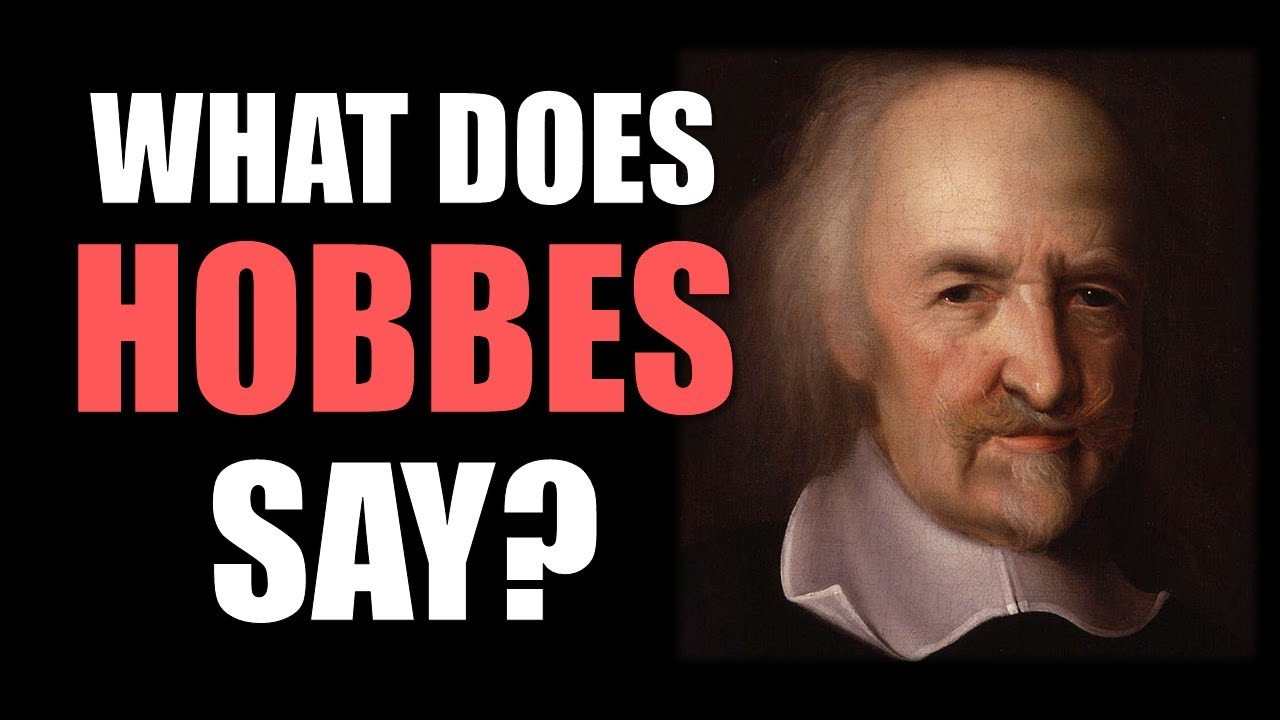
Thomas Hobbes…
wrote about the concept of people having a "social contract" with government.
is well known for saying “I do not agree with a word you say but will defend to the death your right to say it.”
believed people need a powerful absolute monarch to establish and maintain order in society.
believed people have natural rights, including the rights to life, liberty and happiness.



