wayground logo

Free Printable Worksheets

Font size

S
M
L
XL
Worksheets

3rd 9 Weeks Science Review (22)

Total questions: 84

Worksheet time: 1hrs 19mins

Name
Class
Date
1.
Is burning wood a chemical or physical change?
a)
chemical
b)
physical
2.
Is glass breaking a chemical or phyiscal change?
a)
chemical
b)
physical
3.
Is a a rusting bicycle a chemical or physical change?
a)
chemcial
b)
physical
4.
Is melting ice a chemical or physical change?
a)
chemical
b)
physical
5.
Is spoiling food a physical or chemical change?
a)
phyiscal
b)
chemical
6.

Which of the following examples provides evidence of a PHYSICAL change?

a)

Wood is burned and releases ash and smoke

b)

Iron rusts over time

c)

When mixed, baking soda and vinegar form gas bubbles

d)

Boiling water bubbles when heated

7.

Which solution is more concentrated?

Solution 1:

500 mL of water

100 g of salt


Solution 2:

500 mL of water

90 g of salt

a)

Solution 1

b)

Solution 2

c)

They have the same concentration

d)

I have no idea

8.

In order to dilute a solution, you need to

a)

add more of the solid

b)

add more water

c)

find the mass

d)

find the volume

9.

Which solution is more diluted?

Solution 1:

1000 mL of water

60g of salt


Solution 2:

500 mL of water

60 g of salt

a)

Not enough information to tell

b)

Solution 1

c)

Solution 2

d)

They are equally diluted

10.
Which of the following statements is true? 
a)
Balanced forces cause a change in motion. 
b)
Unbalanced forces cause a change in motion. 
c)
Forces do not effect the change in motion. 
11.
If these boys are pulling with the same amount of force.  What will happen?
a)
The boy in blue will win.
b)
They will not move at all.
c)
The boy in red will win.
d)
Both will fall down.
12.

The diagram below show the forces acting on a soccer ball.


In which of the diagrams will the ball remain motionless?

a)

W

b)

X

c)

Y

d)

Z

13.

Which graph could represent a car moving at a constant speed in a forward direction?

a)
b)
c)
d)
14.
Without gravity we would________. 
a)
Float away
b)
Stay in the ground
c)
Nothing would happen.
d)
I don't know
15.
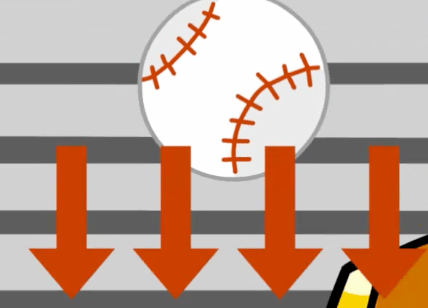
Why a ball falls to the ground?
a)
Earth's force of gravity is GREATER than the ball's, so the ball gets attracted to the ground. 
b)
Earth's force of gravity is LESS than the ball's, so the ball gets attracted to the ground. 
16.

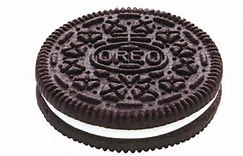
An oreo cookie has a mass of 20 grams. It gets crushed into crumbs for a recipe. What is the mass of the crumbs?

a)

15 grams

b)

25 grams

c)

20 grams

17.

Matter is anything that ---

a)

takes up space and has mass.

b)

is in our universe.

c)

is light, sound or ideas.

18.

The Law of Conservation of Matter states that the total amount of matter _____ after it undergoes change.

a)

disappears

b)

stays the same

c)

weighs less

d)

explodes

19.
If 25 grams of sugar dissolves into 150 grams of water, what is the new weight of the liquid?
a)
125 g
b)
150 g
c)
25 g
d)
175 g
20.

If you put 200 grams of ice into a pitcher with 900 grams of water. Then get distracted and come back later to find that the ice has melted in the water. How many grams of water do you now have in the pitcher?

a)

200 g

b)

700 g

c)

1,100 g

d)

9,200 g

21.

When ice melts, the water has the same _________ as the

a)

temperature

b)

state of matter

c)

shape

d)

mass

22.

15 grams of sugar are dissolved into 300 grams of water. what is the mass of the mixture?

a)

15

b)

315

c)

285

d)

300

23.

250 grams of iron and sand are separated. The mass of the sand is 150 grams. What is the mass of the iron?

a)

is it impossible to determine.

b)

100 grams

c)

150 grams

d)

250 grams

24.

Sarah and Jake were each given a ball of clay that has a mass of 400 grams. Both students used all their clay to make an object. Sarah rolled hers into a ball, and Jake made a long, skinny rope. What is the mass of the clay figures now?

a)

Sarah's weighs more because it is round

b)

Jake's weighs more because it is long

c)

There is no way of knowing

d)

They figures would have equal masses.

25.
Which planet is the largest?
a)
Jupiter
b)
Saturn
c)
Uranus
d)
Neptune
26.
The order of the planets is:
a)
Mars,Venus,Earth,
Mercury,Saturn
Jupiter, Uranus, Neptune
b)
Earth,Venus,Mars
Jupiter, Neptune,
Mercury,Saturn,
Uranus
c)
Mercury,Venus,Earth
Mars,Jupiter,
Saturn,Uranus
Neptune
27.

What planets are IN FRONT OF the asteroid belt?

a)

Inner planets

b)

Outer planets

c)

Both

d)

None

28.

Select all that apply to the GAS GIANTS

a)

They all have rings

b)

They are all made of gas

c)

They have a rocky surface

d)

They are very small

29.

Select all that apply to the ROCKY or TERRESTRIAL planets

a)

They are small

b)

They are made of gas

c)

They have a rocky surface

d)

They are closer to the sun

30.
The motion of a body orbiting another body in space is called _____.
a)
revolution 
b)
period of revolution
c)
rotation
d)
period of rotation
31.
What are the Inner Planets?
a)
Mercury, Mars, Earth, and Venus
b)
Earth, the Moon, Mars
c)
Neptune, Pluto, Earth
d)
:)
32.
Gas giants
a)
Inner planets
b)
Outer planets
c)
Both
d)
Venus
33.
Located between the inner and outer planets.
a)
Sun
b)
Asteroid belt
c)
Uranus
d)
Moons
34.
Solid, rocky surface
a)
Inner planets
b)
Outer planets
c)
Both
d)
Saturn
35.
The spinning of an object on its axis is called______
a)
orbit
b)
rotation
c)
revolution
d)
tide
36.

Stirring the solution increases the rate of dissolution (rate of dissolving).

a)

True

b)

False

37.

The smaller the particle size the faster the rate of dissolution (rate of dissolving).

a)

True

b)

False

38.
Which of the following statements is true about how using smaller salt crystals would affect the rate of making a salt solution in water?
a)
Smaller crystals increase the surface area and slow down dissolving.
b)
Smaller crystals decrease the surface area and speed up dissolving.
c)
Smaller crystals increase the surface area and speed up dissolving.
d)
Smaller crystals decrease the surface area and slow down dissolving.
39.

Which will dissolve faster? Crushed table salt or a cube of table salt. Assume they have an equal mass.

a)

crushed table salt

b)

crystal of table salt

40.

What combination would dissolve a solid solute the fastest?

a)

high temperature, no stirring

b)

no heat, no stirring

c)

sugar cube, no heat

d)

high temperature, stirring

41.

Which of the following actions will NOT

increase the rate of dissolution

(dissolving) for solids?

a)

Stirring the solution

b)

Decreasing the temperature

c)

Increasing the surface area of the

solute

d)

Increasing the temperature

42.

Select the 3 properties that affect the rate of dissolving materials

a)

surface area

b)

volume

c)

temperature

d)

texture

e)

stirring

43.

How does cold water affect the speed of dissolving?

a)

Cold water slows down dissolving.

b)

Cold water speeds up dissolving.

c)

Cold water has no effect on dissolving.

d)

Cold water has no effect on dissolving.

44.

John has three cups of sugar particles. Cup 1 has large sugar particles, Cup 2 has medium-sized particles, and Cup 3 has small sugar particles. If John pours each cup in water, which cup of sugar particles will dissolve the fastest?

a)

Cup 1 will dissolve the fastest.

b)

Cup 2 will dissolve the fastest.

c)

Cup 3 will dissolve the fastest.

d)

They will dissolve at the same rate.

45.
A combination of two or more substances that can be easily separated.
a)
dissolve
b)
mixture
c)
solution
d)
physical property
46.
One or more substances dissolve in another and cannot be easily separated.
a)
mixture
b)
solution
c)
dissolve
d)
solute
47.
If I added 27 grams of salt to water and separated the solution with a hot plate, what amount of salt would be left behind?
a)
20 grams
b)
0 grams
c)
27 grams
d)
10 grams
48.
If you spilled nails in a sandbox, what separation tool/method could you use to clean out the sandbox so it would be safe for children to play in?
a)
Filter
b)
Screen
c)
Magnet
d)
Evaporation
49.
When making fudge on the stove the spoon in the pan becomes very hot.  why?
a)
The Spoon is too short for the pan
b)
A spoon is a poor conductor of heat
c)
A spoon is a good insulator
d)
A spoon is a good conductor of heat
50.
When we put a substance in water and stir it to see if it dissolves we are testing for_______________________.
a)
Relative Density
b)
Solubility
c)
Mass
d)
Temperature
51.
__________ is the ability of an object to float or sink in water
a)
Solubility
b)
Relative Density
c)
Magnetism
d)
Mass
52.
How would you separate a mixture of sand and salt? 
a)
Mix them with water and let the water evaporate
b)
Mix them with water, pour the mixture through a sieve, then let the water evaporate
c)
Heat the sand and salt mixture for 5 minutes, then let it cool
d)
I would not do any of these because none of these options would work
53.

The mixture shown here -

a)

Maintains its physical properties when combined

b)

Dissolves after being stirred together

c)

Will evaporate after a certain period of time

d)

Cannot be separated into ingredients

54.

If I have a mixture of wooden blocks and metal blocks. What is a fast way to separate them?

a)

relative density (put them in water)

b)

filter

c)

sieve

55.

Which answer best shows a mixture that is not a solution?

a)
b)
c)
d)
56.

Which tools are best for separating a mixture of sand, iron filings, and water?

a)

hot plate and filter

b)

tweezers and filter

c)

filter and magnet

d)

magnet and hot plate

57.

This is an example of a

a)

Solution

b)

Mixture

58.

Which of the following materials will sink?

a)

coin

b)

slippers

c)

paper clip

d)

beach ball

59.

Why does oil float when pour into the water?

a)

Oil is more dense than the water.

b)

Oil is less dense than the water.

c)

Oil has equal density with water.

d)

Both oil and water has no density.

60.

Why do some things float on the water?

a)

because it has no weight.

b)

because it has no mass.

c)

because it has no volume.

d)

because it is less dense.

61.
The water is ______ dense than the boat
a)
more
b)
less
62.

Rocks sink because they are

a)

the same density as the water

b)

less dense than the water

c)

more dense than the water

d)

because they're round

63.

Why does the egg not sink or float?

a)

it is more dense than the water

b)

it is less dense than the water

c)

it has the same density as the water

d)

it is light

64.

What is the name of the moon phase in the diagram?

a)

1st Quarter Moon

b)

3rd Quarter Moon

65.

What is the name of the moon phase at #5

a)

New Moon

b)

Full Moon

66.
What are most likely the date of the full moons? (Hint 14 days later)
a)
February 5, March 7, April 5, May 4
b)
February 15, March 17, April 15, May 14
c)
February 25, March 27, April 25, May 24
d)
February 29, March 31, April 29, May 28
67.
Name the phase of the moon that comes BEFORE this moon phase.
a)
waxing gibbous
b)
waning gibbous
c)
waning crescent
d)
waxing crescent
68.
What moon phase comes next?
a)
New Moon
b)
First Quarter
c)
Full Moon
d)
Third Quarter
69.
Approximately how many days will it take for this moon phase to appear again?
a)
3-4 days
b)
6-7 days
c)
13-14 days
d)
27-28 days
70.
What moon phase is seen three weeks before a new moon?
a)
First Quarter
b)
Full Moon
c)
Last Quarter
d)
New Moon
71.
Longest day of the year
a)
Autumnal Equinox
b)
Summer Solstice 
c)
Winter Solstice
d)
Vernal Equinox
72.
If its ____ in the Northern hemisphere, then its fall in the Southern hemisphere. 
a)
spring
b)
summer
c)
fall
d)
winter
73.
Which of the following best describes the tilt of the earth when it is summer in the southern hemisphere?
a)
The northern hemisphere is tilted toward the sun
b)
The northern hemisphere is tilted away from the sun
c)
The norther hemisphere is tilted neither toward or away from the sun
d)
Why are you talking about the northern hemisphere when you asked about the southern hemisphere?
74.
Which season is taking place in the Northern Hemisphere in Position 1?
a)
Winter
b)
Spring
c)
Summer
d)
Fall
75.
Which season is taking place in the Northern Hemisphere in Position 3?
a)
Winter
b)
Spring
c)
Summer
d)
Fall
76.
What are the reasons for the season?
a)
Earth's tilt & rotation
b)
Earth's tilt & revolution
c)
Earth's rotation & size
d)
Earth's tilt & resolution
77.

The sun APPEARS to move across the sky, during the day. Which of the following causes shadows to change length throughout the day?

a)

earth's rotation

b)

earth's revolution

c)

sun's revolution

d)

earth's orbit

78.

Earth's rotation causes the day and night cycle. It also causes-

a)

the sun appear to move

b)

the sun remain in orbit

c)

the sun orbit earth

d)

all of the above

79.

Earth revolves around the sun, but it also makes one complete rotation. How long does it take Earth to make one complete rotation on its axis?

a)

365 days

b)

1 month

c)

1 day

d)

1 week

80.

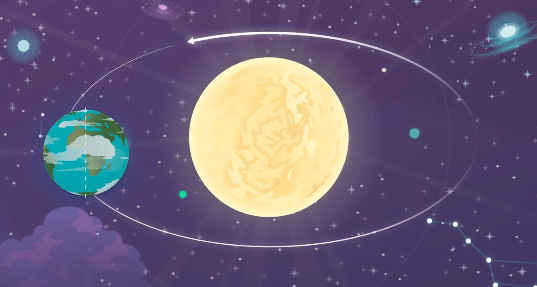
How long does it take for the Earth to make one full revolution around the Sun?

a)

one day

b)

one week

c)

one month

d)

one year

81.

In this diagram, the motion of the yellow satellite can best be described as -

a)

Rotation

b)

Revolution

82.

The time it takes Earth to rotate; 24 hours

a)

Revolution

b)

Day

c)

Axis

d)

Rotation

83.
Earth has seasons because 
a)
Earth rotates on it's axis
b)
The distance between Earth and the sun changes
c)
The temperature of the sun changes
d)
Earth's axis is tilted as it moves around the sun
84.
Earth is tilted as it revolves around the sun which gives us seasons. Which season would it be in North America at letter D?
a)
Summer
b)
Spring
c)
Winter
d)
Fall