
 Worksheets
HAP U1-4 Test Review
Total questions: 55
Worksheet time: 55mins
Not having direct blood flow classifies a tissue as
Vascular
Avascular
Regnerative
Amitotic
Where is epithelial tissue found?
in/on glands
covering body surfaces
lining hollow organs
all of the above
Which of the following locations would be LEAST LIKELY to contain epithelial tissue?
the lining of the bladder
the skin on your elbow
the inside of sweat glands
the ligaments that hold the knee together


The study of cells
cytology
biology
microscopy
anatomy
What is the name of the macromolecule that makes up the majority of the cell membrane?
Lipid
Carbohydrate
Nucleic acid
Protein
"water fearing"
Hydroloric
Hydroelectric
Hydrophilic
Hydrophobic
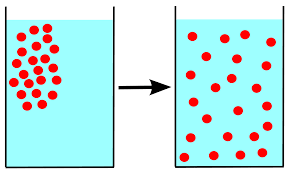
A person should never drink very salty water because their cells could
shrink
expand
A person would never have pure water put into their veins in a hospital because their blood cells would...
Shrink/Dehydrate
Expand/Burst
The movement of molecules against a concentration gradient
simple diffusion
facilitated diffusion
active transport
osmosis
Diffusion & Facilitated Diffusion are both __________ transport.
Passive
Active
Easy
Free
What is a difference between diffusion and facilitated diffusion?
movement of particles from [high] to [low]
a protein "helper"
movement of particles from [low] to [high]
energy

The study of structures of the human body is known as
anatomy
physiology
biology
science
The study of functions of the human body is known as
anatomy
physiology
biology
science
Measuring the acid content of the stomach would relate more closely to
anatomy
physiology
Using principles of Chemistry to study the human body would relate more closely to
anatomy
physiology
Studying dead specimens would relate more closely to
anatomy
physiology
The head is _________________ to the navel.
anterior
posterior
superior
inferior
The navel is _________________ to the head.
anterior
posterior
superior
inferior
The ears are_________________ to the nose.
medial
lateral
superficial
deep
The spine is _________________ to the navel.
anterior
posterior
superior
inferior
The skin is _________________ to the muscles.
ventral
dorsal
superficial
deep
The ankle is _________________ to the knee.
superior
inferior
proximal
distal
Which of the following does NOT indicate the standard anatomical position?
palms facing forward
standing up
feet slightly apart
arms flexed at the elbows
This plane divides the body into even left and right halves.
midsagittal plane
frontal plane
transverse plane
parasagittal plane
ear
cervical
buccal
mental
otic
orbital
groin
inguinal
femoral
crural
sural
pedal
foot
inguinal
femoral
crural
sural
pedal
armpit
axillary
brachial
antebrachial
antecubital
carpal
wrist
axillary
brachial
antebrachial
antecubital
carpal
above the buttocks
coxal
sacral
gluteal
pubic
The pigment that gives skin its color. It is found in the epidermis.
Melanin
Sebum
Perspiration
Langerhans cells
Goosebumps are caused by contractions of the ______ muscle
Arrector pili
Apocrine
Eccrine
Sebaceous
In which layer of the epidermis does cell division occur?
stratum lucidum
stratum basale
stratum granulosum
stratum corneum
The clear layer only present in certain thickened areas of the skin is called:
Stratum granulosum
Stratum spinosum
Stratum corneum
Stratum lucidum
What is a thermoreceptor?
Responds to body position
Responds to changes in temperature
Responds to physical forces including touch and pressure
Responds to squirrels running outside
Which layer of the dermis contains pain and touch receptors and epidermal ridges?
papillary
reticular
collagen
adipose
Glands located throughout the body that secrete sweat directly onto the skin's surface, which helps control body temperature
Eccrine glands
Apocrine glands
Ceruminous gland
Sebaceous gland
A sheath of epideris surrounding each hair
Hair follicle
Keratin
Melanin
Stratum basale
A tough, fibrous protein that provides structureal strength to the skin hair and nails
Melanin
Keratin
Dermis
Insulin
Glands that secrete an oily substance called sebum into each hair follicle
Sebaceous gland
Apocrine gland
Eccrine gland
Ceruminous gland

