wayground logo

Free Printable Worksheets

Font size

S
M
L
XL
Worksheets

Quiz: Aseptic Technique

Total questions: 28

Worksheet time: 14mins

Name
Class
Date
1.
When streaking a plate, the loop should be flamed
a)
At the beginning and end 
b)

 At the beginning and end and between the first 2 quadrants

c)

At the beginning and end and between the second and third quadrants 

d)

At the beginning and end and between each quadrants 

2.

What is the first thing you should do during aseptic culture transfer technique?

a)

put on gloves

b)

wash your hands

c)

sterilize your workspace

3.

Which one of the following is the most appropriate disinfectant for cleaning the work area (Laminar Flow Cabinet)?

a)

saline

b)

water

c)

>70% ethanol

d)

bleach

4.

Why is it important that the Petri plates are incubated upside down?

a)

To get dense colonies

b)

To get mat culture

c)

To get colonies with reduced growth

d)

To prevent moisture from condensing onto the agar surface

5.

Name the instrument and its purpose.

(a)  

6.

What is Subculturing?

(a)  

7.
The purpose of streaking a plate is to obtain 
a)
large quantities of bacteria
b)

pure isolated colonies

8.
Plates should be incubated
a)
agar side up
b)
agar side down 
c)
it doesn't matter
9.
The bacteriology loop should be sterilized in what part of the Bunsen burner flame? 
a)
in the bright blue cone
b)
just above the bright blue cone
c)
above the flame
d)
at the base of the flame
10.
What is the last thing you should do?
a)
take off your gloves
b)
wash your hands
c)
sterilize your workspace
11.

What is the bunsen burner used for?

a)

Nutrients for bacteria

b)

Sterilising equipment

c)

Collecting/spreading bacteria

d)

Stopping contamination

12.

What is the agar used for?

a)

Nutrients for bacteria

b)

Sterilising equipment

c)

Collecting/spreading bacteria

d)

Stopping contamination

13.

An investigator placed paper discs containing different concentrations of an antibiotic onto a culture of bacteria in a petri dish.

After an incubation period of two days, the dish looked like this.


Explain why there are areas around some of the paper discs where no bacteria are growing.

4 lines
14.
What do we call this piece of equipment?
a)
petri dish
b)
agar plate
c)
petri plate
d)
agar dish
15.
In an investigation to see the effects of antiobiotics on bacterial growth, what would you expect to happen to the clear zone around the antibiotic disc, as the concentration of the antibiotic was increased?
a)
the area of the clear space would increase
b)
the area of the clear space would decrease
c)
there would be no difference in the size of the clear area
d)
there would be no clear area
16.
What do we call the technique used during experiments that ensures no other microoganisms contaminate the results?
a)
aseptic
b)
antiseptic
c)
hygienic
d)
antibiotic
17.
Which of these is not part of an aseptic technique?
a)
all of these are aseptic techniques
b)
using sterile equipment to transfer bacteria
c)
flaming the neck of bottles of bacterial culture
d)
wiping the work area with disinfectant
18.

What do we call substances used to kill microorganisms on the surface of the body?
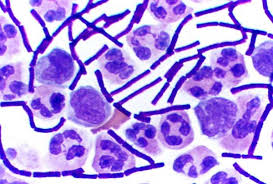
a)
antiseptics
b)
antibiotics
c)
antigens
d)
disinfectants
19.
Which of the following is not the gowning aproches
a)
Top down
b)
bottom up
c)
inside out
d)
top out
20.
Which part of a bacteria cell wall "holds" the stain? 
a)
plasma membrane
b)
fimbriae
c)
peptidoglycan
d)
pilus
21.
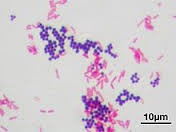
These bacteria are
a)
gram positive
b)
gram negative
c)
nonliving
d)
viral
22.
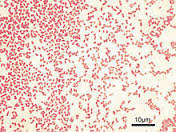
These bacteria are
a)
nonliving
b)
gram positive
c)
gram negative
d)
gram positive and gram negative
23.
These bacteria are
a)
gram positive and negative
b)
gram positive
c)
gram negative
d)
viral
24.

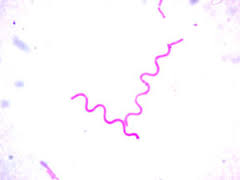
Which bacterial shape is the photo?

a)
coccus
b)
bacillus
c)
spirilla
d)
none of these
25.

Which bacterial shape is the photo?

a)
coccus
b)
bacillus
c)
spirilla
d)
none of these
26.
Which is applied first in gram staining?
a)
alcohol
b)
grams iodine
c)
crystal violet
d)
safranin
27.
Which is applied last in gram staining?
a)
alcohol
b)
crystal violet
c)
safranin
d)
grams iodine
28.

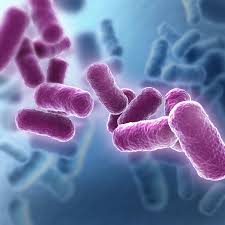
Which bacterial shape is the photo?

a)
coccus
b)
bacillus
c)
spirilla
d)
none of these