Wayground logo

Free Printable Worksheets

Font size

S
M
L
XL
Worksheets

Weathering and Erosion Review

Total questions: 50

Worksheet time: 25mins

Name
Class
Date
1.
Which of the following is NOT a type of chemical weathering?
a)
water
b)
carbon dioxide
c)
ice wedging
d)
living organisms secreting acid to break down rocks
2.
What is weathering?
a)
The process by which
water, ice, wind or gravity
moves fragments of rock
and soil.
b)
The process by which
water, ice, wind or gravity
deposit rock sediments
and soil in a new place.
c)
The breaking down of
Earth’s crust into smaller
and smaller pieces.
3.
What is erosion?
a)
The process by which
water, ice, wind or gravity
moves fragments of rock
and soil.
b)
The process by which
water, ice, wind or gravity
deposit rock sediments
and soil in a new place.
c)
The breaking down of
Earth’s crust into smaller
and smaller pieces.
4.
Which of the following is NOT a type of physical weathering?
a)
burrowing plants
b)
ice wedging
c)
plant roots
d)
acid rain
5.
What are the two factors that affect the rate at which weathering occurs?
a)
climate and mass of rock
b)
climate and size of rock
c)
type of rock and size of rock
d)
type of rock and climate
6.
Which of the following is an example of mechanical weathering?
a)
Acidic groundwater dissolving limestone
b)
frost wedging
c)
Paper being burned
7.
The diagrams  shows a natural process that weathers rock.
 Which statement best explains why this process results in weathering?
a)
frozen water acts as a solute
b)
water expands when it freezes
c)
the mass of water increases when it freezes
d)
frozen water dissolves most types of rock
8.
What is mechanical weathering?
a)
Process through which rocks are physically broken into smaller pieces.
b)
Rocks are broken down through chemical changes.
c)
Rocks are worn away from acid in plant roots.
d)
Rocks broken down by machinery.
9.
The process that breaks down rocks and other materials on Earth's surface is called
a)
weathering
b)
erosion
c)
soil conservation
d)
decomposition
10.
Which type of climate will have faster chemical weathering?
a)
Hot and Wet
b)
Cold and Dry
c)
Hot and Cold
d)
Cold and Wet
11.
How do plants weather rocks?
a)
during photosynthesis
b)
when roots grow into cracks of rocks and expand the rock
c)
when the plant moves water from the roots to the leaves
12.

The breakdown of rock into smaller pieces because of wind, water, or ice

a)

Erosion

b)

Weathering

c)

Lava

d)

Landslide

13.

Moving sediment from one place to another

a)

Weathering

b)

Deposition

c)

Erosion

d)

Earthquake

14.

The dropping off of sediments in a new place.

a)

Weathering

b)

Erosion

c)

Deposition

d)

Volcano

15.

The process that changes the minerals that rocks are made of. This is a type of weathering

a)

Physical Weathering

b)

Erosion

c)

Chemical Weathering

d)

Breaking Rocks

16.

The breaking down of rocks caused by physical force

a)

Chemical Weathering

b)

Physical Weathering

c)

Explosion

17.

A rapid landform change in which a large chunk of earth falls from its original position.

a)

Volcano

b)

Landslide

c)

Sand Dune

d)

Earthquake

18.

What is weathering?

a)

A process that breaks down rocks into smaller pieces

b)

A shift in weather patterns

c)

The process by which mountains are formed

d)

The process by which the seasons change

19.

What might cause mechanical weathering?

a)

Acid rain

b)

Violent earthquakes

c)

Growing plants and expanding ice

d)

Volcanic eruptions

20.

How long does the weathering process take?

a)

A few days

b)

No more than a month

c)

Exactly one year

d)

Years and years

21.

What type of changes does erosion cause?

a)

Physical changes

b)

Chemical changes

c)

Electrical changes

d)

Magnetic changes

22.

Erosion occurs when natural forces alter the landscape. What does it mean to alter a landscape?

a)

To blow dust around

b)

To change what land looks like

c)

To deposit silt at the mouth of a river

d)

To create a floodplain

23.

What would be a simple way to prevent erosion?

a)

Blocking the wind

b)

Planting trees

c)

Preventing rainfall

d)

Preventing the flow of rivers

24.
When rocks are broken down into smaller pieces
a)
erosion
b)
weathering
c)
sediment
25.

Soil is a mixture of the following except

a)

weathered rock particles

b)

dead plant material

c)

garbage

d)

dead animal material

26.

Water, wind, gravity, ice, plants are all part of this kind of weathering

a)

Chemical

b)

Mechanical

27.
Roots break apart a side walk
a)
Chemical weathering
b)
Physical weathering
28.
Carbon dioxide in rainwater dissolves limestone
a)
Chemical weathering
b)
Mechanical weathering
29.
Rain washing away soil from a hillside
a)
Weathering
b)
Erosion
30.
Water getting into cracks, freezing, and breaking the rocks or pavement apart
a)
Weathering
b)
Erosion
31.
Wind blowing sand from one location to another
a)
Weathering
b)
Erosion
32.
Flood waters moving soil from one location to another
a)
Weathering
b)
Erosion
33.
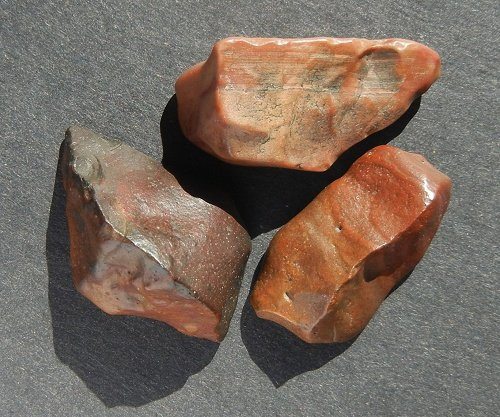
These rocks were made smooth by wind blowing smaller rock particles across their surface.  This is an example of:
a)
ice wedging
b)
chemical weathering
c)
acid rain
d)
abrasion
34.
These rocks were broken apart from the continuous freeze/thaw of water in the cracks of the rocks. This is an example of:
a)
ice wedging
b)
acid rain
c)
permeability
d)
abrasion
35.
What type of erosion causes landslides
a)
wind
b)
waves
c)
water
d)
gravity
36.
The process by which rocks are broken down chemically or physically is known as:
a)
Weathering
b)
Erosion
c)
Deposition
d)
Transportation
37.
When wind, water, or ice leave materials in a location, this is known as:
a)
Weathering
b)
Erosion
c)
Deposition
d)
Transportation
38.
A hot wet climate causes weathering to take place -
a)
slowly
b)
rapidly
c)
unevenly
d)
at the same rate as when the climate is dry and cool
39.
The most important factors in determining the rate of weathering are - 
a)
carbon dioxide and acid rain
b)
abrasion and acids from plant roots
c)
animal actions and oxygen
d)
rock type and climate
40.
What at 4 types of mass movement?
a)
compaction, cementation, heat, and pressure
b)
mudflow, slump, creep, landslide
c)
abrasion, animal action, acid rain, ice wedging
d)
oxidation, living organisms, tree roots, human activity
41.
What is the difference between weathering and erosion?
a)
Deposition breaks rocks down, weathering carries sediment away
b)
Weathering breaks rock down and erosion moves it
42.
What are the agents of erosion?
a)
oxidation, acid rain, abrasion, root rust, root pry, abrasion
b)
deflation and depostion
c)
water, wind, ice, gravity
43.
__________________occurs when materials containing iron are exposed to oxygen and water.
a)
Erosion
b)
Root pry
c)
Ice wedging
d)
Oxidation
44.
3 types of physical weathering
a)
1.       tree roots, ice wedging, burrowing animals, abrasion, human activity, waves
b)
oxidation, acid rain, lichen
c)
carbonic acid, water, deposition
45.
the breakdown of rock into smaller pieces of the same rock without any change in its composition
a)
mechanical weathering
b)
chemical weathering
c)
erosion
d)
deposition
46.
the process by which layers or sheets of rock gradually break off
a)
exfoliation
b)
abrasion
c)
erosion
d)
deposition
47.
the expansion of desert conditions in areas where the natural plant cover has been destroyed
a)
desertification
b)
exfoliation
c)
abrasion
d)
erosion
48.
animals break up the ground by burrowing
a)
mechanical weathering
b)
chemical weathering
c)
erosion
d)
deposition
49.
carbon dioxide dissolves in water then weathers marble and limestone
a)
chemical weathering
b)
mechanical weathering
c)
erosion
d)
deposition
50.
the part of the erosion process in which sediment travels to a new location and is laid down or dropped off
a)
chemical weathering
b)
mechanical weathering
c)
erosion
d)
deposition