wayground logo

Free Printable Worksheets

Font size

S
M
L
XL
Worksheets

Reaction Rates Practice

Total questions: 35

Worksheet time: 25mins
Name
Class
Date
1.
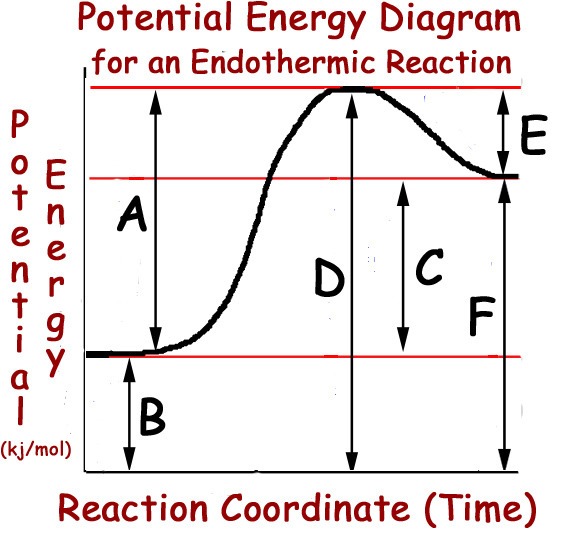
What type of reaction is this?
a)
Endothermic
b)
Exothermic
2.
What letter represents the activation energy?
a)
A
b)
B
c)
C
d)
D
3.
Activation energy is required to start a chemical reaction. What is activation energy?
a)
The energy needed for a reaction to occur
b)
The minimum amount of energy needed for a reaction to potentially occur
c)
The energy added by a catalyst
d)
The energy possessed by the products
4.
Increase in temperature of the reactants can do one of the following
a)
Slow collision frequency
b)
Allow less effective collision between the particles
c)
Cause particles to lose speed
d)
Increase collision between the particles thus increasing the rate.
5.
Grinding a seltzer tablet into powder increases the rate of reaction due to increased
a)
concentration
b)
surface area
c)
temperature
d)
reactants
6.
Which factors increase the rate of a reaction.
a)
increasing temperature
b)
increasing concentration
c)
increasing surface area
d)
all of these
7.
A ______________ is a substance that increases the rate of a reaction without being used up during the reaction. 
a)
catalyst
b)
product
c)
reactant
d)
solute
8.
Smaller particle size allows for a _________ surface area to be exposed for the reaction.
a)
larger
b)
smaller
9.
Exothermic reactions release heat to the surroundings.
a)
true
b)
false
10.
Increasing the concentration of the reactants will slow down the reaction.
a)
false 
b)
true
11.
In an endothermic reaction the products have 
a)
more energy than the reactants
b)
less energy than the reactants
c)
the same energy as the reactants
d)
no energy
12.
In an exothermic reaction the products have
a)
more energy than the reactants
b)
the same energy as the reactants
c)
less energy than the reactants
d)
no energy
13.
C represents
a)
energy absorbed
b)
energy released
c)
activation energy
14.
Why does a higher temperature increase the rate of a reaction?
a)
it increases both the frequency and energy of particle collisions
b)
it only increases the frequency of particle collisions
c)
it only increases the energy of particle collisions
d)
it reduces the activation energy of the reaction
15.
Why does a higher concentration increase the rate of reaction?
a)
it increases the amount of reactants
b)
it lowers the activation energy
c)
it increases the energy of particle collisions
d)
it increases the frequency of particle collisions because there are more collision sites
16.
Which of these will NOT speed up the rate of reaction between a strip of magnesium and hydrochloric acid?
a)
tightly coil up the strip of magnesium
b)
cut up the strip of magnesium
c)
increase the concentration of the hydrocholoric acid
d)
increase the temperature of the hydrocholoric acid
17.
Products will form faster if____________
a)
the particle size of the reactants are larger.
b)
temperature is decreased.
c)
concentration of the reactants are increased.
d)
the reaction is not stirred.
18.
Explosions can happen when there is a large amount of powdered substance because of a large
a)
temperature
b)
surface area
c)
concentration
d)
pressure
19.
Exothermic reactions...
a)
Absorb energy
b)
Release energy
c)
Release Color
d)
Absorb Color
20.

Adding a catalyst ___________ the activation energy.

a)

Raises

b)

Lowers

c)

Doesn't affect

d)

Inreases

21.

The minimum amount of energy needed for colliding particles to react is called

a)

Chemical Energy

b)

Kinetic Energy

c)

Activation Energy

d)

Potential Energy

22.
Why don't all collisions between particles cause a reaction?
a)
the particles also need to collide with a catalyst
b)
not all the particles collide with enough energy
c)
not all the particles collide at a high enough temperature
d)
the particles need to collide with each other twice
23.

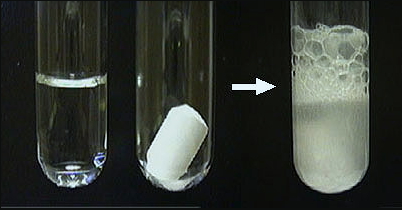
How could we make this reaction happen more quickly?

a)

Decrease the concentration of the acid

b)

crush the chalk to increase the surface area

c)

Put the test tube in an ice bath

24.

The major theory of reaction rate is called

a)

Collision theory

b)

Crash theory

c)

Newton's laws

d)

Thermodynamics

25.
The following graph shows two different reaction pathways for the same overall reaction at the same temperature. Which pathway is slower and why?
a)
Red, because the activation energy is larger
b)
Blue, because the activation energy is lower
c)
both reaction progress at the same rate
26.
What does NOT happen when the temperature is increased?
a)
Particles collide more often
b)
Particles collide with more energy
c)
Particles move faster
d)
More particles collide in the correct orientation
27.
What makes an effective collision?
a)
When molecules collide.
b)
When molecules collide with the proper orientation.
c)
When molecules collide with proper orientation and enough kinetic energy.
d)
High Temperature.
28.
What is the rate of reaction?
a)
How fast a reaction is 
b)
How big a reaction is
c)
How loud a reaction is
d)
How much gas a reaction produces
29.
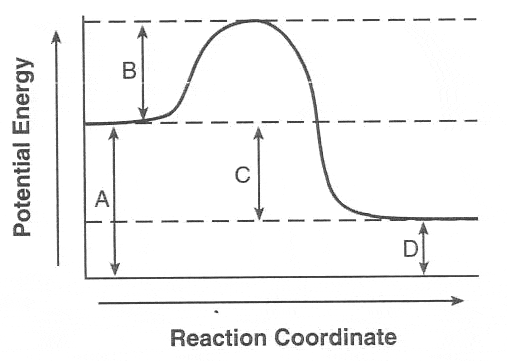
Which letter corresponds to the activation energy of the forward reaction?
a)
A
b)
B
c)
C
d)
D
30.

List four factors that affects the rate of a reaction

a)

temperature

b)

concentration

c)

surface area

d)

volume

e)

catalysts

31.

The ______________is required to break the bonds of the reactants.

a)

Carbonic energy

b)

Activation energy

c)

Plutonic energy

d)

Energi Gaib

32.
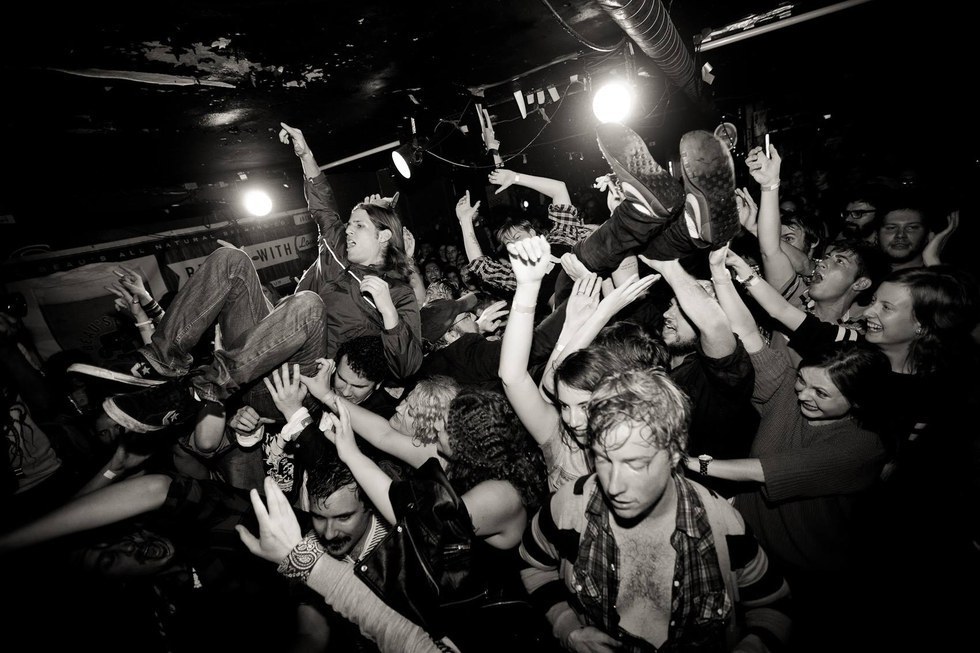
You add more bodies into a "mosh pit" to hope for more collisions.  You have increased-
a)
temperature
b)
concentration
c)
pressure
d)
catalyst
33.

When surface area is decreased the rate of reaction...

a)

Decreases, because there are LESS possible sites for correct collisions

b)

Increases, because there are LESS possible sites for correct collisions

c)

Decreases, because there are MORE possible sites for correct collisions

d)

Increases, because there are MORE possible sites for correct collisions

34.

Which of the following would increase the number of collisions that occur? Choose all that apply.

a)

Increase Surface Area

b)

Decrease Concentration

c)

Increase Temperature

d)

Increase Volume

35.

A Catalyst speeds up a reaction, where a ___________ slows down the reaction.

a)

Inhibitor

b)

De-Catalyst

c)

Fractioning Tower

d)

Burett