
 Worksheets
Evolution and Natural Selection
Total questions: 41
Worksheet time: 29mins
Why are advantageous traits more likely to be passed onto offspring?
Because they are more likely to survive and reproduce.
Because they come from dominant alleles.
Because they come from recessive alleles.
Because the organism knew it needed that trait, survives, and passes it on.
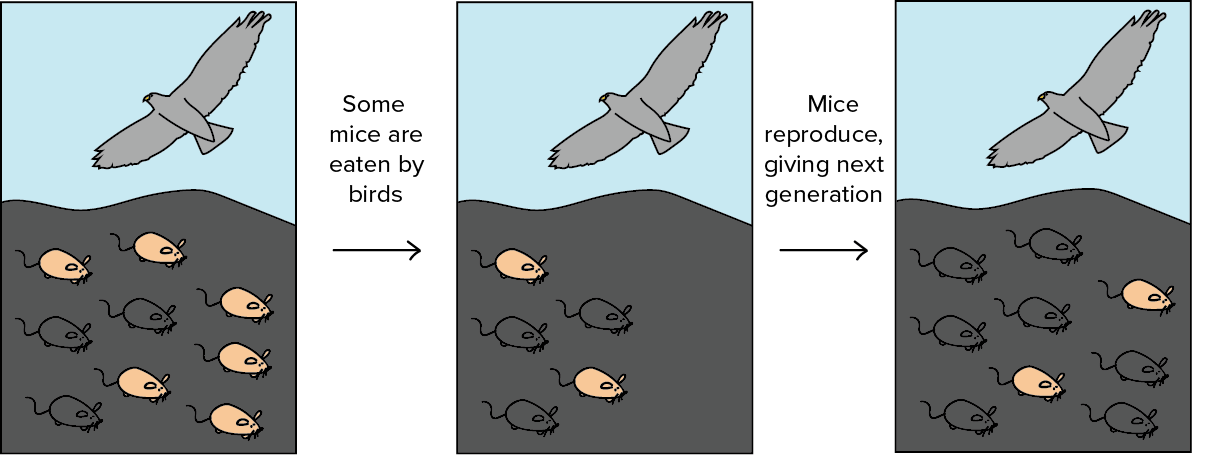

"Organisms that are better adapted to the environment survive to pass traits to their offspring" is the definition of
Natural Selection
Evolution
Selective Breeding
Artificial Selection

All rabbits of the same species living in a particular area would be an example of a(n)
population
species
community
ecosystem
Why is competition important for natural selection?
It shows which variations are more successful, allowing the organisms with those variations to survive.
It causes organisms, regardless of which traits they have, to die out, reducing the population size.
It causes organisms to get stronger due to having to outcompete other species.
Competition is not important for natural selection.
Adaptations can be:
camouflage
ability to survive cold weather
hunting skills
all of the above

What is most likely to happen to moth populations in the picture shown?
Light moths--hunted easily, dark moths--population increase
Dark moths--hunted easily, dark moths--population increase
Light moths--hunted easily, light moths--population increase
Lights moths will change their color to match dark moths.
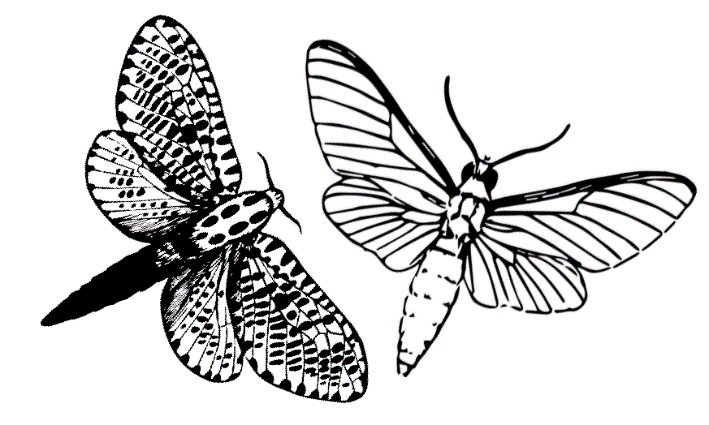
According to natural selection, light colored tree trunks would favor
light colored moths
dark colored moths
red colored moths
red and light colored moths
Change in a population over time that descend from a common ancestor.
Natural Selection
Selective Breeding
Homeostasis
Evolution
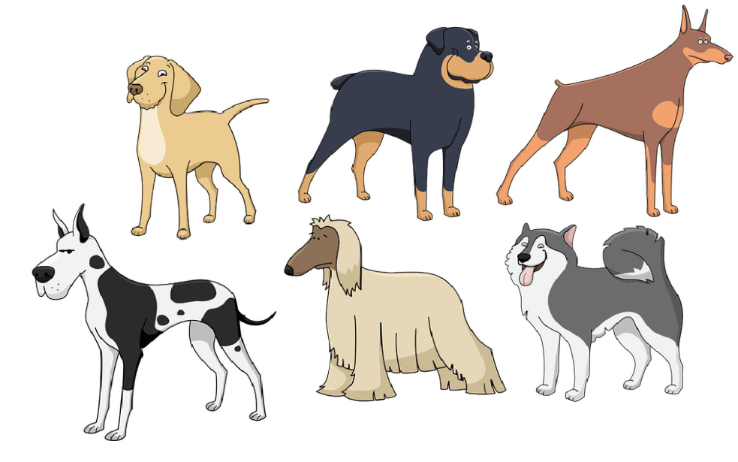
Genetic diversity in a species makes long term survival of some members
impossible
improvable
more likely
less likely
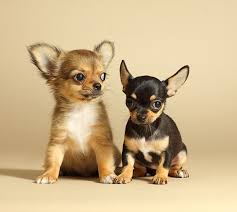
Why might it be helpful for a species to have a lot of variations?
They can't be seen by predators
If the environment changes, they might be better able to adapt
It is helpful in asexual reproduction
They don't recognize each other
Humans selecting which traits are preferred in an organism, and then intentionally breeding organisms for those particular sets of characteristics is known as
natural selection
artificial selection
adaptations
macroevolution
Which statement is true comparing natural selection and artificial selection?
In natural selection, traits benefit humans and in artificial selection, the traits benefit the species
In natural selection, traits benefit the species and in artificial selection, the traits benefit humans
In natural and artificial selection, the process takes hundreds of years to occur
In natural and artificial selection, nature determines what traits will be passed down to offspring.
What adaptation prevented moths from being eaten by birds?
camouflage coloring
fast flying
long necks
bright colors
What happened when the trees turned dark color?
Moths that were light color survived and reproduced successfully
Moths that were dark color survived and reproduced successfully
Moths that were light color turned dark color to hide
Moths went extinct because they were all light color and got eaten
What selecting factor was responsible for the less fit moths dying?
Birds that hunt by sight
Different colored trees
Different colored moths
Industrial revolution
Evolution of peppered moth color happened because of the process of_____
Selective breeding
Artificial Selection
Inheritance of Acquired Traits
Natural Selection

All of these finches have different shaped beaks. They are an adaptation to gain access to
Water
Food
Shelter

The different finch beaks shown in this picture are adapted for
different colors
different food
different mating rituals
different nesting sites

Galapagos finches most likely evolved from
several other bird species
a single common ancestor
a European ancestor
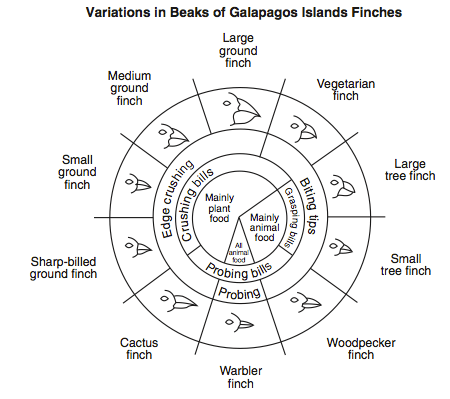
Which two finches would compete the least for food?
Different finch species have beaks of different shapes and sizes. These different beak structures are evidence of:
different finch species adapting to different environments over many generations.
different finch species with different beak structures coming to the Galápagos Islands from the mainland.
different finch populations being evolutionarily related.
individual birds changing their beak characteristics so that they could feed efficiently.
Which is the most likely explanation for the presence of 13 different finch species on the Galápagos Islands today?
Many years ago, several different species of birds migrated to the islands and the 13 finch species that currently live there are the only species that survived.
Many years ago, a small population of a single bird species migrated to the islands and evolved into the 13 species that live on the islands today.
Each of the 13 species has migrated to the islands at different times over the years.
A single bird species migrated to one island at around the time of Charles Darwin’s voyage to the Galápagos and then migrated to all 13 islands.

Which feature of the finches helped support Darwin's theory of Natural Selection?
Finches had different beak shapes to suit their food source
Finches had unusual reproductive behavior
Finches changed features during their lifetime
Finches were able to survive from predator attacks
Galapagos finch species are genetically similar enough that they could produce offspring; they do not interbreed though. Which of the following is one of reasons that these finches don't interbreed?
They have different mating songs that the different species don't recognize.
Each species lives so far away from the other species that they never come into contact
Each species mates at a different time of the year.
The different species are physiologically incompatible so mating is physically impossible.

