
 Worksheets
Western Expansion Final Test Quizziz (study tool)
Total questions: 146
Worksheet time: 2hrs 14mins
In 1830, President ____________________ pushed the Indian Removal Act through Congress
John Quincy Adams
Henry Clay
Andrew Jackson
James Madison
The Indian Removal Act led to the event known in history as....
The Trail of Tears
The trail of Death
Battle of Little Bighorn
Transcontinental Railroad
What river did Lewis and Clark travel on for the majority of the journey?
Mississippi River
Clark River
Columbia River
Missouri River
Which Shoshone Indian joined the group as a guide and interpreter?
Pocahontas
Nantucket
Black Kettle
Sacagawea
What land purchase in 1803 doubled the size of the United States?
Sacagawea
the Pacific Ocean
the Missouri River
the Louisiana Purchase
Which statements accurately describe: Zebulon Pike
Led two expeditions. Brought back information about the Great Plains and the Rocky Mountains. Mapped part of the Rio Grande and explored what is now northern Mexico and southern Texas.
Was enslaved to Clark. Was very interesting to the Native Americans because they had never seen an African American before. Was good at cooking, fishing, and hunting.
Interpreter between the Native Americans and the explorers. Negotiated the purchase of horses. Identified edible plants. Eased tensions between the explorers and Native Americans.

To attract people to California, the Mexican government offered land grants. Land grants are
gifts of land.
money to buy things.
gifts of houses.
money for cattle.

What is a rancho?
A rancho is a ranch with geese.
A rancho is a ranch for cattle.
A rancho is a ranch for trees.
A rancho is a ranch for growing vegetables.
Which of the following received most of the land grants in California?
Californio women
Californio men
California Indians
settlers from the United States

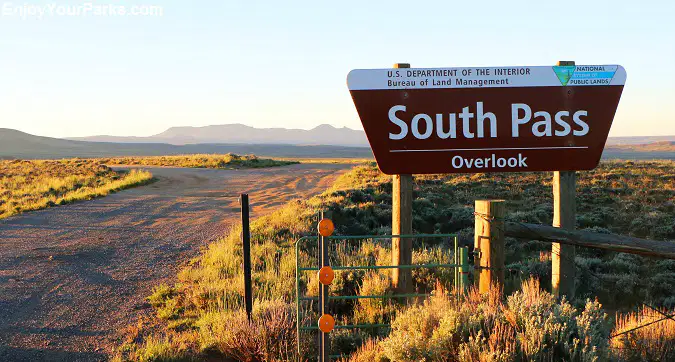
What mountains did the mountain men make a passageway through
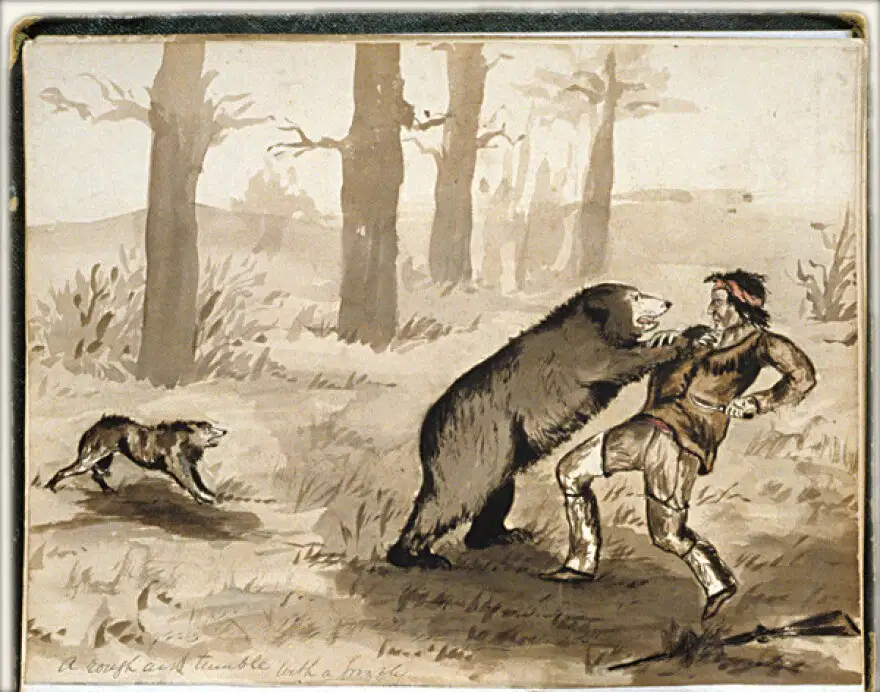
Who was the mountain man who got his ear ripped off by a bear?
American Indians often guided the trappers and traded with them.
True
False
What is a missionary?
Someone that goes on missions
A pilot
Someone that goes on adventures
Someone that brings religion to a people or place
Marcus and Narcissa Whitman went on the Oregon Country to...
teach the fur trappers about Christianity
teach the Native Americans about Christianity
build a mission at Fort Astoria
help the Makah find more efficient ways to hunt grey whales
What were the main causes of death on the Oregon Trail?
Indians and sickness
Accidents and dust
Mud and Mountains
Sickness and Accidents
This person tried to serve the Cayuse Indians in Oregon with his wife.
William Becknell
John Jacob Astor
Marcus Whitman
Narcissa Whitman
These people were the fur trappers of the Northwest, who would become legendary.
Mountain Men
Missionaries
Fur Traders
Frontiersmen
Who were the first white easterners to build permanent homes in Oregon?
Missionaries
Fur Traders
Merchants
Explorers
How did pioneers on the Oregon Trail protect themselves on the dangerous journey?
They brought more weapons than food
They banded together for mutual protection
They only traveled at night to stay out of sight
They traded with the Native Americans for protection
Why did pioneers lighten the load on their trip out west?
Because they needed more room for goods they picked up along the way
Because they didn't think their new homes could fit all their things
Because the horses and oxen would get tired quickly
Because they needed to be faster to avoid attacks
A line of wagons traveling as a group.
Prairie Schooner
Wagon Train
Pioneers
Oregon Trail
This type of wagon was designed for the strenuous journey. It had a covering, large wheels, and the bed could float like a boat.
Prairie Schooner
Wagon Train
Pioneers
Oregon Trail
The Mormon leader who led 150 Mormons west from Illinois to the Great Salt Lake in what is now Utah. He helped found Salt Lake City.
Joseph Smith
Brigham Young
Marcus and Narcissa Whitman
Levi Strauss
Founded the Mormon religion and was killed by a mob.
Joseph Smith
Brigham Young
Marcus and Narcissa Whitman
American Indians
Brigham Young helped make the ______________________ that many others followed to settle in the West.
Old Spanish Trail
Mormon Trail
Oregon Trail
Santa Fe Trail

Which animal did Mountain Men trap
Lion
Buffalo
Beaver
Wildebeast
Where did the travelers of the Oregon Trail originally set out from?
Nebraska
Idaho
Wyoming
Missouri

The main goal of Marcus and Narcissa Whitman was to
convert Native Americans to Christianity.
attract additional settlers to the Oregon Country.
provide a place for settlers to stop and rest on their journey.
write and publish reports about what the Oregon Country was like.
What profession were the majority of homesteaders?
What was the average distance traveled per day on the Oregon Trail?
Where did the Oregon Trail begin?
Independence, Michigan
Independence, Missouri
Independence, Montana
Independence, Massachusetts
Where was gold first discovered in California?
Sutter's Mill
San Francisco
San Diego
Sacramento
Which group came from overseas to join the gold rush?
Russians
Chinese
Germans
Gauls

What was "gold fever?"
A. A disease caused by exposure to radioactive gold
B. A sudden rise in gold prices caused by the discovery of gold in California
C. A mental illness that caused people to mistake worthless metals for gold
D. The desire to get rich quick by acquiring gold
Levi Strauss is famous for
creating the first pair of blue jeans
creating the first grocery store
finding gold
creating the telegraph

What was the purpose of the two trails marked on the above map?
To ship cotton from southern Texas to factories in the north.
To allow easy access to the Gulf of Mexico in order to ship goods.
To allow ranchers to move their cattle north to railroads which shipped cattle east.
To allow army troops in Texas to easily and quickly move north to help defend against attacks from American Indians.
What caused Texas ranchers to drive their cattle north to the railways?
Many of the miners from the California Gold Rush wanted beef as part of their diet.
There was a major drought in south Texas and ranchers were driving herds north towards water sources.
There was a strong demand for beef in eastern cities which gave the ranchers a price incentive to drive the cattle north.
Roads were constructed through Texas making it much easier and quicker to drive the cattle north towards the railroads.
What are the long horn?
Wild horses
Herds of Goats
Prairie Dogs
Herds of Cows
Why were the long horn important?
Kept grass cut low
Pretty to look at
Food Source
Kept trails clear
Who were the black cowboys of Texas?
Ranchers
Cowboys from Texas
Settlers on the Great Plains
Former Slaves with valuable skills
Why did cattle drives end?
Too many cattle
Supply took over demand
Sheep ranchers took over land
Expansion of railroads and barbed wire fences
The process by which cowboys guided herds of cattle (cows) along dusty trails to be sold
Gold Rush
Cattle Drive
Pioneer
Manifest Destiny
Early settlers of an area, such as the American West
Cattle Drives
Gold Rush
Pioneers
Railroad
On May 10, 1869, two railroad lines, one from the east and one from the west, met at Promontory Point, Utah. This was the completion of the ______________________.
Southern U.S. Railroad
Transcontinental Railroad
Kansas Pacific Railroad
California Railroad
What was one way that the growing railroad changed life across America?
It allowed factory products to be shipped back to the east coast
It allowed people to find gold on the east coast.
It allowed raw materials from the West to be shipped quickly.
It caused people to move to China after they reached California.
_____________________ signed the Homestead Act on May 20, 1862.
Abraham Lincoln
Thomas Jefferson
Meriwether Lewis
William Clark
The Homestead Act of 1862 gave settlers the chance to get __________ acres of free land from the federal government?
100
120
140
160
The Homestead Act had many goals. Select all that apply.
to encourage settlement of the West
to prepare for the Civil War
to rebuild the economy after the Civil War
to help African Americans and other poor people own land
The railroads were funded by loans and _____________.
Land Grants
Stock
Buffalo Hides
More Workers
Which mountain range did the Central Pacific have to build through?
The Sierra Nevada Mountains
The Appalachian Mountains
The Platte Mountains
The Rocky Mountains
Which city grew by over 30,000 people in just six years because of the Gold Rush?
Los Angeles
San Francisco
Denver
Portland
California became a state because of _____________.
The Homestead Act
The Compromise of 1812
The Pacific Railroad Act of 1862
The Forty-niners
The two railroad companies that built the Transcontinental Railroad were ________________ and ___________________.
Western and Eastern
Eastern and Northern
Union and Central Pacific
Baltimore and Ohio
Of the following who were most likely to have worked on the Central Pacific railroad?
African-Americans
Chinese-Americans
Irish-Americans
Confederate Veterans
At the Battle of Little Bighorn this 7th U.S. Calvary leader was killed along with ALL of his men
Ulysses S Grant
Robert E Lee
William Sherman
George Custer
What effect did the Transcontinental Railroad have on many Native American communities?
The tribes grew larger and more prosperous.
The tribes' land was stolen and the people were displaced
The tribes completely disappeared from the U.S.
Americans adopted the tribes' traditions and beliefs.
What is the Battle of Little Bighorn known as?
Custer's Last stand
The last war in the American Revolution
The start of Westward expansion
None of the above
Who led the Indians in Little Bighorn?
Who was General Custer?
Native American warrior
Native American soldier
a commander of the 7th cavalry Regiment for the U.S. Army
Varnum's commander
What led to the Black Hills War?
Many Lakota signed treaties to live on reservations that no one else could take from them
Settlers kept moving West and taking Lakota's land
Lakota people were pushed off their land/reservations
The government gave the Lakota a deadline to move back onto their reservations or there would be war.
The Lakota did not return to the land. Thus started a war!
Why is the Battle of the Little Bighorn often referred to as Custer's Last Stand?
Despite being outnumbered, the U.S. Army defeated the Lakota.
Custer died in the battle, so this battle was his last effort to fight against the enemy.
Sitting Bull had a vision of Custer standing on the hill.
All of the above.
What closed the open range?
Fireproof doors
Barbed Wire
The Sheriff
Elite Military units
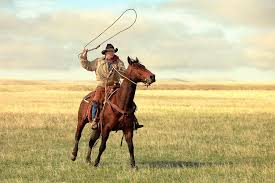
Cattle drives and ranching were year-round jobs for who?
Buffalo Soldiers
Farmers
Indians
Cowboys
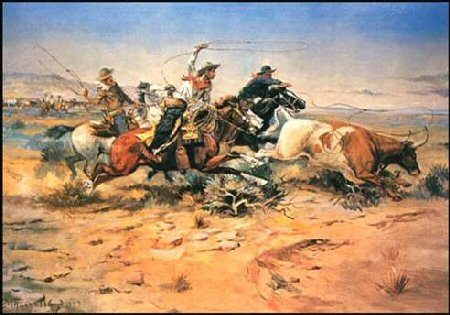
Bad weather, cattle rustlers, Indians, and stampedes are all causes of what?
Dangers on an oil rig
Dangers during the battle of the Alamo
Dangers on a Cattle Drive
Dangers of farming
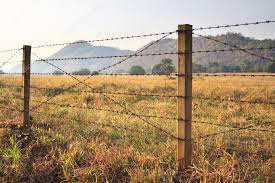
Identify the invention in the image. This invention helped to close off the open range making cattle drives dangerous and contributing to the Open Range War.
Barbed Wire
Wooden Fence
Metal Fence
Wooden Post
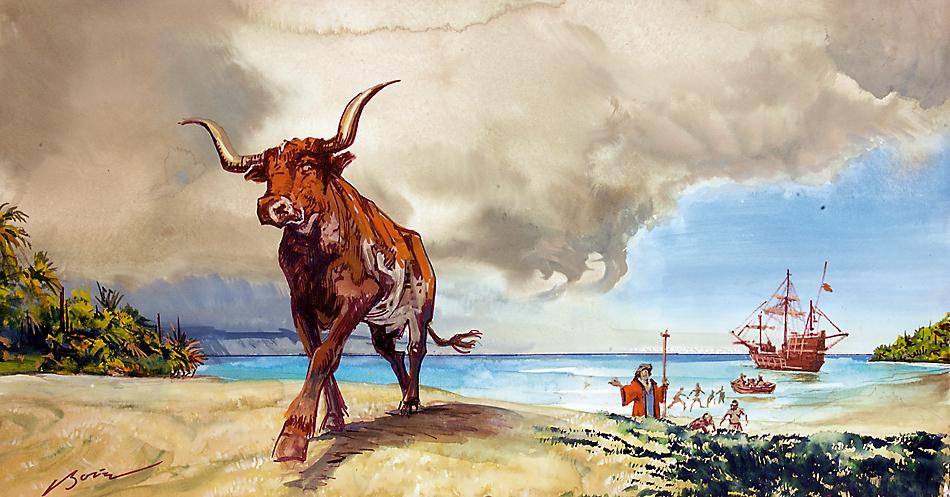
Which country brought cattle to Texas and the rest of the United States?
Spain
England
France
United States
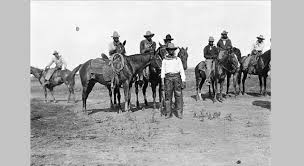
Why did so many African American men choose to live life in the open range and not in the cities?
Pork and beans was a meal only given on cattle drives
Less discrimination on the open range
Less discrimination in the city
Indians were more friendly on the open range
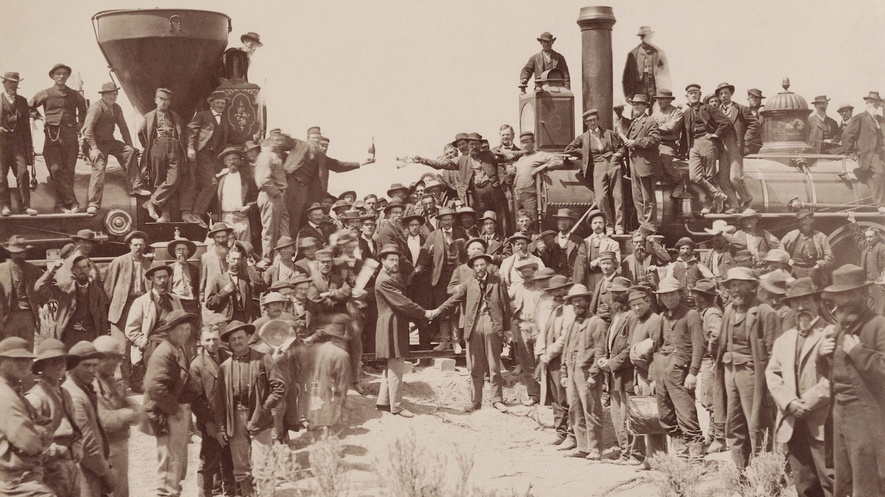
What two cultures helped build the railroads of the United States?
Indians and Mexicans
Mexicans and French
Chinese and Irish
English and Spanish

What inventions changed West Texas after the Civil War and encouraged settlement in the west?
Cars and planes
Books and water bottles
cell phones and laptops
Windmills, barbed wire, and railroads
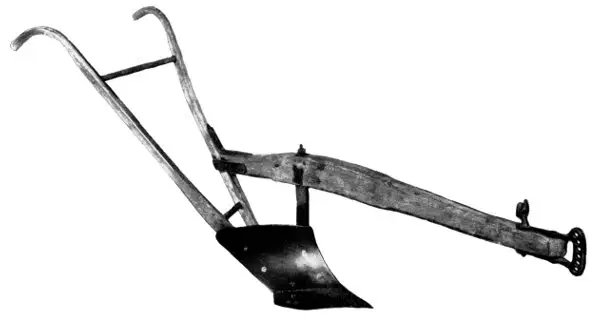
Who made the first plow?
Oliver
Case I H
John Deere
Big bud

Who founded John Deere?
Daniel Massey
John deere
John Z. Deere
Johny Deere
The important animals for the Indians as they got food and clothing from these animals.
goats
horses
antelopes
bison


He tried to lead his tribe to Canada to avoid relocating from his traditional land to live on a reservation.
Sitting Bull
Chief Joseph
Geronimo
Custer

He led a series of raids against new settlements and avoided capture by U.S. Army troops.
Sitting Bull
Chief Joseph
Geronimo
Custer

What is the process in which a group gives up their own culture to blend with another
Conversion
Acceptance
Assimilation
Nativism

Chief Joseph; 1877
What is the best explanation for Chief Joseph making this statement?
Farmers of the Great Plains faced all of the following problems, except
lack of wood
harsh weather
lack of wind for windmills
insects
Why did many Native Americans not like the white settlers?
they killed their buffalo
they broke promises and treaties
they took their land
All of the above
What did the settlers use to build their houses out of?
trees
grass
sod
buffalo skins
Provided a source of water to the homesteaders on the plains

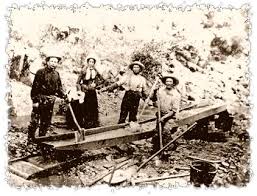

Some store owners became rich selling gold prospectors their supplies.
True
False
What was one legacy of the Californios?
city names
trading posts
athletic events
religious practices
Why were the Whitman's killed by the Cayuse Indians?
The Cayuse didn't want them on their land.
It was part of a religious ritual performed by their tribe.
They Whitman's tried to force the Cayuse to be their slaves.
The Cayuse blamed the Whitmans for the measles epidemic that swept through their tribe.
Why did Mountain Men brave this dangerous lifestyle?
It was worth the money
They liked the freedom and adventure if offered.
They were hired by the government
They were looking for land to settle,
What did the U.S. government promise railroad companies for building the railroad?
paid for all supplies
provided subsidies (in the form of land)
provided all the laborers
Which of the following was the typically the last step in this process: gold discovered, mining camps, boomtowns, _____
gold rush
ghost towns
crime waves
law and order

When did the largest American Indian land losses occur?
before 1775
between 1850 and 1894
between 1894 and 1992
after 1992
Who led the U.S. Army at the Battle of Little Bighorn?
General Robert E. Lee
Colonel George Armstrong Custer
General Ulysses S. Grant
Major General William Tecumseh Sherman
The completion of the Transcontinental Railroad significantly reduced the travel time across the United States from months to:
Weeks
Days
Hours
A single day
What was a significant contribution of Chinese immigrants to the development of the Transcontinental Railroad?
They provided expertise in explosive handling for tunnel construction
They acted as intermediaries for acquiring land rights
They were responsible for the architectural design of the stations
They managed the logistics and supply chains
Irish immigrants who worked on the Transcontinental Railroad were primarily responsible for:
Engineering and design
Blasting tunnels through mountains
Laying tracks
Financial investments
What was the primary goal of the Homestead Act?
To provide land for the construction of the transcontinental railroad
To grant free land to American citizens and encourage westward expansion
To establish reservations for Native American tribes
To promote the mining industry in the western territories
Who was the President of the United States when the Indian Removal Act was passed?
George Washington
Thomas Jefferson
Andrew Jackson
Abraham Lincoln
What was the final destination of the Cherokee after the Trail of Tears?
California
Oklahoma
Texas
Florida


Henry Comstock discovered _______ ore at the Comstock Lode, NV.
Zinc
Silver
Gold
Coal

