wayground logo

Free Printable Worksheets

NEW

Font size

S
M
L
XL
Worksheets

Review Waves and Tools of Astronomy

Total questions: 59

Worksheet time: 31mins

Name
Class
Date
1.

satellites

a)

contain instruments to collect data and travel out of Earth's orbit

b)

collect the light from distant stars and separate that light into bands of different colors

c)

placed in orbit around Earth with special instruments and telescopes

2.

radio telescopes

a)

use convex lens to bend and focus light rays to produce images

b)

use mirrors to focus light rays to produce images of objects in space

c)

receive radio waves emitted from objects in space

3.

space probes

a)

telescopes or other instruments that have been launched into outer space to collect data on distant planets, galaxies and other celestial bodies

b)

collect light from distant stars and separated that light into bands of different colors to identify elements present

c)

contain instruments to collect data and travel out of Earth's orbit to explore places to dangerous people

4.

What is the definition of reflecting telescope

a)

Telescopes that bring visible light to focus with mirrors. It is also that that uses convex lenses to gather and focus light.

b)

Telescopes that help us to look at stars.

c)

An object that make objects appear nearer.

d)

Telescope that bring visible light to focus with mirrors

e)

All of the above

5.

What is refracting telescope.

a)

It is a telescope that has electromagnetic radiation.

b)

It was the first invented around the year 1600, used lenses to bring visible light to a focus. It is also called refractors. A telescope that curve mirror to focus light.

c)

Is it a telescope that has a radio.

d)

A and B

6.

What type of telescope can work 24 hours a day and even be used in the rain?

a)

Refracting Telescope

b)

Radio Telescope

c)

Newtonian Telescope

d)

Solar Telescope

7.
Which of these is a place where humans live and study space?
a)
Moon probe
b)
Mars Rover
c)
Space Shuttle
d)
International Space Station
8.

What is the name of a space tool that orbits in space around a certain object like Earth?

a)

Space Probe

b)

Satellite

c)

Radio Telescope

d)

Spectroscope

9.

Which tells us what a star is made up of by separating light into colors?

a)

optical telescope

b)

observatory

c)

spectroscope

d)

radio telescope

10.
Collects data from places outside of Earth's orbit that would be too dangerous for humans
a)
satellies
b)
space probes
c)
other telescopes
d)
spectroscope
11.

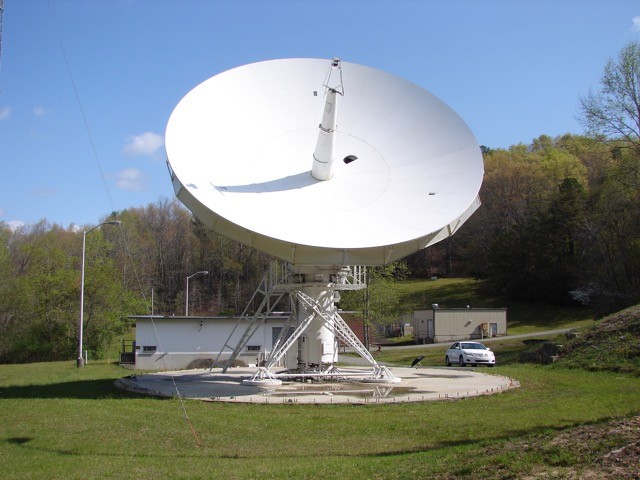
What type of telescope is this?

a)

Reflecting telescope

b)

Space Telescope

c)

Refracting Telescope

d)

Radio Telescope

12.

Which of the following has the shortest wavelength?

a)

microwaves

b)

UV rays

c)

Infrared

d)

the color blue

13.

Which of the following has the most energy?

a)

Red

b)

Blue

c)

Green

d)

Violet

14.

Which of the following has the most energy?

a)

X-rays

b)

The color green

c)

Microwaves

d)

ultraviolet

15.
True or false: as you move along the spectrum, radio to gamma waves, the wavelengths decrease in size (get smaller)
a)
true
b)
false
16.
A wave with a large wavelength will have a ______ frequency and _____ energy
a)
high, low
b)
high, high
c)
low, high
d)
low, low
17.
Select the correct order of waves on the EMS from the longest wavelength to the shortest wavelength
a)
Radio, Micro, Infra, Visible, Ultra, X-ray, Gamma
b)
Gamma, X-ray, Ultra, Vis, Infra, Micro, Radio
c)
Vis, Micro, Infra, Ultra, X-ray, Gamma, Radio
d)
Micro, Radio, Vis, Infra, Ultra, X-ray, Gamma
18.
Which has the LONGEST wavelength and, therefore, the lowest frequency/energy
a)
Gamma Rays
b)
Radio Waves
c)
Visible Light
d)
Infrared rays
19.
Which has the SHORTEST wavelength and, therefore, the highest frequency/most energy
a)
Radio waves
b)
Ultraviolet Rays
c)
Gamma Rays
d)
X-rays
20.
Which section of the spectrum is the ONLY one we can see?
a)
X-rays
b)
Visible Light
c)
Gamma Rays
d)
Ultraviolet Rays
21.
How are electromagnetic waves different from other waves? 
a)
They have very short wavelengths 
b)
They transmit energy instead of matter 
c)
They can travel through empty space
d)
They can change direction by reflection 
22.
As the frequency of an electromagnetic wave increases, the amount of energy in that wave...
a)
increases.
b)
decreases.
c)
stays the same.
23.
High frequency waves have _________ wavelengths.
a)
varying
b)
long
c)
the same
d)
short
24.
The distance between two crests or two troughs of a wave is called:
a)
frequency
b)
amplitud
c)
wavelength
d)
hertz
25.
The height of the wave from the rest position is known as the _____________.
a)
amplitude
b)
crest
c)
trough
d)
wavelength
26.
What are electromagnetic waves?
a)
sound waves
b)
electric & magnetic fields (energy) that travel through empty space very quickly
c)
Someone's name
d)
things like longitudinal waves
27.
Which electromagnetic waves are used in devices such as heat lamps & TV remote controls?
a)
ultraviolet rays
b)
microwaves
c)
infrared rays
28.
Which type of waves are used in broadcasting?
a)
radio waves
b)
infrared rays
c)
x-rays
29.
Electromagnetic waves that help your body produce vitamin D are called?
a)
ultraviolet rays
b)
x-rays
c)
gamma rays
30.
Which electromagnetic waves allow us to diagnose & treat cancer?
a)
Gamma rays
b)
X-rays
c)
Ultraviolet rays
31.
The electromagnetic spectrum includes the complete range of electromagnetic waves placed in order of:
a)
increasing amplitutde
b)
increasing wavelength
c)
increasing frequency
32.
Which electromagnetic waves help doctors detect broken bones inside your body?
a)
gamma rays
b)
x-rays
c)
ultraviolet rays
33.
Radar uses which type of electromagnetic waves to detect objects & measure their distance and speed?
a)
microwaves
b)
infrared rays
c)
x-rays
34.

What is a medium?

a)

the matter through which a mechanical wave travels

b)

two lines that will never touch

c)

the particles of a medium that travel parallel to a wave

d)

two lines that meet at a right angle

35.

What is a longitudinal wave?

a)

the matter through which a mechanical wave travels

b)

two lines that will never touch

c)

the particles of a medium that travel parallel to a wave

d)

two lines that meet at a right angle

36.

What is a transverse wave?

a)

the particles of a medium that travel perpendicular to a wave

b)

the particles of a medium that are fast

c)

the particles of a medium that travel parallel to a wave

d)

the particles of a medium that you can touch

37.

What type of wave is this?

a)

Transverse

b)

Longitudinal

c)

Surface

d)

Hair wave

38.

What type of wave is this?

a)

Transverse

b)

Longitudinal

c)

Surface

d)

Hair wave

39.

At which point is the Rarefaction located?

a)

A

b)

C

c)

D

d)

E

e)

F

40.

At which point is the Crest located?

a)

A

b)

C

c)

D

d)

E

e)

F

41.

At which point is the Wavelength located?

a)

A

b)

C

c)

D

d)

E

e)

F

42.

At which point is the Wavelength located?

a)

B

b)

D

c)

E

d)

F

e)

G

43.

At which point is the Trough located?

a)

B

b)

D

c)

E

d)

F

e)

G

44.

At which point is the Compression located?

a)

B

b)

D

c)

E

d)

F

e)

G

45.

At which point is the Amplitude located?

a)

B

b)

D

c)

E

d)

F

e)

G

46.
Which type of wave has a wave perpedicular to the disturbance?
a)
surface
b)
mechanical
c)
transverse
d)
longitudinal
47.
What happens when a mechanical wave travels through a medium?
a)
Waves are transferred
b)
Energy is transferred
c)
Mass is transferred
d)
Particles are transferred
48.
Energy can be transferred from one medium to another through _________.
a)
vibrations
b)
stacking objects
c)
an ordered sequence
d)
colors
49.
Which of these waves cannot travel in a vacuum?
a)
light wave
b)
sound wave
c)
electromagnetic wave
d)
microwave
50.
Which is true of a mechanical wave?
a)
It must have a medium
b)
It must travel in empty space.
c)
It can travel in a vacuum.
d)
Both sound and light are examples.
51.
What is the wavelength of a wave?
a)
the size of the disturbance
b)
the amount of time that occurs in one full cycle
c)
the distance between two crests of a wave
d)
the amount of cycles that occur in a given time
52.
Unlike a transverse wave, the disturbance in a longitudinal wave is
a)
in a circular motion.
b)
parallel to the wave motion.
c)
perpendicular to the wave motion.
d)
in the opposite direction of the wave motion
53.
A transverse wave can be created in a Slinky® by moving it
a)
side to side.
b)
in a circular motion.
c)
together and apart.
d)
up and down.
54.
When on a flat surface, giving the Slinky® a push or pulse will create a disturbance
a)
in the opposite direction of the wave motion.
b)
parallel to the wave motion.
c)
in a circle.
d)
perpendicular to the wave motion.
55.

what are the colours for the spectrum of white light?

a)

red, orange, yellow, green, blue and violet

b)

red, orange, yellow, green, black and white

c)

white

d)

orange, yellow, green, cyan, blue and violet

56.
EM waves are always____________
a)
Transverse
b)
Compression
c)
Longitudinal
d)
Seismic
57.
Cell phones use_____________waves.
a)
Microwaves
b)
Gamma
c)
XRays
d)
Radio 
58.
What are the units of frequency?
a)
m/s
b)
s
c)
Hz
d)
m
59.
EM waves travel the speed of light which is..
a)
3000 miles/sec
b)
300,000 km/sec
c)
3000 miles/hour
d)
30 miles per hour