
 Worksheets
Articles of Confederation
Total questions: 41
Worksheet time: 23mins

"A few days after the signing of the Declaration of Independence in 1776, a committee was appointed by the Continental Congress to present a plan for how our new country would work."
What is a committee?
a group of delegates
a group of farmers
a group of presidents
a group of colonists, who owned businesses

"A few days after the signing of the Declaration of Independence in 1776, a committee was appointed by the Continental Congress to present a plan for how our new country would work."
What does it mean to be appointed?
to volunteer for a specific job
to be officially selected (by someone in a higher position) for a specific job
to be elected by popular vote to do a specific job
to opt out of doing a specific job that you've been selected for

For the next _____ months, as war raged on, the committee members argued over the details of an effective plan of government for the new nation.
6
12
14
24

This committee eventually established the first form of national government in the new United States. What was this new plan of government called?
The Declaration of Independence
The Articles of Confederation
The Constitution

The delegates were ____________ the idea of establishing a central authority in the new nation. After all, they had just fought a war to get rid of the British king!
afraid of
open to
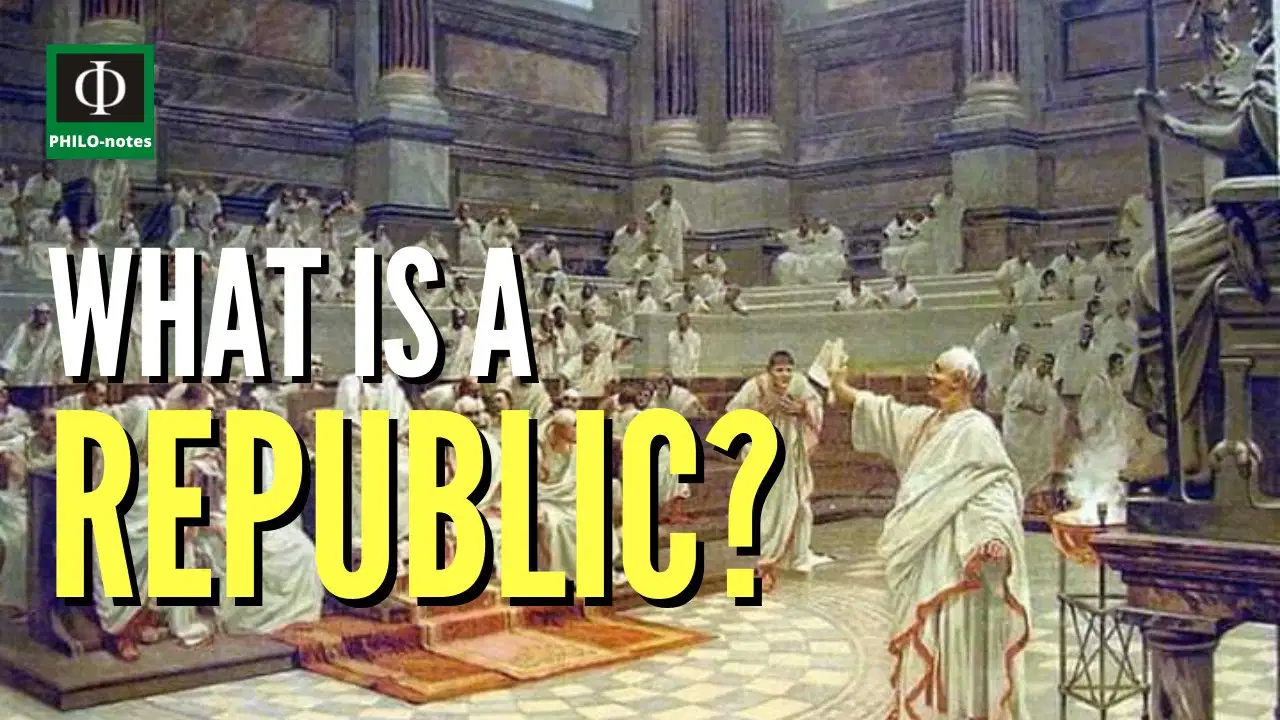
The delegates initially ___________ the idea of the states forming a republic.
a Republic= a representative national government
accepted
rejected

But how would elected representatives stay in touch with the people they represent?
They decided to give the most power to....
local counties & cities
the state governments
the national government

Under this plan, each state would remain _________________. At this time, we were basically thirteen "countries" that came together (unified) only if there were major disputes.
(2 answers)
dependent on other states
independent of other states
dependent on the national government
independent of the national government

Under the Articles of Confederation, Congress was allowed to make __________ and alliances with other nations.
contracts
treaties
trade agreements

"Under the Articles of Confederation, Congress could open up diplomatic relationships with European countries."
What does the word, "diplomatic" (diplomacy), mean?
(2 answers)
going to war with other nations
establishing trade with other nations
having an open dialogue (peaceful talks & conversations) with other nations
invading other nations

Under the Articles of Confederation, Congress had the power to deal with territorial disputes and handle the increasingly fragile relationships with the ____________ nations.
Spanish
Indian
French
Scottish

When we talk about "the central government", what type of government is this referring to?
(2 answers)
the national government
state governments
the federal government ("the Feds")
local governments

Under the Articles of Confederation, the central government had a difficult time paying for anything because they could not....
borrow money from other nations
print their own money
collect taxes
have their own budget (plan for how they would spend their money)

Under the Articles of Confederation, the national Congress also had NO ability to....
(3 answers)
enforce laws
(no national law enforcement agencies like the FBI)
stop the states from restricting trade (no control over interstate commerce)
judge the laws (no federal court system)
pass laws (no legislative branch)

"Under the Articles of Confederation, Congress had no ability to regulate (oversee) interstate commerce."
What is commerce?
(2 answers)
the buying and selling of goods & services
the welfare system (giving away goods & services)
the lottery & sweepstakes system (with monthly winners of goods/services)
the lawful trade of goods & services

"Under the Articles of Confederation, the U.S. Congress had no ability to impose (set up) tariffs."
What is a tariff?
a tax on imported goods (that are brought in from other countries)
a tax on exported goods (that are sent to other counties)
a tax on people's income (the amount of money they earn)
a sales tax on whatever is bought & sold in stores

"Under the Articles of Confederation, Congress could NOT collect national tax revenues."
What is revenue?
the money paid in taxes & fees
the money collected in taxes & fees
the money donated to local charity organizations, like the American Red Cross
the money collected in community & school fundraisers

THE ARTICLES OF CONFEDERATION
What is a confederation?
(2 answers)
a strong & unified organization of states
a loose organization of states
a "league of friendship" between states

The Articles of Confederation was adopted in 1777, but wasn't ratified (approved) until _________.
1776
1781
1787
1791

To formally approve a new law, policy, or document (usually by voting on it) means...
to ratify it
to repeal it
to resign it

What is the opposite of... "to ratify"?
(hint: it means to cancel an existing law, policy, or plan of action)
to resign
to repeal
to request
to return

DOOMED TO FAIL...?
Even getting all the states to agree to a plan of government was difficult. It took over ________ years to come up with a document that everyone would agree to sign.
two
three
four
six

Two years later (in 1783), the _______________ officially ended the American Revolutionary War. The former colonies had stood together, ______________ in war.
Now... could they stay ______________ in peace??
Treaty of Versailles, united
Treaty of Paris, divided
Treaty of Versailles, divided
Treaty of Paris, united

Bonus Question: The British troops surrendered to the Americans at _________, VA in October 1781. They carried a ___________ flag of surrender, petitioning (asking) George Washington for a cease-fire.
Charlottesville, red
Williamsburg, black
Yorktown, white
Richmond, rainbow-colored

The Articles of Confederation ultimately failed because it set up a ______________ national government.
strong
weak
neutral

5 Reasons for Failure
The Articles of Confederation set up a weak national government. None of the states wanted to lose control of their own interests. Very few laws applied to all the states, and the national government had no easy way to ____________ those laws.
justify
enforce
interpret
ratify

5 Reasons for Failure
The Articles of Confederation set up a weak Congress. Why was this Congress so weak, in its power to do anything?
(3 answers)
they could not collect taxes
they could not pass their own laws
they could not enforce their own laws
the states were acting like individual nations (there was no unified national economy)

5 Reasons for Failure
Under the Articles of Confederation, there WAS a standardized U.S. dollar. Individual states had NO ability to print their own currency.
True
False

Under the Articles of Confederation, there was no national currency. Individual states had their own currencies and even British & Spanish money was widely accepted.
What is a currency?
(2 answers)
the monetary (money--$$) system that's used in a particular country
the stocks that are traded in a particular country
the printed money & coins used in a particular country
the public opinion shared by the majority of people living in a particular country

5 Reasons for Failure
Under the Articles of Confederation... large states with bigger populations (such as Virginia or New York) had the same number of votes as smaller states with less population (such as Rhode Island or Delaware).
True
False

5 Reasons for Failure
--Larger states (like VA, NY, and PA) felt that they should have _________ of a voice (representation) in Congress because they had a _____________ population size.
less, higher
less, lower
more, higher
more, lower

Under the Articles of Confederation, each state (regardless of population size) had....
one vote
two votes
multiple votes

5 Reasons for Failure
Under the Articles of Confederation, there was no ____________ branch to enforce the national laws or ___________ branch to interpret & apply the laws.

The Articles of Confederation created a _____-_______ legislature (a unicameral Congress).
one house
two house
multiple house

The Articles of Confederation allowed Congress to make new laws and amendments.... but under the Articles of Confederation, what was the main reason for why it was so difficult to pass these new laws & amendments in the first place?
Because the national gov. had no army and no national law enforcement agency
Because the national gov. couldn't tax the states to collect revenue
Because the national gov. had to reach a consensus (at least 75% majority vote) in order to pass a new law
Because state governments had to reach a unanimous (everyone agrees) decision in order to pass a new law

Along with other representatives, which of the "founding father" delegates expressed doubts about the new government plan?
(2 answers)
Alexander Hamilton
Benjamin Franklin
George Mason
James Madison

What happened in late August, 1786?
a new Continental Congress met in Philadelphia, PA to write a new "Articles of Confederation"
a revolt in western Massachusetts involving farmers who were being heavily taxed and having their farms taken
a new "Common Sense" pamphlet was written by Thomas Paine's grandson
farmers in Massachusetts were trying to convince the state legislature to secede (break away from) the Union (the USA)

This 1786 revolt, organized by Massachusetts farmers who had fallen into debt (due to rising taxes), became known as....
(led by Daniel Shays)
Shays Rebellion
Shays Revolution
Shays Protest
Shays Petition

Shays Rebellion made it clear, to the rest of the states, that the Articles of Confederation was weak because...
(2 answers)
Congress couldn't collect taxes from the farmers
Congress couldn't raise a national army to put down the rebellion/revolt
Congress couldn't interfere in the affairs (the dealings) of individual states
Congress didn't have a president and national law enforcement agencies (like the FBI) to help "suppress" the revolt

In February 1787, Congress initially met to __________ the Articles of Confederation.
(2 answers)
add on to
revise
replace
edit

Congress would eventually end up replacing the Articles of Confederation with a whole new document, called the.....
(which we still live under today)
Declaration of Independence
U.S. Constitution
Virginia Declaration of Rights
Bill of Rights

