
 Worksheets
Beginning of Architect - Let's start!
Total questions: 30
Worksheet time: 23mins
What does the Solution Architect do in a software development team?
The architect writes all mission-critical code in the solution
The architect receives technical specifications from the lead developer, and uses them to create functional design specifications. These are handed over to the functional analyst.
The architect receives functional requirements from the functional analyst, and uses them to create technical specifications. These are handed over to the lead developer.
The architect is responsible for all milestones and project planning.
What is the highest-ranking role in an IT project team that still involves coding?
The developer
The lead developer
The architect
The functional analyst
Who is held responsible for all technology decisions in the project?
The developer
The lead developer
The architect
The functional analyst
What is the main responsibility of the lead developer?
Ensure that all developers are successful
Ensure that the lead developer is successful
Ensure that the architect is successful
Ensure the functional analyst is successful
Should the architect define all aspects of development? Why/why not?
Yes. The architect is responsible for the technological success of the solution, so it's essential that he or she micro-manages all aspects of development.
No. The architect is responsible for empowering the lead developer, and should consider sharing responsibility for this task with him or her.
Yes. It helps the architect to effectively manage and coach the development team.
No. It is not the job of the architect to define all aspects of development.
The lead developer complains that he or she is coding all the time, and doesn't have time to mentor or coach the development team. What happened?
The functional specifications are invalid.
The architectural design is invalid.
The planning is too optimistic.
The architect role holds no real power in the organization.
What's the goal of a software architecture?
Separate the design into distinct areas of concern
Maximize performance.
Minimize complexity.
Maximize manageability
What is microservices design?
A design used primarily in functional programming and object-oriented programming
A small program that represents discrete logic that executes within a well-defined boundary on dedicated hardware
A style of design for enterprise systems based on a loosely coupled component architecture
A very small piece of code that never gets any bigger than 10 lines
Which of the following responses is an advantage of microservices?
Any microservice component can change independently from other components
They don't require a lot of expertise to program
They're so small that developers can typically write very powerful ones with a few lines of text
They are easy to manage
Which of the following responses is a disadvantage of microservices?
Latency issues can occur during heavy use.
All of the above
Microservices are very difficult to manage at scale
Microservices require a lot of monitoring to operate effectively
SDLC stands for
Software Development Life Cycle
System Delivery Life cycle
Software Design Life Cycle
System Design Life Cycle
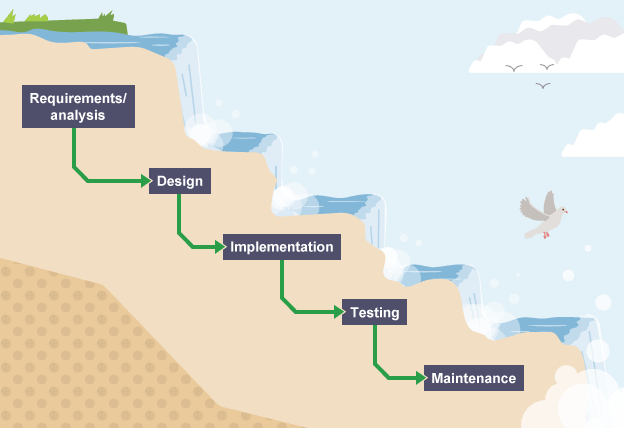

What is a sprint?
A working model of software with some limited functionality.
This person is the tester of the product
Similiair to the product owner
Fixed length (in time) iterations
What is at the heart of scrum?
Testing
Planning
Daily Scrum
Sprint
How many bits are in a single byte?
4
8
12
16
What is your current project role?
Project Manager/Scrum Master
Solution Architect/Technical Lead
Developer
QA/Tester
Others

