

wayground logo

Free Printable Worksheets

NEW

Font size

S
M
L
XL
Worksheets

Astronomy RETEST

Total questions: 20

Worksheet time: 10mins
Name
Class
Date
1.
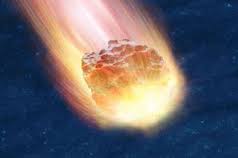
The difference between a meteor and meteoroid is: 
a)
Size
b)
Weight
c)
Position in space
d)
Distance to Earth
2.
The greater the mass, the ______the gravity
a)
Lower
b)
Greater
c)
Smaller
d)
Heavier
3.
In the diagram given, what happens as we move to the left?
a)
Stars Get Larger
b)
Stars get Colder
c)
Stars get hotter
4.
Which of these stars is hottest?
a)
Red Star
b)
Yellow Star
c)
Orange Star
d)
Blue Star
5.
Compared to the rest of the stars, our sun is considered...
a)
Extremely Large and Cold
b)
Small with a medium temperature
c)
Medium size with medium temperature
6.
Which category is our Sun located in?
a)
White Dwarfs
b)
Supergiants
c)
Main Sequence
d)
Giants
7.
Which star has the lowest temperature?
a)
A
b)
B
c)
C
d)
D
8.
A large cloud of gas and dust in interstellar space; the predecessor to stars...
a)
Constellation
b)
Black hole
c)
Nebula
d)
Galaxy
9.

The universe has many different components. Which list places four components of the universe in the most likely order from smallest to largest?

a)

Planets, stars, nebulae, galaxies

b)

Planets, stars, galaxies, nebulae

c)

Nebulae, stars, planets, galaxies

d)

Galaxies, stars, planets, nebulae

10.

A student learns that the sun is classified as a medium-size star and that many stars are much bigger and brighter. However, the student observes that other stars look very dim, even through a telescope.


Why do other stars look much dimmer than the sun?

a)

The sun appear yellow, which is more visible than other colors.

b)

The sun is much closer to Earth than other stars are

c)

Other stars are made up of different gases than the sun is.

d)

As light from other stars travels through space, it gets reflected.

11.

Stars are made mostly of which two elements?

a)

hydrogen and helium

b)

mercury and strontium

c)

iron and potassium

d)

krypton and bismuth

12.
What type of galaxy is this?
a)
Spiral
b)
Elliptical
c)
Irregular 
d)
Irrational
13.
What type of galaxy is this?
a)
Spiral
b)
Elliptical
c)
Irregular
d)
Irrational
14.
The type of galaxy that is composed of the older stars and low-mass stars.
a)
Spiral
b)
Elliptical
c)
Irregular
d)
Constellation
15.

Cell phones (also have microwaves) and televisions use this type of EM wave. It has the longest wavelength with the lowest frequency.

a)

Radio Wave

b)

TV Wave

c)

Gamma wave

d)

Ultraviolet Wave

16.

The type of wave with the shortest wavelength and highest frequency. This type of wave is extremely harmful.

a)

radio

b)

infrared

c)

gamma

d)

x ray

17.
Which portion of the electromagnetic spectrum includes the range of light that can be detected by the human eye? 
a)
ultraviolet light
b)
visible light
c)
infrared light
d)
x-rays
18.
If the wavelength of an electromagnetic wave is longer, what is true about the energy? 
a)
Energy is higher.
b)
Energy is lower. 
c)
Energy is not dependent on wavelength. 
d)
energy is cancelled out
19.

What is the time taken for the light to travel between the Sun and Earth?

a)

4 minutes

b)

8 minutes

c)

12 minutes

d)

2 minutes

20.

Proxima Centauri is ______ light years away.

a)

6.8

b)

2.5

c)

4.3

d)

5.4
