wayground logo

Free Printable Worksheets

Font size

S
M
L
XL
Worksheets

Great Depression

Total questions: 49

Worksheet time: 26mins

Name
Class
Date
1.
Buying stock without knowing the risks, assuming it will just go up is known as ________.
a)
speculation
b)
buying on margin
c)
market capitalization
d)
hammering the market
2.

Defaulted means_________________________.

a)

To fail to make loan payments

b)

That you are making payments on time

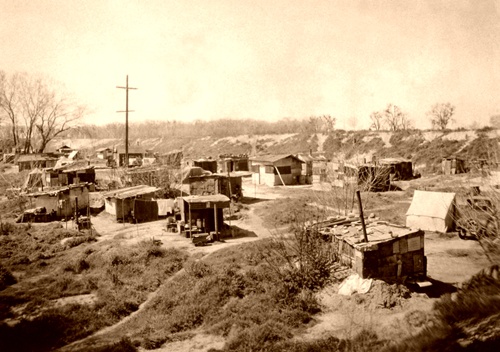
c)

That it is your fault

d)

When you give someone else a turn

3.

Banks often owned many ____________ so they could make more money.

a)

farmers

b)

stocks

c)

loans

d)

bonds

4.

What event caused many banks to close?

a)

The Dust Bowl

b)

Auto and Construction Industry collapse

c)

The Stock Market crash

d)

High income inequality

5.

Income inequality is _______________________

a)

When most people have equal amounts of money

b)

When you bring in lots of income

c)

When you bring in a little amount of income

d)

When much of the wealth is owned by the richest few

6.

A tariff is a tax on goods that come __________ the U.S.

a)

into

b)

go out of

c)

made in

d)

mad out of

7.

Some adults and their children had to go to a place called a __________________ to get food.

a)

meal delivery service

b)

soup kitchen

c)

Salvation Army

d)

bank

8.

In the Dust Bowl, a ______________ caused the soil to dry up.

a)

dust storm

b)

water shortage

c)

drought

d)

tornado

9.

In the Dust Bowl event, after the topsoil was gone, static electricity caused massive ________________________.

a)

thunderstorms

b)

snowstorms

c)

dust storms

d)

rain storms

10.

On October 29th, 1929 the stock market took an all time drop with millions losing their life savings this is known as

a)

Black Wednesday

b)

Black Tuesday

c)

Black Saturday

d)

Stock Monday

11.

Click ALL of the following that could apply to the effects of the Great Depression

a)

Bank failures

b)

Unemployment rises

c)

Rise of Banks opening

d)

Life Savings lost

12.

After President Hoover failed to help the public, who ran for election on the slogan a New Deal for Americans?

a)

Franklin D Roosevelt

b)

Harry S Truman

c)

Calvin Coolidge

d)

Herbert Hoover

13.

The New Deal is BEST described as

a)

fixing and ending the Great Depression giving millions a steady job and a regular paycheck moving forward into the 1940s

b)

being the same thing President Hoover did just setting up a system of empty promises given to the people

c)

temporary help and relief to some Americans, but could not sustain or end the Great Depression

14.

The Great Depression began in

a)

1929

b)

1932

c)

1933

d)

1919

15.

Which economic factor contributed most directly to the start of the Great Depression?

a)

low worker productivity

b)

high income taxes

c)

decreasing tariff rates

d)

buying stocks on margin

16.

Pick the best answer. Over-production of what led to the Great Depression?

a)

farm goods

b)

consumer goods

c)

farm and consumer goods

d)

Radios

17.

The Bonus Army incident in 1932 best illustrates the idea that

a)

F.D.R.'s relief programs were unsuccessful.

b)

many felt that Herbert Hoover was not handling the Depression well.

c)

protests by veterans during the Depression were effective.

d)

the U.S. Army had increased in size and power during the Depression.

18.
Define Hyperinflation
a)
Money loses value quickly
b)
Money gains value quickly
c)
The market becomes flooded with a surplus
d)
The Stock Market rises quickly in one day
19.
This term describes the decade of great wealth America enjoyed after WWI
a)
Roaring 20s
b)
Roaring 30s
c)
Roaring 10s
d)
Roaring 40s
20.
Buying on margin means:
a)
buying stocks at a fraction of their price, with the promise of paying the rest later
b)
planning out your budget to make sure you have enough to get by
c)
Buying a few stocks from many companies to ensure profit
d)
Pouring all of your money into one stock in order to ensure profit
21.
This president was blamed for not doing enough during the Great Depression, so much so that shanty towns were named after him
a)
Hoover
b)
Roosevelt
c)
Wilson
d)
Polk
22.
This country had to pay huge war reparations after WWI, causing its economy to collapse
a)
Germany
b)
France
c)
Britain
d)
US
23.
This Image is used to describe:
a)
The failure of banks, causing people to lose their life savings
b)
How irresponsible people were with their money in the 20s
c)
How overspending had caused an economic collapse
d)
That buying on credit caused the stock market to crash
24.
Many organizations, such as the CCC and the SSA, were created to help Americans get back on their feet. These organizations were known as:
a)
Alphabet Soup
b)
The 3 Rs
c)
FDR's economic plan
d)
Economic Revitalization project
25.
Define Communism
a)
A Dictator is in charge, there is a strong emphasis on nationalism
b)
The people vote for their leaders in a democratic process
c)
There is no organized government, religion, or economy. People work together to survive
d)
A small group of nobles makes the decisions for the country
26.
Define Socialism
a)
Business is usually controlled by the government, and profits are shared among the people
b)
Government has little influence in business, people can make money any way they please
c)
The economy is left on its own, with little influence from either government or private enterprises
d)
There is no economy, rather people work together to survive. 
27.
Define Fascism
a)
Emphasizes extreme nationalism while denying individual liberties. Usually led by a dictator
b)
An elected ruler holds all of the power
c)
There is no government in society, only cooperation
d)
Emphasizes a certain religion, with religious leaders holding political power
28.
Which of the following was a major cause of the Great Depression?
a)
overproduction and underconsumption
b)
a decrease in the supply of consumer goods
c)
an increase in demand for imported products
d)
an increase in the price of wheat on the world market
29.
How did "bank runs" impact the American people during the Great Depression?
a)
Banks eventually ran out of money to loan, and people's life savings were gone.
b)
Banks made loans throughout the Great Depression, helping people pays bills until they could find work.
c)
Banks were able to people's deposits safe, but they could not loan out any more money.
d)
Banks were not at all involved in the Great Depression because people did not use them.
30.
What was the main reason for the emergence of “Hoovervilles” like the one shown in the photograph?
a)
Many Americans had lost jobs during the Great Depression.
b)
Thousands of homes had been destroyed by the effects of the Dust Bowl.
c)
Housing projects could not keep up with the demand for homes needed by the poor.
d)
Preparations for World War I had created a shortage of building materials.
31.
A major difference between the philosophies of President Herbert Hoover and President Franklin D. Roosevelt in responding to the Great Depression is that Roosevelt
a)
wanted to rely on private charities to provide assistance
b)
stressed the need for individual rugged individualism
c)
supported direct relief to people out of work
d)
thought the government should not be involved in economic reform
32.
FDR addressed the American public in weekly broadcasts known as:
a)
FDR Hour
b)
Hangin' With Franklin
c)
Fireside Chats
d)
Around the Fire
33.
What was a guiding principle of the New Deal economic policies?
a)
Pro-business tax breaks would solve the problems associated with urban poverty.
b)
Antitrust legislation would destroy the free market economy of the United States.
c)
Rugged individualism must be allowed to solve social inequality.
d)
Government must assume more responsibility for helping the poor.
34.
As part of the New Deal, the Securities and Exchange Commission (SEC) and the Federal Deposit Insurance Corporation (FDIC) were created to
a)
allow for a quick recovery of stock prices
b)
provide direct loans to businesses
c)
protect individual investors from stock fraud and bank failure
d)
allow banks and companies to invest in the stock market
35.
The Civilian Conservation Corps (CCC) and the Works Progress Administration (WPA) were both New Deal programs developed to address the problem of
a)
excessive stock market speculation
b)
high unemployment
c)
increased use of credit
d)
limited income of senior citizens
36.
The TVA is significant because it hired people to 
a)
deliver food to the poverty-stricken Dust Bowl residents
b)
build dams and generators that provided electricity
c)
work on farms to help stabilize agriculture
d)
publish important facts about businesses
37.
How would an African American during the Great Depression most likely have felt about the New Deal?
a)
Disappointed, because the TVA failed to bring power to African American farmers in its Rural Electrification Program.
b)
Outraged, because African Americans were ineligible for any benefits under New Deal programs.
c)
Frustrated, because the CCC and other work programs discriminated against African Americans.
d)
Angry, because President Franklin D. Roosevelt did not attempt to restrain his racially insensitive views.
38.
The Fair Labor Standards Act of addressed what labor issue?
a)
Workplace safety
b)
Health insurance
c)
Collective bargaining
d)
Minimum wage
39.
Which of the following statements concerning the economy of Europe during the "Roaring '20s" is NOT accurate?
a)
The worst inflationary pressures were resolved, though at the cost of wiping out the value of savings for many propertied groups.
b)
Industrial production boomed.
c)
Mass consumption standards, based on ready availability of new products, rose.
d)
The United States lagged behind the European nations in both industrial production and mass consumption.
40.
When people went to the bank to withdraw their money and the banks had no money was known as the 
a)
Bank Crisis 
b)
Black Tuesday
c)
Stock Market Crash
d)
New Deal 
41.
What was the purpose of the New Deal?
a)
To institute Soviet-style Marxist communism in the formerly free market
b)
To increase government spending and further enrich the Roosevelt family
c)
To let the free market function and correct itself as part of the natural business cycle
d)
To use government agencies to provide employment, regulate industry, and provide relief. 
42.
During the Great Depression, many people were unemployed.  This means that they lost their ____________.
a)
jobs
b)
homes
c)
families
d)
friends
43.
Paying a small % of a stock's price & borrowing the rest is known as what?
a)
buying on margin
b)
speculation
c)
fiat money
d)
price supports
44.
President Hoover's philosophy that Americans must work harder to dig out of the depression.
a)
chicken in every pot
b)
rugged individualism
c)
Square Deal
d)
New Deal
45.
The collection of markets and exchange where the issuing and trading of equities, bonds and other sorts of securities takes place.
a)
Margin
b)
New Deal
c)
Deficit Spending 
d)
Stock Market 
46.
A time in America following the roaring 20's where America experience rising unemployment that did not end until the onset of World War II. 
a)
New Deal
b)
Roaring 20's
c)
Great Depression
d)
Cold War 
47.
Passage of the Social Security Act (1935) helped American workers by 
a)
creating jobs for the unemployed
b)
guaranteeing a minimum wage
c)
legalizing the right to join labor unions
d)
providing financial assistance after retirement
48.
What is a good title for this list?
a)
Culture of the 1920s
b)
The Great Migration
c)
Impact of the Great Depression
d)
Features of the New Deal
49.
A major result of the New Deal was that it
a)
eliminated poverty in the US
b)
extended the merit system in the civil service
c)
destroyed the private enterprise system
d)
greatly increased the size and power of the Federal Government