
 Worksheets
STD 7 Science Practice Quizizz
Total questions: 204
Worksheet time: 2hrs 44mins

What are the products of aerobic respiration?
Carbon Dioxide and Energy
Lactic Acid
Water and Carbon Dioxide
Glycogen and Carbon Dioxide
What are the products of anaerobic respiration in a human cell?
Energy and Lactic Acid
Lactic Acid
Lactic Acid and Carbon Dioxide
Carbon Dioxide and Water
What is the chemical formula for glucose?
C6H12O6
C12H6O12
C6O12H6
6CH2O
Where in the body does respiration take place? Select the best answer.
The lungs
The muscles
All cells
The blood
Which of these is a product of cellular respiration?
ATP
Carbon dioxide
Water
All of these are a product of cellular respiration
The respiratory system works with the ________ to help with Cellular Respiration
Nervous system
Circulatory System
Muscular System
Endocrine System
Lungs are present in the
Chest Cavity
Nasal cavity
Respiration
Diaphragm
What is cellular respiration?
The breakdown of glucose to release ATP
The breakdown of glucose to release NADH
The breakdown of glucose to release FADH
The breakdown of glucose to release carbon
When we inhale air, it passes through our nostrils into the
Nasal cavity
Chest cavity
Tracheae
Spiracles
Earthworms skin is
Moist and slimy
Moist and rough
Rough and slippery
Rough and slimy
Small openings on the side of the cockroaches body is called as
Trachea
Spiracles
Glucose
None
During inhalation diaphragm moves
Down
Left
Right
Up
Yeast is a
Multicellular
Carnivore
Anaerobe
Single-celled organism
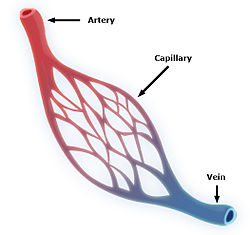
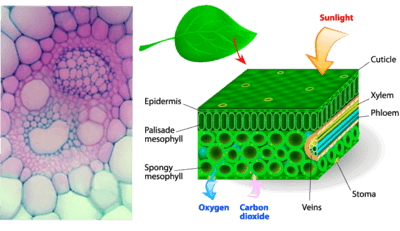
Recall that the movement of food in the phloem is called.
Translocation
Transpiration stream
Evaporation
Respiration
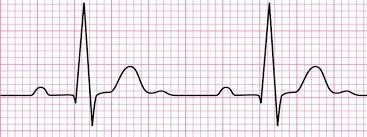
Type of device that records the electrical signal from your heart to check for different heart conditions.?
AED
MRI
ECG
CAT Scan
Which of the following indicates the pathway of water through a plant?
root hair cell --> xylem --> stomata
stomata --> root hair cell --> xylem
xylem --> stomata --> root hair cell
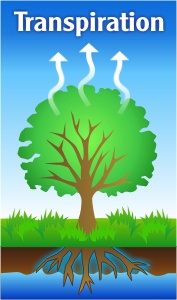
What is the size of a heart?
Closed fist
Hand
Open hand
Closed hand
Which of the following is the main circulatory fluid in our body ?
Plasma
Lymph
Blood
None of these
Why is color of blood red?
myoglobin
globulin
heamoglobin
fibrinogen
What is the function of white blood cells?
transport oxygen
fight against infection
clotting
all the above
The blood vessel which carries blood to the heart
lymphatic vessel
capillaries
veins
arteries
Instrument used to measure the heart beat
Endoscope
Kaleidoscope
Microscope
Stethoscope
Pulmonary artery carries what type of blood
Oxygenated
mixed
pure blood
Deoxygenated
Phloem helps in the transport of
Food
water
Food and Water
Oxygen
Human heart has -----------chambers
3
2
4
1
Aorta carries oxygenated blood to all parts of the body
True
False
No, pulmonary artery
No, pulmonary vein
Xylem transports
Food
Food and water
Water and minerals
Food, water and minerals
Vegetative propagation in potato takes place by
leaves
stem
root
seed
In …………………. reproduction, one individual can produce many individuals from its body parts.
(a)
Two individuals are needed for a sexual reproduction.
True
False
In which of the following plants buds are present on the margins of leaves?
Touch me not
Chandan
Bryophyllum
Coriander
Both stamen and carpel are present in …………………. flowers.
(a)
Seed is the only structure which develops into new plant.
True
False
In yeasts reproduction occurs by
fragmentation
binary fission
budding
spore formation
Budding is a type of …………………. reproduction.
(a)
Plants such as cacti produce new plants when their parts get detached from the main plant body.
True
False
Which of the following parts of a plant take part in sexual reproduction?
(i) Flower (ii) Seed (iii) Fruit (iv) Branch
(i) and (ii)
(i), (ii) and (iii)
(iii) and (iv)
(ii), (iii) and (iv)
The process of …………………. ensures continuity of life on the earth.
(a)
Plants produced by vegetative propagation take less time to grow and bear flower and fruit.
True
False
Lila observed that a pond with clear water was covered up with a green algae within a week. By which method of reproduction did the algae spread so rapidly ?
Budding
Sexual reproduction
Fragmentation
Pollination
…………………. are the reproductive parts of a plant.
(a)
The spores are asexual reproductive bodies.
True
False
Seeds of drumstick and maple are carried to long distances by wind because they possess
large and hairy seeds
long and ridged fruits long and ridged fruits
spiny seeds
winged seeds
Buds in potato are also called ………………….
(a)
Anther contains female gametes called eggs.
True
False
The ‘eye of the potato plant is what
the root is to any plant
the bud is to a flower
the bud is to Bryophyllum leaf
the anther is to stamen
Plants produce seeds as a result of …………………. reproduction.
(a)
The fruit is ripened ovary.
True
False
The ovaries of different flowers may contain
only one ovule
many ovules
one to many ovules
only two ovules
The small bulb like projection coming out from the yeast cell is called a ………………….
(a)
Seed dispersal in coconut is aided by winds.
True
False
Which of the following statements is/are true for sexual reproduction in plants?
(i) Plants are obtained from seeds
(ii) Two plants are always essential
(iii) Fertilisation can occur only after pollination
(iv) Only insects are agents of pollination
Choose from the options given below:
(i) and (ii)
(i) only
(i) and (ii)
(i) and (iv)
The …………………. develops into an embryo.
(a)
Fusion of male and female gametes is called pollination.
True
False
Pollination refers to the:
transfer of pollen from anther to ovary
transfer of male gametes from anther to stigma
transfer of pollen from anther to stigma
transfer of pollen from anther to ovule
The fruits are ripened ………………….
(a)
A bisexual flower has both male and female reproductive parts.
True
False
The distance covered by an object in a ________ is called as the speed.
Unit time
Unit length
Position
If an object keeps changing it's speed, then the motion is _______ .


The time taken by the pendulum to complete ________ is called it's
time period .
Ten oscillations
One oscillation
Five oscillations
The basic unit of speed is__________.
m/s
m/hr
km/hr
Who invented the pendulum clocks?
Galileo Galilie
James Watt
Albert Einstein
Earlier time measuring instrument


_______ measures the speed and ________ measures the distance moved by the vehicle.


A simple pendulum consists of a _________ and thread suspended from a rigid stand.


To and fro motion of a simple pendulum
shows __________ .


The most appropriate unit for expressing the speed of a space rocket is:
m/s
km/s
km/h
km/min
The instrument installed in a car for measuring the distance travelled by the car is called:
barometer
speedometer
anemometer
odometer
The slope of a distance-time graph of a moving object indicates:
distance moved by the object
time taken by the object
speed of the object
position of the object
The clocks and watches which are used for measuring time are based on :
Rectilinear motion
circular motion
periodic motion
rotational motion
The distance moved by an object in a unit time is called
Distance
Displacement
Time
Speed
The distance-time graph of vehicle moving with constant speed is a ________ line
Curved
horizontal
straight
parallel
The to and fro motion of a simple pendulum is an example of _________ motion.
Rectilinear
curvilinear
circular
oscillatory
A bus takes 30 minutes to travel a distance of 25 kilometers. The speed of the bus in km/h is :
55 km/h
50 km/h
5 km/h
75 km/min

The movement seen in a giant wheel is an example of _____________ motion.
Rectilinear
Circular

The above picture shows _____________ motion.
Circular
Rotational
Rectilinear
The formula to calculate distance is
S x T
T/S
S/T
A combination of two or more cells is called
A button cell
A battery
An electric cell
Truck battery
Substances through which electric charges cannot move freely-
Insulators
Conductors
Wood
Plastic

Which is true about a cell?
Longer line represent-Positive terminal and Shorter line represents-Negative Terminal
Longer line represent-Negative terminal and Shorter line represents-Positive Terminal
Both line represent-Positive Terminal
Both line represents-Negative Terminal

Three bulbs A, B, C are connected in a circuit as shown in Figure, When the switch is ‘ON'
bulb C will glow first.
bulb B and C will glow simulaneously and bulb A will glow after some time.
the bulbs will glow in the order A, B and C
all the bulbs A,B and C will glow at the same time
The heating effect of an electric current is used in
Hair dryer
A fan
A computer
Nichrome contains
20% nickel 80% chromium
80% nickel 20% chromium
40 % chromium 60% zinc
A fuse wire is a wire of-
High resistivity and low melting point
High resistivity and high melting point
Low resistivity and low melting point
Low resistivity and high melting point
When current is switched 'on' of a bulb it converts _______ energy into _______ energy.
Electrical, heat
Electrical, light
Electrical, mechanical
Electrical, sound
When current is switched on in an electric bell, it converts _______ energy into _______ energy.
Electrical, light
Electrical, sound
Electrical, heat
Mechanical, sound
Connection of more than one device/ appliance to a single socket is called-
Overloading
Short circuit
Both
A common household device, that do not use an electromagnet in its working, is-
The electric bell
Geyser
Telephone
Loud speaker
The filament of A bulb, is a wire of
High resistivity, low melting point
Low resistivity, low melting point
High resistivity, high melting point
Low resistivity, high melting point
The heating coils/elements of different electrical appliances are usually made from ________ or ________ wires.
1. Copper 2. Aluminum 3. Nichrome 4. Tungsten
1 & 2
1 & 4
2 & 4
3 & 4
When electric current flows through the metal filament of the bulb it gets heated to very high temperature and becomes______ hot and start emitting _______.
White, light
Red, light
White, heat
Red, heat
Which one of the following is the most energy efficient
LED
Incandescent bulb
CFL
Substances through which electric charges flow easily are called
Wire
Metal
Conductors
Insulators
Full form of-CFL
Compact Flood Light
Common Full Light
Compact Fluorescent Lamp
Compact Flood Lamp
WHo discovered the magnetic effect of current?
Galileo Galilei
Newton
Marconi
H C Oersted

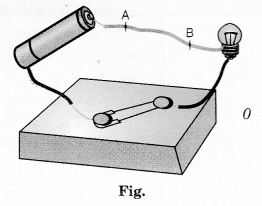
The given circuit is an example of __________ effect of electric current
Magnetic effect
Heating effect
Chemical effect
The instrument used to separate iron scrap from the junk yard that uses magnetic effect is


Magnetic effect of electric current was invented by
Coulomb
Oersted
Joule
When current is passed through a wire, it behaves like
Conductor
Magnet
Insulator
A current carrying conductor behaves like a magnet
till the current is flowing throuhg it
even though current is not passing
none of the above
Rajan made an electromagnet by winding 50 turns of the wire over an iron screw. Priya also made an electromagnet by winding 100 turns of the wire over an iron screw. which electromagnet will attract more pins?
Rajan's Electromagnet
Priya's Electromagnet
Both attract same number of pins
The magnetic strength of a conductor decreases with the increase in current
True
False
None of the above
It is important to use electrical appliances with _______ marks on it.
ISI
SIS
SSS
ASA
The hammer is attatched to the __________ which in turn strikes the _________.
Gong; Iron strip
Iron Strip; Gong
Electromagnet; Switch
Switch; Iron Strip
Q1. If in a circuit diagram containing a cell and nichrome wire tied between two nails, the cell is replaced by a battery then what will happen to the nichrome wire?
A)It gets red hot slowly.
B)No change in the temperature take place.
C)It will get red hot quickly.
D)The wire will break due to increase in strength of current.
Q3. Which among the following are the advantages of heating effect of current?
1.Can be used in electric fuse
2.Increases the life of several appliances in the circuit.
3.It helps in preventing loss of energy.
Q5. Tungsten is used for the manufacture of an electric bulb because
A)it is malleable
B) it is inexpensive
C) it has a very high melting point
D) it is a good conductor
Q10. Select the one that you will prefer to make an electromagnet.
A) Steel
B) Plastic
C) Stainless steel
D) Soft iron
element of an electric iron is made up of
nickel
chromium
nichrome
tungsten

A fuse wire is an alloy of ________ and _______ .
Steel and copper
iron and nickel
lead and tin
cobalt and iron

Full form of MCB is ?
Miniature Circuit Breaker
Minute Circuit Builder
Both of these
None of these
Which of the following cannot be an example for the use of electromagnets
Electric Bell
Doorbells
Oven
Phone
When an electric current flows through a copper wire AB as shown in Figure, the wire:
deflects a magnetic needle placed near it
becomes red hot
gives electric shock
behaves like a fuse
Why people prefer to put an MCB in their house instead of fuse nowadays- (Choose one or more options)
They are cheap.
Fuses need to be changed every time they blow out.
MCBs can be controlled manually.
Fuses are expensive.
Electromagnets are not used to lift heavy loads.
True
False
The magnitude of magnetism produced by an electric current in a wire depends upon- (a) Increases with an increase in the strength of electric current (b) Decreases, as the distance from the wire increases
Both a, b
Only a
Only b
None
Connection of more than one device/ appliance to a single socket is called-
part of g.k
Overloading
Short circuit
Both
Which year was observed as International Year of Fresh Water?
2003
2006
2008
1990
Which of the following does not show water shortage?
Taps running dry
Long queue for getting water
Marches and protests for demand of water
A family gets three buckets of water per person per day
------------- pressure on agriculture forces increasing use of groundwater?
Population
industries
all the above
Which of the following does not allow water to seep in easily?
graas
mud
pukka floor
all the above
Water is a what type of resource?
renewable resource
non-renewable resource
continuous resource
farmers in India depend upon ------- for irrigating their crops.
soil
seeds
rain
all the above
Why is fresh water a limited resource?
It isn't because it is a renewable resource
97% of water is in the oceans and too salty to drink.
Only 2.5% is drinkable and is stored in icecaps, rivers, and lakes.

What is 1 in the image .(Click on the image to see the whole image )
rainwater
groundwater
Hail
MELTING POINT OF ICE
18 DEGREE C
0 DEGREE C
-1 DEGREE C
10 DEGREE C
AMOUNT OF WATER COVERING EARTH
97%
74%
71%
68%
CHANGING OF WATER VAPOUR INTO CLOUDS
EVAPORATION
CONDENSATION
PRESIPITATION
THREE FORMS OF WATER
(a)
We have seen that most of the water that we get as rainfall just flows away. This is a waste of precious natural resource. The rainwater can be used to recharge the groundwater. What is this process called ? Choose 2 answers
Water saving
Rainwater harvesting
Rainwater saving
Water Harvesting
Which of the following is NOT a way water moves from the land to the air?
transpiration
respiration
evaporation
precipitation


What is happening in the image ?
Rainwater harvesting
Drip irrigation
EVAPORATION , CONDENSATION , PRECIPITATION ETC . ARE COMPRISED IN WHICH PROCESS ?
GROUNDWATER CYCLE
WATER CYCLE
DRIP IRRIGATION
The process of Water molecules turning into water vapour is called ___________?
Condensation
Precipitation
Evaporation
Irrigation
Which is the quality of water waste?
Dirty look
Foul smell
Mixed with lather
All of these
Which of the following is/are products of wastewater treatment?
Biogas
Sludge
Both biogas and sludge
Aerator
Water polluted by various human activities causes a number of water borne diseases. Which of the following is not a water borne disease?
Cholera
Typhoid
Asthma
Dysentery
Sewage treatment
is a process of waste water treatment.
refers to waste water that is released by homes, industries, hospitals etc.
refers to the rain water that run down the streets during heavy rains.
All of the above
In the treatment of waste water, following steps are involved. (i) aeration (ii) removal of large objects (iii) chlorination The correct order of these steps is
(i),(iii),(ii)
(iii), (ii), (i)
(i), (ii), (iii)
(ii), (i), (iii)
We should not throw cooking oil and paint down the drain because
they break the pipe
they harden and clog the pipe
they flow through the drain freely
None of these
Which of the following is a good practice be followed?
Cooking oil and paint should not be thrown down a drain.
Used tea leaves, solid food and cotton should not be thrown in the drain.
Chemicals like insecticides should not throw in the drain.
All of the above
Which process during waste water treatment helps in eliminating germs?
Aeration
Sedimentation
Chlorination
None of the above
Dried _____ is used as manure
slury
sewage
sand
sludge
In vermi-processing toilet the human excreta is treated by
Redworm
Tapeworm
Earthworm
Roundworm
Which gas is released during treatment of sludge?
(a)
Large objects and garbage in the wastewater are removed by passing them through the (a)
Cleaning of water is a process of removing (a) .
Name the toilets used in areas with limited water supply.
(a)
Water which is cleared from the floatable substances like oil and grease by a skimmer is called
(a)
when is the world water day celebrated ?
13 september
2 october
22 march
cleaning of water is a process of removing contaminants from the wastewater, which is commonly known as -----------
(a)
The dirty water or the uncleaned water that comes from the houses, factories, offices etc.. is commonly known as ..
blue water
wastewater
sewages
organic impurities contain-
human faeces , animal waste, oil, urea.
nitrates, phosphorus, metals.
vibro cholera
the pipes which carry the dirty water are known as -
(a)
large objects like rugs, napkins, plastic bags are removed by using ?
bar screens
sludge
aeration
the grit and sand remover tank removes (a)
human excreta and urea are removed by
sludge
bar screen
sea beds
the skimmer removes oil and grease
True
False
the anaerobic bacteria releases ozone gas
TRUE
FALSE
air is pumped into the clarified water for the growth of aerobic bacteria
TRUE
FALSE
name two chemicals used in wastewater treatment plant
(a)
the short form 'wastewater treatment plant' is
WWTP
WWWP
WPWP
the swatch bharat abhiyan was started in
2014
2015
2017
2016

Water that has been used in the home, in a business, or as part of an industrial process and also which is unclean is called
(a)
When is World Water Day celebrated?
May 22
June 23
March 22
March 12
Which of these create water pollution?


Which is the first process of Wastewater Treatment Plant(WWTP)?
Bar screen
Grit and sand removal tank
Water clarifier
Aerator

Any 1 method of reducing water pollution.
Water that is not fit for use is called
clean water
wastewater
both (a) and (b)
none of these
Which of the following is not a source of wastewater?
Industries
Homes
Sewers
Hospitals
The period of International Decade for action on ‘Water for Life’ is
2000-2010
2005-2015
2010-2020
2003-2013
The process of removing pollutants in water before it enter a water body is called
cleaning of water
refining
filtering of water
none of these
Suspended impurities contained by sewage are called
contaminants
sludge
grey water
none of these
Solid waste extracted during sewage treatment is known as
(a)
(a) is the equipment that removes floatable particles from wastewater is
Which of the following is a step of wastewater treatment?
Aeration
Chlorination
Filtration
All of these
Sewage is mainly a
liquid waste
solid waste
gaseous waste
Mixture of solid and gas
Tuberculosis is a water-borne disease?
True
False

