Wayground logo

Free Printable Worksheets

Font size

S
M
L
XL
Worksheets

REVIEW: 3C Energetics

Total questions: 51

Worksheet time: 1hrs 9mins

Name
Class
Date
1.

What is the correct chemical formula of glucose?

a)

C6H12O6

b)

C6H12O

c)

C2H12O6

d)

C6H6O6

2.

What is the correct equation for cellular respiration?

a)

O2 + C6H12O6 -> CO2 + H2O + Energy

b)

O2 + C6H12O6 + Energy -> CO2 + H2O

c)

CO2 + H2O -> O2 + C6H12O6 + Energy

d)

CO2 + H2O + Energy -> O2 + C6H12O6

3.

Why do plants conduct photosynthesis?

a)

To make light

b)

To make mitochondria

c)

To make glucose

d)

To release carbon dioxide

4.

Which product is "waste" and mostly released by the producer (plant)?

a)

oxygen

b)

carbon dioxide

c)

sugar

d)

glucose

5.
What are the reactants of cellular respiration?
a)
glucose & carbon dioxide
b)
glucose & oxygen
c)
water & oxygen
d)
water & carbon dioxide
6.

The purpose of cellular respiration is to

a)

make water

b)

make energy

c)

make glucose

d)

make oxygen

7.

When cells get energy from glucose without oxygen it is called _____________.

a)

cytoplasm

b)

fermentation

c)

photosynthesis

8.

What is the ultimate source of energy for all living things?

a)

electricity

b)

plants

c)

sun

d)

food

9.

In what organelle does photosynthesis take place in?

a)

chlorophyll

b)

chloroplast

c)

cytoplasm

d)

mitochondria

10.

Where does the first stage of cellular respiration take place?

a)

chlorophyll

b)

chloroplast

c)

cytoplasm

d)

mitochondria

11.
Photo means
a)
sun
b)
light
12.
Synthesis means 
a)
to make
b)
to tear apart
13.
The process by which sugar is converted into energy (ATP) by living organisms is called
a)
photosynthesis
b)
cellular respiration
14.
The products of cellular respiration are
a)
carbon dioxide, water, energy
b)
oxygen and sugar (glucose)
15.
The products of photosynthesis are
a)
carbon dioxide, water, energy
b)
sugar (glucose), oxygen, water
16.
The reactants in photosynthesis are
a)
carbon dioxide, water
b)
sugar (glucose), oxygen
17.
The reactants in cellular respiration are
a)
sugar (glucose), oxygen
b)
carbon dioxide, water
18.
The green pigment in plants is called
a)
melanin
b)
chlorophyll
19.
The green pigment in plants absorbs
a)
oxygen
b)
light
20.
Chlorophyll is the only pigment found in plants.
a)
false
b)
true
21.

What do plants need to perform photosynthesis?

a)

Love

b)

Soil with a high nitrogen (N) content

c)

Water (H2O) + Carbon Dioxide (CO2) and Sunlight Energy

d)

Pollinators such as bees and hummingbirds

22.

What does C6H12O6 tell you about the glucose molecule?

a)

That it has 6 carbon (C) atoms, 12 hydrogen (H) atoms, and 6 oxygen (O) atoms

b)

That it has too many atoms for us to count, so we just assign random numbers to show that its really big

c)

That it is smaller than a water (H2O) atom

d)

That it has 12 carbon (C) atoms, 12 hydrogen (H) atoms, and 12 oxygen (O) atoms

23.

In which cell organelle does PHOTOSYNTHESIS take place?

a)

The chloroplast

b)

The mitochondria

c)

The cytoplasm

d)

The golgi apparatus

24.

What process must cells undergo to convert the energy stored in glucose (C6H12O6) into useable cell energy (ATP)?

a)

Photosynthesis

b)

Cellular respiration

c)

Ketosis

d)

The macarena

25.

True of false: Plants do not need to undergo cellular respiration

a)

True

b)

False

26.

Why are many plants green?

a)

plant cells are green

b)

plants absorb green light

c)

chlorophyll reflects green light

d)

rigid cell walls are green

27.
Chloroplasts are...
a)
A type of pigment used for photosynthesis
b)
The location inside a plant cell where photosynthesis happens
c)
The location where cellular respiration happens
d)
Green beans
28.
Mitochondria are...
a)
The location in cells where photosynthesis happens
b)
Kidney beans
c)
The location in cells where cellular respiration happens
d)
A type of pigment used for cellular respiration
29.
ATP is...
a)
A form of energy the cell can use that is produced by cellular respiration
b)
A kind of sugar produced in photosynthesis
c)
A battery
30.
Plants can...
a)
Only use photosynthesis
b)
Only use cellular respiration
c)
Use photosynthesis and cellular respiration
31.

Animals can...

a)

Do the processes photosynthesis

b)

do the processes of cellular respiration

c)

Use photosynthesis and cellular respiration

32.
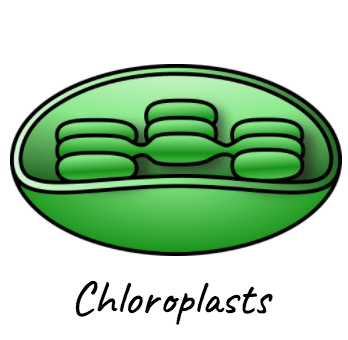
The stacks of disks in the chloroplast are called:
a)
Lamellae
b)
Grana
c)
Stroma
d)
Thylakoid
33.
The disks in the chloroplast are called:
a)
Lamellae
b)
Grana
c)
Stroma
d)
Thylakoids
34.
The interior space of the chloroplast is called:
a)
Lamellae
b)
Grana
c)
Stroma
d)
Thylakoids
35.
The electrons for the Light Reactions come from
a)
NADP+
b)
Water
c)
NADPH
d)
Glucose
36.
Chlorophyll gives leaves a green colour because it:
a)
Absorbs green light
b)
Reflects green light
37.
Bundles of pigments called photosystems absorb light and donate electrons to ETCs
a)
True
b)
False
38.
Where do the light reactions happen?
a)
mitochondria membrane
b)
thylakoid membrane
c)
stroma
d)
central vacuole
39.
What is the main purpose of the light dependent reactions?
a)
To provide the energy for the calvin cycle
b)
To capture energy and make sugar
c)
To reflect green light
d)
To make sugars
40.
What are the two products of the light reactions that are needed for the calvin cycle?
a)
NAD and NADPH
b)
NADP + and Glucose
c)
NADPH and ATP
d)
Oxygen and NADPH
41.
In the ________________________, energy from the sun is used to make ATP 
a)
light-independent reaction
b)
dark reaction
c)
light-dependent reaction
d)
Calvin cycle
42.

Pancake shaped compartments filled with chlorophyll, that form stacks called grana inside the chloroplast.

a)

chloroplast

b)

stroma

c)

grana

d)

thylakoids

43.
Krebs Cycle takes place in the:
a)
Cytoplasm
b)
Matrix
c)
Ribsome
d)
InterMembrane Space
44.
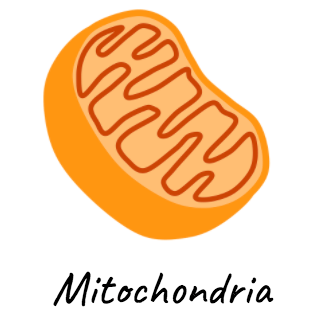
Folds in the mitochondrion are called:
a)
Cristae
b)
Matrix
c)
Golgi Bodies
d)
Carbuncles
45.
The inner most interior of the mitochondrion is called the:
a)
Cristae
b)
Matrix
c)
Golgi Bodies
d)
Carbuncles
46.
Krebs Cycle is part of_______________ respiration.
a)
Aerobic
b)
Anaerobic
47.

In what part of the mitchondria does the electron transport chain occur?

a)

Inner mitochondrial membrane (folds of the mitochondria)

b)

Outer mitochondrial membrane

c)

Cytoplasm

d)

Ribosomes

48.
What does ATP synthase do?
a)
Create ATP in chemiosmosis.
b)
Break down ATP in chemiosmosis.
c)
Break down NADPH. 
d)
Create NADPH.
49.
Cellular Respiration is considered aerobic because it:
a)
requires carbon dioxide
b)
requires glucose
c)
requires ATP
d)
requires oxygen
50.

Which of the following processes creates the most ATP during aerobic cellular respiration?

a)

glycolysis

b)

fermentation

c)

electron transport chain

d)

Citric acid cycle

51.

Please identify the proper locations for each step of cellular respiration.

a)

Glycolysis = Cytoplasm

b)

Glycolysis = Mitochondria

c)

Citric Acid Cycle = Cytoplasm

d)

Citric Acid Cycle = Mitochondria

e)

Oxidative Phosphorylation = Cytoplasm