

wayground logo

Free Printable Worksheets

NEW

Font size

S
M
L
XL
Worksheets

DNA Structure and Function

Total questions: 30

Worksheet time: 24mins
Name
Class
Date
1.
According to Chargaff's rule, Cytosine always pair with
a)
Adenine
b)
Uracil
c)
Thymine
d)
Gaunine
2.
What is the significance of the sequence (order) of the Nitrogen Bases in DNA?
a)
The order of the Nitrogen Bases determines the number of chromosomes present in an organism.
b)
The order of the Nitrogen Bases determines the traits that an organism will possess (have).
c)
The order of the Nitrogen Bases determines the gender of an organism.
d)
The order of the Nitrogen Bases determines whether an organism is abiotic biotic.
3.
Which of the following would be determined by the order of the Nitrogen Bases in your DNA?
a)
Your Gender.
b)
The Number of Chromosomes you have.
c)
Your hair color.
d)
The number of siblings you will have.
4.
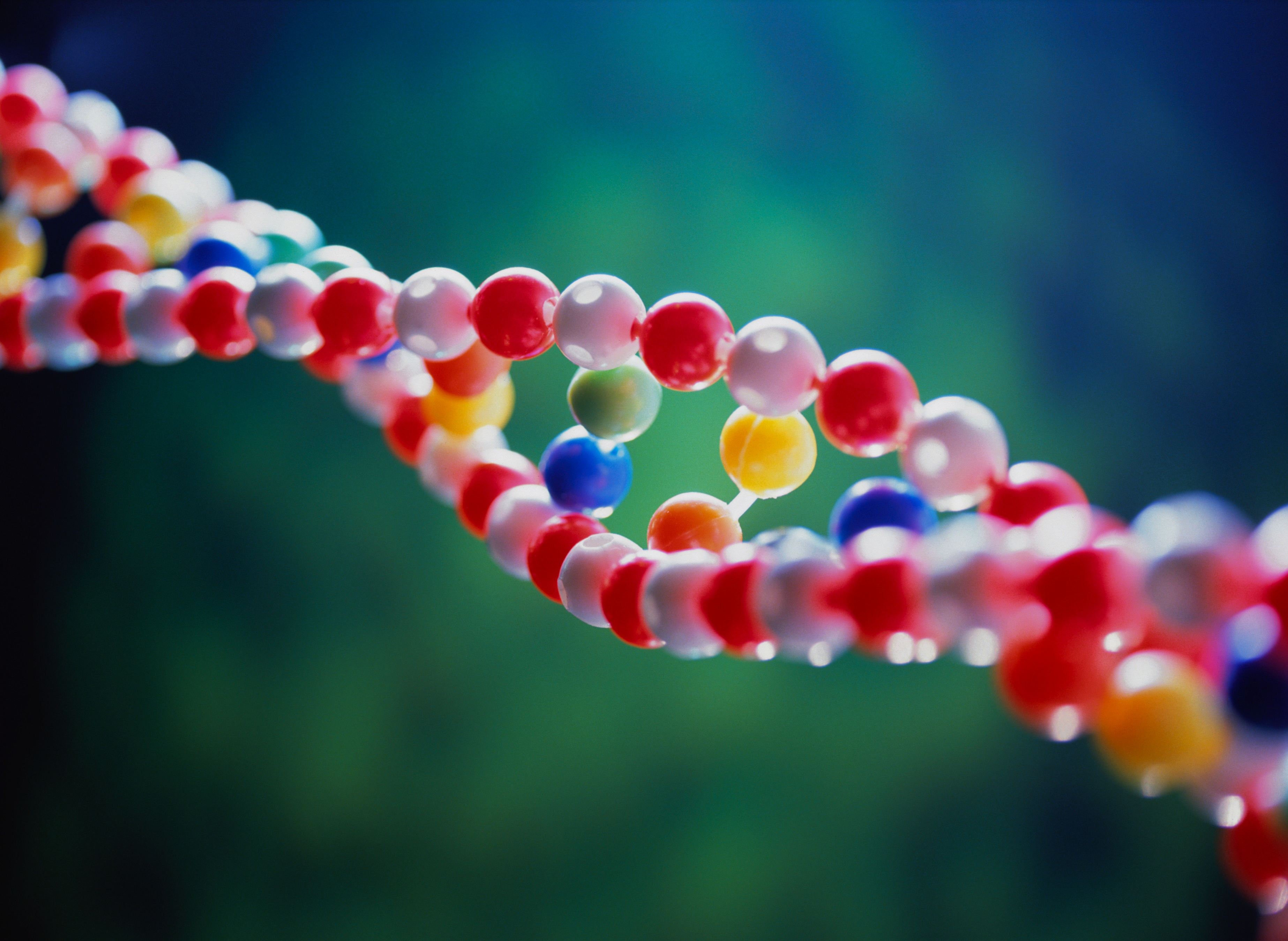
The twisted ladder shape of DNA is known as a
a)
Double Helix
b)
Triple Helix
c)
Single Helix
d)
Triple Helix
5.
How is the instructions for your traits carried on a DNA molecule?
a)
Sequence of the nitrogen bases
b)
In the 5 Carbon Sugar
c)
In the bond between the phosphate and the sugar
d)
In the phosphate group
6.
What is meant by the phrase "DNA is universal"?
a)
All organisms possess DNA made up of the same 3 components.
b)
All organisms share the exact same DNA
c)
DNA can be found throughout the universe
d)
DNA is found in Prokaryotes, Eukaryotes, and Viruses
7.
What are the nucleotides made of?
a)
Sugar, Phosphate, nitrogen base
b)
Phosphate, Adenine, nitrogen base
c)
Thymine, Adenine, Cytomine
d)
Phosphate, Nitrogen, Adenine
8.
Which of the following units are repeatedly joined together to form a strand of DNA? (This is the MONOMER of DNA.) 
a)
amino acids
b)
nucleotides
c)
fatty acids
d)
polysaccharides
9.
Adenine bonds with ______________.
a)
Guanine
b)
Thymine
c)
Cytosine
d)
Adenine
10.
Guanine bonds with ______________.
a)
Adenine
b)
Guanine
c)
Cytosine
d)
Thymine
11.
Why is DNA important?
a)
it is very small and very complicated
b)
it's in everything
c)
it serves as the blueprint for traits of all living things
d)
because we eat it every day for energy
12.
Which 2 molecules forms the sides (backbone) of the DNA ladder?
a)
deoxyribose and adenine
b)
deoxyribose and a hydrogen bond
c)
sugar and the nucleus
d)
deoxyribose (sugar) and phosphate
13.
Which organelle is DNA usually found in?
a)
cell membrane
b)
vacuole
c)
chloroplast
d)
nucleus
14.
What are the three components of a nucleotide?
a)
sugar, hydrogen, nitrogen base
b)
sugar, oxygen, nitrogen base
c)
sugar, phosphate, nitrogen base
d)
sugar, phosphate, protein
15.
DNA holds the code for
a)
lipids
b)
carbohydrates
c)
protein
d)
sugar
16.
What does DNA stand for?
a)
Deoxyribonucleic acid
b)
Denitrogenous acid
c)
Deribonucleic acid
d)
Diribonucleic acid
17.

The scientists who discovered the structure and function of DNA based on Rosalind Franklin’s Xray diffraction photograph.

a)

James Watson and Frances Crick

b)

Rosalind Franklin

c)

Maurice Wilkins

d)

all of the above

18.

The weak connection that holds together matching nitrogenous bases.

a)

Chronic Bond

b)

Peptide Bond

c)

Hydrogen Bond

d)

Double Helix

19.

The physical attributes of any living thing that come from the genetic code.

a)

Atom

b)

Mitochondria

c)

Genetic Traits

d)

Genome

20.

The scientific study of heredity

a)

Genetics

b)

Chomosome

c)

Alleles

d)

DNA

21.

The letters that represent the different forms of a gene

a)

Genetics

b)

Chomosome

c)

Alleles

d)

DNA

22.

The different forms of characteristic (ex. eye color)

a)

Genetics

b)

Traits

c)

Alleles

d)

DNA

23.

The trait that overshadows and is expressed

a)

dominant

b)

heredity

c)

gene

d)

recessive

24.

The trait that is hidden

a)

dominant

b)

heredity

c)

gene

d)

recessive

25.
combination of alleles (letters: DD, Dd, dd)
a)
phenotype
b)
genotype
c)
homozygous
d)
heterozygous
26.

The physical appearance of a trait (Ex. Dimples, no dimples)

a)

phenotype

b)

genotype

c)

homozygous

d)

heterozygous

27.

Franklin discovered two distinct forms of DNA.

a)

True

b)

False

28.

What did Franklin call her greatest discovery?

a)

Determining the structure of DNA

b)

Figuring out the complex structure of a virus

c)

The picture of Photo 51

d)

Working at King's College

29.

A change in a DNA sequence(order) that affects genetic information.

a)

Recessive trait

b)

Mutation

c)

Allele

30.
the process of making a copy of DNA
a)
transcription
b)
double helix
c)
DNA replication
d)
replication fork
