wayground logo

Free Printable Worksheets

Font size

S
M
L
XL
Worksheets

Bundle 6 Review

Total questions: 37

Worksheet time: 1hrs 27mins

Name
Class
Date
1.

You're starving during 3rd period and pull out a candy bar and eat it. What systems work together to control how much sugar enters your blood after eating the candy bar?

a)

Digestive and Circulatory

b)

Nervous and Endocrine

c)

Endocrine and Circulatory

d)

Muscular and Skeletal

2.

An organ, like your heart, is composed of

a)

the Circulatory System

b)

cardiac muscle (tissue)

c)

muscle cells

d)

mitochondria

3.

The plant hormone response to touch

a)

Thigmotropism

b)

Geotropism

c)

Phototropism

d)

Transpiration

4.
Which of the following removes carbon from the atmosphere?
a)
Combustion
b)
Respiration
c)
Photosynthesis
d)
Death
5.

What organisms in the ocean absorb the most carbon dioxide?

a)

Algae and marine plants

b)

Ocean mammals, like whales and dolphins

c)

Fish

d)

Coral

6.

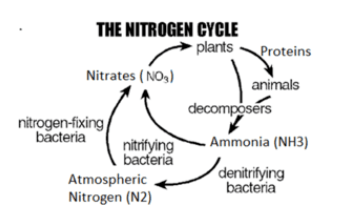
According to this diagram, plants use nitrogen to make _________________________

a)

carbohydrates

b)

cellulose

c)

proteins

d)

unsaturated fats

7.
What type of succession is shown going from figure A to figure B?
a)
primary succession
b)
eutrophication
c)
secondary succession
d)
intermediate
8.
Which catastrophic event will most likely have the effect of returning an ecosystem to primary succession?
a)
A tornado
b)
A volcanic eruption
c)
A flood
d)
A drought
9.
If a frog is the prey, what could be the predator?
a)
Grass
b)
Insect
c)
Snake
d)
Snail
10.
In a food web, arrows point at:
a)
who gets energy.
b)
who gets eaten.
11.
If the grasshopper were to be removed completely from the food web, what organism would be most effected?
a)
The squirrel
b)
The shrew
c)
The deer
d)
The rabbit
12.
Which organism in this food chain is a secondary consumer?
a)
Fish
b)
Grass
c)
Grasshopper
d)
Hawk
13.
How much energy is passed from one trophic level to the next?
a)
1%
b)
10%
c)
50%
d)
100%
14.
In this food chain, the bacteria is most likely acting as a -
a)
predator
b)
competitor
c)
decomposer
d)
producer
15.
Which organism in this food chain is a secondary consumer?
a)
Fish
b)
Grass
c)
Grasshopper
d)
Hawk
16.
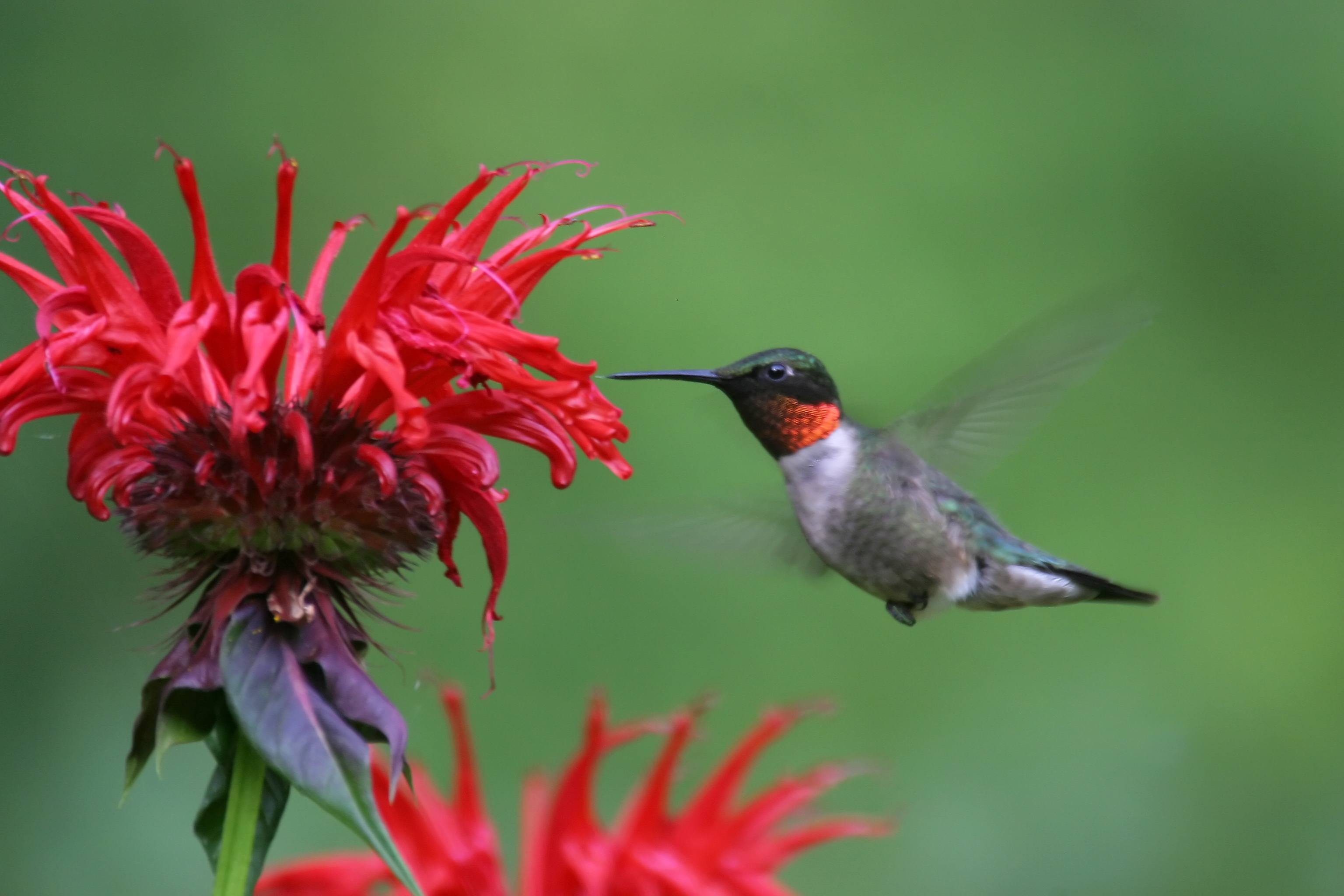
What type of symbiosis?  Hummingbirds feed on nectar from flowers.  The flowers are pollinated by hummingbirds as they move from flower to flower.
a)
commensalism
b)
mutualism
c)
parasitism
d)
predation
17.

A lion kills and eats a zebra. This is an example of

a)

Symbiosis

b)

Competition

c)

Predation

18.
The introduction of a non-native species into an ecosystem can result in serious ecological problems.  This is often because the non-native species
a)
adapt to changes quickly
b)
mutations
c)
lacks natural predators 
d)
provides additional genetic diversity
19.
How do adaptations help animals?
a)
to hide from predators
b)
to hunt for food
c)
to survive in their habitats
d)
All of these are correct
20.

The process of using oxygen to break down sugar in food and producing energy (ATP) in cells.

a)

Breathing or Ventilation

b)

External Respiration

c)

Internal Respiration

d)

Cellular Respiration

21.

Olympic sprinters undergo increased heart and breathing rates while competing. Which of the following best describes the interactions among systems of a sprinter?

a)

Respiratory system is working to obtain more oxygen, while the circulatory system works to transport the oxygen to the muscles.

b)

The digestive system takes in more glucose, while the excretory system removes waste.

c)

The endocrine system transports ATP to the nervous system

d)

Excretory system removes waste from the digestive system to reduce weight so the sprinter can run faster

22.

Desert plants have adaptations for survival, such as -

a)

Stems and roots store water

b)

Leaves with waxy coating or hairy covering

c)

Fewer and smaller stomata

d)

All of these choices

23.

The digestive and respiratory systems pair together to ...

a)

bring carbon dioxide and wastes to cells for diffusion.

b)

bring oxygen and wastes to cells for diffusion.

c)

bring oxygen and nutrients to cells for cellular respiration.

d)

bring carbon dioxide and nutrients to cells for cellular respiration.

24.

The immune system fights diseases. The circulatory system pairs with the immune system because ___.

a)

blood is made in the bones.

b)

plasma carries nutrients.

c)

red blood cells carry oxygen.

d)

white blood cells fight infection.

25.

What is a major role of the endocrine system?

a)

release hormones to control many body functions

b)

digest and absorb food

c)

transport nutrients through the blood

d)

first line of defense from infection

26.

In the carbon cycle, animals can release carbon back into the cycle through __________ or through __________.

a)

burning . . . photosynthesis

b)

fixation . . . decomposition

c)

decomposition . . . photosynthesis

d)

respiration . . . decomposition

e)

respiration . . . photosynthesis

27.
Bacteria fix nitrogen on plant roots. Plant roots provide sugar to bacteria. This is an example of
a)
mutualism
b)
parasitism
c)
commensalism
d)
competition
28.
How nitrogen is "fixed" into useable form for plants
a)
only through action of bacteria
b)
only through lightning
c)
through action of bacteria & lightning
d)
through photosynthesis
29.

What is the best definition of animal adaptation?

a)

Changes to an animal's diet.

b)

Characteristics that help animals survive.

c)

Characteristics of an animal's habitat.

d)

Skills learned in order to hunt.

30.
Why might some plants that grow on the shady rain forest floor have large leaves?
a)
to stay safe from predators
b)
to attract different animals
c)
to survive harsh winters with heavy snowfall
d)
to take in as much sunlight as possible
31.
Some grasses grow in hot dry areas. Why might they grow deep roots?
a)
to protect the plant from sun damage
b)
to take in as much light as possible
c)
to spread seeds to new places
d)
to reach water down below
32.

What term best relates to equilibrium?

a)

pioneer species

b)

primary succession

c)

secondary succession

d)

climax community

33.
In an energy pyramid, energy_______ as you move up the pyramid.
a)
Increases
b)
Decreases
c)
Stays the same
d)
Changes up and down
34.
The diagram represents a pyramid of energy in an ecosystem.  Which level would most likely contain members of the plant kingdom?
a)
A
b)
B
c)
C
d)
D
35.
The diagram represents a model of a food pyramid.  Which statement best describes what happens in this food pyramid?
a)
More organisms die at higher levels than at lower levels, resulting in less mass at higher levels.
b)
Energy is lost to the environment at each level, so less mass can be supported at each higher level.
c)
When organisms die at higher levels, their remains sink to lower levels, increasing the mass of lower levels.
d)
Organisms decay at each level, and thus less mass can be supported at higher levels
36.
Fill in the blanks:
"The ________ system allows us to move around, but the _________ system controls our movement."
a)
Skeletal, Nervous
b)
Nervous, Skeletal
c)
Muscular, Skeletal
d)
Nervous, Muscular
37.
Alveoli are microscopic air sacs in the lungs of mammals.  Which statement best describes how the structure of the alveoli allows the lungs to function properly?
a)
they increase the amount of energy transferred from the lungs to the blood.
b)

they increase the flexibility of the lungs as they expand during inhalation

c)
they increase the volume of the lungs, allowing more oxygen to be inhaled
d)

they increase the surface area of the lungs, allowing efficient gas exchange