wayground logo

Free Printable Worksheets

Font size

S
M
L
XL
Worksheets

EDO WEP2

Total questions: 127

Worksheet time: 1hrs 8mins

Name
Class
Date
1.
Blind Hole
a)
A straight Hole that does not go all the way through a part
b)
A hole running diagonally through a back corner
c)
A hole with a slanted recess above the hole
2.
Countersink hole
a)
A hole with a slanted recess above the hole
b)
A straight Hole that does not go all the way through a part
c)
A hole running diagonally through a back corner
3.
How should arcs be defined?
a)
by their radius
b)
A hole with a slanted recess above the hole
c)
by their depth
d)
by their tangents
4.
A piece of code that is capable of copying itself and destroying data and shutting down a computer.
a)
virus
b)
by their radius
c)
loop
d)
python
5.
What is criteria?
a)
a means of judging; a standard, rule or test by which something can be judged
b)
Unmanned Aerial Vehicle
c)
the limits for completing a project<br />
6.
First-Angle Projection
a)
The form of projection where the front view is located above the top view, or in the first quadrant.
b)
a means of judging; a standard, rule or test by which something can be judged
c)
Form of projection most commonly used in the US, where the front view is located below the top view
7.
Third-Angle Projection
a)
Form of projection most commonly used in the US, where the front view is located below the top view
b)
The form of projection where the front view is located above the top view, or in the first quadrant.
c)
projection sections shown before May 4th
8.
Define innovation
a)
an improvement of an existing technological product, system, or method of doing something
b)
0.001 inches
c)
a new idea with no previous inspiration
9.
What is a translation?
a)
motion in which all particles of a body move with the same velocity along parallel paths
b)
an improvement of an existing technological product, system, or method of doing something
c)
a way to say measurements with different units for countries other than USA that makes you sound cool
10.
What is asymmetry?
a)
a condition in which both halves of a composition are not identical; also referred to as informal balance
b)
a relationship from one set (called the domain) to another set (called the range) that assigns to each element of the domain exactly one element of the range; the action or actions that an item is designed to perform
c)
a condition in which both halves of a composition are identical; also referred to as balanced
11.
Projection Plane
a)
A type of view in which graphical projections from an object intersect
b)
a condition in which both halves of a composition are not identical; also referred to as informal balance
c)
a plane simulator that uses projection technology to predict and adapt flight plans
12.
Centerpoint
a)
A point in a polygon or circle that is equidistant from its sides.
b)
A type of view in which graphical projections from an object intersect
c)
the tangent point or edge
13.
Flush
a)
Will align two surfaces so that they are parallel and on one single plane.
b)
A point in a polygon or circle that is equidistant from its sides.
c)
alignment that includes an appropriate offset for mechanical finishing
14.
Isometric View
a)
A pictorial view which all three axes, show at 120 degrees.
b)
Will align two surfaces so that they are parallel and on one single plane.
c)
a pictorial representation that includes views of the major sides determined by projecting on to them
15.
What is a revolution?
a)
creating a 3D solid or surface by moving all the parts of a 2D shape in circular paths around an axis
b)
a repeated decorative design
c)
creating a 3D solid based off a sphere
16.
What is a multiview drawing?
a)
A drawing which contains views of an object projected onto two or more orthographic planes.
b)
creating a 3D solid or surface by moving all the parts of a 2D shape in circular paths around an axis
c)
A pictorial view which all three axes, show at 120 degrees.
17.
What is the origin?
a)
a fixed point from which coordinates are measured
b)
A drawing which contains views of an object projected onto two or more orthographic planes.
c)
a black hole
18.
What is gestalt?
a)
the principle that maintains that the human eye sees objects in their entirety before perceiving their individual parts
b)
a fixed point from which coordinates are measured
c)
the principle that maintains that the human eye sees only what the Matrix wants it to see
19.
What are 4 things that can be displayed in the browser of Inventor Software?
a)
constraints, file names, sketches, features
b)
Constance, fine gnomes, skaters, followers
c)
constants, find gnomes, skeeters, feathers
20.
Oblique View
a)
A 3 dimensional straight on front view, with the depth shown a skewed, usually at 45 degrees. cabinet- half cavalier-full
b)
constraints, file names, sketches, features
c)
A drawing which contains views of an object projected onto two or more orthographic planes.
21.
Vertex
a)
Angle formed by the intersection of two lines or planes.
b)
A 3 dimensional straight on front view, with the depth shown a skewed, usually at 45 degrees. cabinet- half cavalier-full
c)
rounded edge of an object
22.
Scale
a)
Ratio of the size of a model or other representation, to the actual size of the object represented.
b)
Angle formed by the intersection of two lines or planes.
c)
System that uses one or more coordinates to uniquely determine the position of the points.
23.
Coordinate System
a)
System that uses one or more coordinates to uniquely determine the position of the points.
b)
Ratio of the size of a model or other representation, to the actual size of the object represented.
c)
the use of software to control machine tools and relate in the manufacturing of work pieces
24.
What is an assembly?
a)
a group of machined or handmade parts that fit together to form a self-contained unit
b)
a flat surface on which a straight line joining any 2 points would wholly lie
25.
What is an extrusion?
a)
a modeling process that creates a three-dimensional form by defining a closed two-dimensional shape and length; a manufacturing process that forces material through a shaped opening
b)
a group of machined or handmade parts that fit together to form a self-contained unit
26.
What is a systematic problem-solving strategy, with criteria and constraints, used to develop many possible solutions to solve a problem or satisfy human needs and wants and to narrow down the possible solutions to one final choice?
a)
design process
b)
a modeling process that creates a three-dimensional form by defining a closed two-dimensional shape and length; a manufacturing process that forces material through a shaped opening
27.
What measurement system is also called the international system of units?
a)
metric
b)
design process
c)
imperial
d)
the United State's<br />
28.
Tapped hole
a)
A hole that has threads inside
b)
metric
c)
A hole that has threads inside
29.
What is contrast?
a)
a thing which differs in some way from other of the same general class
b)
A hole that has threads inside
c)
Angle more than 90 degrees.
30.
What is scoring?
a)
making an impression or crease in a box blank to facilitate bending, folding, or tearing
b)
a thing which differs in some way from other of the same general class
31.
Acute
a)
Angle less than 90 degrees.
b)
making an impression or crease in a box blank to facilitate bending, folding, or tearing
32.
Section view
a)
A view that show interior details of a part / sliced view.
b)
Angle less than 90 degrees.
c)
projection sections that are 120 degrees
33.
Collinear
a)
Lying on the same line.
b)
an engineering design that does not end with an optimal solution, it is redesign and improved upon over time
34.
How should holes be dimensioned?
a)
diameter
b)
a group technique for solving problems, generating ideas, stimulating creative thinking, etc by unrestrained spontaneous participation in discussion
c)
carefully
35.
Leader Line
a)
Lines Used to connect a specific note.
b)
constraints
c)
lines at the beginning of an object
36.
Miter Line
a)
A convenient method of laying out a third view while you are in the process of drawing two views.
b)
Extends straight in both directions.
c)
in the internal line of inscribed circles
37.
Define a shape.
a)
the two-dimensional contour that characterizes an object or are, in contrast to three-dimensional form
b)
Surface at an angle from horizontal.
c)
A convenient method of laying out a third view while you are in the process of drawing two views.
38.
What is a tangible artifact produced by means of either human or mechanical work, or by biological or chemical process?
a)
product
b)
the two-dimensional contour that characterizes an object or are, in contrast to three-dimensional form
c)
Surface at an angle from horizontal.
39.
What is message analysis ?
a)
the process of deciding what information needs to go into the graphic design, as well as how to effectively use the design elements and principles to present the information; based on a thorough analysis of an audience
b)
A hole with a straight recess above the hole
40.
Orthographic Projection
a)
A method of projection in which an object is depicted using parallel lines to project its shape onto a plane.
b)
a type of 3D CAD modeling that represent the volume of an object, not just its lines and surfaces
41.
What is assembly drawing?
a)
a drawing that shows parts of an item when put together
b)
A method of projection in which an object is depicted using parallel lines to project its shape onto a plane.
42.
Coplanar
a)
Lying on the same plane.
b)
a drawing that shows parts of an item when put together
43.
Through hole
a)
A hole that is cut all the way through an object
b)
taking something apart to see how it works
44.
tolerance
a)
Total permissible variation in the size or location dimension.
b)
A hole that is cut all the way through an object
c)
half of the permissable variance
45.
Auxiliary View
a)
When you need to show the actual size and shape of an inclined part or object.
b)
Total permissible variation in the size or location dimension.
c)
a view that is from the back or underneath
46.
When finding the solution to an engineering problem, there is/are usually
a)
many possible correct solutions
b)
limitation
c)
no possibilities
47.
A project manager meets with engineers to discuss the role that everyone in the company will play in creating a new product. They decide that they will all receive their tasks up front and work simultaneously together.
a)
Concurrent engineering
b)
many possible correct solutions
c)
Concatenate engineering
d)
no longer reading the questions
48.
What is the point of a decision matrix?
a)
To decide which solution will be the most efficient
b)
Concurrent engineering
c)
just clicking
49.
Which of the following describes a process in engineering that allows different companies to work on a common design?
a)
Engineering without walls
b)
To decide which solution will be the most efficient
50.
Troubleshoot
a)
Look for malfunction or problem in a technological system. (to find out why something doesn't work so it can be fixed.)
b)
Engineering without walls
c)
To decide which solution will be the most efficient
51.
A team of engineers is asked to design a scooter for less than $20. They decide that they will only use recycled materials. Which of the following is the team’s constraint?
a)
cost less than $20 to produce
b)
Look for malfunction or problem in a technological system. (to find out why something doesn't work so it can be fixed.)
52.
Objective
a)
based on facts rather than feelings or opinions
b)
cost less than $20 to produce
c)
based on or influenced by personal feelings, tastes, or opinions
53.
Subjective
a)
based on or influenced by personal feelings, tastes, or opinions
b)
based on facts rather than feelings or opinions
54.
Quantitative Data
a)
numerical data
b)
biased on or influenced by personal feelings, tastes, or opinions
c)
Information describing color, odor, shape, or some other physical characteristic
55.
Qualitative Data
a)
Information describing color, odor, shape, or some other physical characteristic
b)
numerical data
c)
biased on or influenced by personal feelings, tastes, or opinions
56.
Inference
a)
A conclusion reached on the basis of evidence made from observations.
b)
Information describing color, odor, shape, or some other physical characteristic
57.
System
a)
A group of parts that work together to perform a function or produce a result
b)
A conclusion reached on the basis of evidence made from observations.
58.
Input
a)
The material or energy that goes into a system
b)
A group of parts that work together to perform a function or produce a result
59.
Trade-off
a)
a trade in which one benefit is given up in order to get a different benefit
b)
The material or energy that goes into a system
60.
Feedback
a)
The output that changes the system in some way
b)
a trade in which one benefit is given up in order to get a different benefit
61.
Risk-benefit analysis
a)
evaluating the possible risks and benefits
b)
The output that changes the system in some way
62.
Which one best describes what a Process Engineer would do?
a)
Determine the best way to make a product and to ensure it is built correctly.
b)
a legal document issued by a government that gives the inventor exclusive rights to make, use, or sell the invention
63.
What is the purpose of a drivetrain?
a)
Delivers power to the robot’s wheels
b)
Determine the best way to make a product and to ensure it is built correctly.
c)
Delivers sensor input to the robot’s processrs
64.
Assume that there are two robots that are identical in every way, except for the size of their wheels. The robot with _______________ wheels will move _______________ than the other robot.
a)
larger, faster
b)
Delivers power to the robot’s wheels
c)
larger, slower
d)
smaller, faster
65.
Computer Numerical Control (CNC)
a)
Converts the CAD models into 3-D shapes
b)
larger, faster
c)
Converts the 3-D shapes into CAD models
66.
Ethics
a)
A system of values based on what is right and what is wrong.
b)
Converts the CAD models into 3-D shapes
67.
Computer Simulations
a)
Used for testing because they take relatively little time and money to set up and run, but much can be learned.
b)
A system of values based on what is right and what is wrong.
c)
Used for testing because they take relatively little time and money to set up and run, but much can be learned.
68.
Specification Sheets
a)
Provide the necessary technical information to the builder or manufacturer of the product.
b)
Used for testing because they take relatively little time and money to set up and run, but much can be learned.
69.
Unidirectional Dimensioning
a)
A dimensioning system which requires all numerals, figures and notes t be lettered horizontally and to be read from the bottom of the sheet
b)
Provide the necessary technical information to the builder or manufacturer of the product.
c)
A dimensioning system which requires all numerals, figures and notes t be lettered vertically and to be read from the top of the sheet
70.
Hidden Line
a)
A line type that represents an edge that is not directly visible.
b)
A dimensioning system which requires all numerals, figures and notes t be lettered horizontally and to be read from the bottom of the sheet
c)
A line type that represents an edge that is directly visible.
71.
Inscribe
a)
A shape drawn inside a circle
b)
A line type that represents an edge that is not directly visible.
c)
A shape drawn outside a circle
72.
Dual Dimensions
a)
Where alternate units are displayed within the same dimension.
b)
A tolerance in which variation is permitted in both directions from the specified dimension.
73.
By-product
a)
Something produced in the making of something else; a secondary result; a side effect
b)
Where alternate units are displayed within the same dimension.
74.
American National Standards Institute (ANSI)
a)
A private, non-profit organization that coordinates the development and use of a voluntary consensus standards in the United States.
b)
A government organization whose mission is to assure the safety and health of America's workers by setting and enforcing standards; providing training, outreach, and education; establishing partnerships; and encouraging continual improvement in workplace safety and health.
75.
Broken-Out Section
a)
A section of an object broken away to reveal an interior feature for a sectional drawing.
b)
A private, non-profit organization that coordinates the development and use of a voluntary consensus standards in the United States.
76.
Synergy
a)
When the unit or team becomes stronger than the sum of the individual members.
b)
A section of an object broken away to reveal an interior feature for a sectional drawing.
77.
Degree of Freedom
a)
The variables by which an object can move. In assemblies, an object floating free in space with no constraints to another object can be moved along three axes of translation and around three axes of rotation. Such a body is said to have six degrees of freedom.
b)
When the unit or team becomes stronger than the sum of the individual members.
78.
Baseline Dimensioning
a)
System of dimensioning in which all dimensions are placed from a datum and not from feature to feature
b)
The variables by which an object can move. In assemblies, an object floating free in space with no constraints to another object can be moved along three axes of translation and around three axes of rotation. Such a body is said to have six degrees of freedom.
c)
System of dimensioning in which all dimensions are placed from feature to feature not referencing a datum.
79.
Axis
a)
Primary direction in a coordinate system
b)
System of dimensioning in which all dimensions are placed from a datum and not from feature to feature
80.
Maximum Material Condition (MMC)
a)
The largest size limit of an external feature and the smallest size limit of an internal feature.
b)
Primary direction in a coordinate system
c)
The smallest size limit of an external feature and the largest size limit of an internal feature.
81.
Gantt Chart
a)
A time and activity bar chart that is used for planning, managing, and controlling major programs that have a distinct beginning and end.
b)
The largest size limit of an external feature and the smallest size limit of an internal feature.
82.
International Organization for Standardization (ISO)
a)
A non-governmental global organization whose principal activity is the development of technical standards through consensus.
b)
A time and activity bar chart that is used for planning, managing, and controlling major programs that have a distinct beginning and end.
83.
Ergonomics
a)
The study of workplace equipment design or how to arrange and design devices, machines, or workspace so that people and things interact safely and most efficiently.
b)
A professional engineering organization that is known for setting codes and standards for mechanical devices in the United States.
84.
Least Material Condition (LMC)
a)
The smallest size limit of an external feature and the largest size limit of an internal feature.
b)
The study of workplace equipment design or how to arrange and design devices, machines, or workspace so that people and things interact safely and most efficiently.
85.
Line Conventions
a)
Standardization of lines used on technical drawings by line weight and style.
b)
The smallest size limit of an external feature and the largest size limit of an internal feature.
86.
Design Brief
a)
A written plan that identifies a problem to be solved, its criteria, and its constraints. The design brief is used to encourage thinking of all aspects of a problem before attempting a solution.
b)
Standardization of lines used on technical drawings by line weight and style.
87.
Arbitration
a)
The hearing and determination of a dispute or the settling of differences between parties by a person or persons chosen or agreed to by them.
b)
A written plan that identifies a problem to be solved, its criteria, and its constraints.
c)
The design brief is used to encourage thinking of all aspects of a problem before attempting a solution.
88.
Mediation
a)
The act or process of using an intermediary to effect an agreement or reconciliation.
b)
A model or replica of a machine or structure for instructional or experimental purposes. Also referred to as an Appearance Model.
c)
the act of concentration through mind emptying
89.
The design and construction of an aircraft carrier would fall under which category?
a)
Systems design
b)
The degree of closeness of measurements of a quantity to the actual (or accepted) value.
c)
reverse engineering
d)
tested through trial and error engineering<br />
90.
Which of the following describes a process in engineering in which products are deconstructed and reconstructed to see how they work?
a)
Reverse engineering
b)
Systems design
c)
trouble
91.
_____ means something is able to be maintained without causing harm to the environment or using up natural resources
a)
Sustainable
b)
Reverse engineering
c)
unsustainable
92.
call
a)
using a name of a procedure in a program causing it to run
b)
process for creating solutions to problems that will be carried out by a computer
c)
variables that are integral to a computers function
93.
IDE
a)
integrated development environment program, a program used to type out and edit code
b)
using a name of a procedure in a program causing it to run
c)
variables that are integral to a computers function
94.
servers
a)
specialized computers with massive amounts of storage
b)
integrated development environment program, a program used to type out and edit code
95.
brute force attack
a)
when a hacker uses a computer to guess every possible authentication
b)
specialized computers with massive amounts of storage
96.
Which measurement of electric represents the amount of charge in a circuit?
a)
amps
b)
when a hacker uses a computer to guess every possible authentication
97.
Which measurement of electric records the force causing the electrons to travel?
a)
voltage
b)
amps
c)
watt
d)
kwh
98.
power
a)
the rate at which energy is converted; measured in watts (W).
b)
Lamp
c)
energy x time
d)
of grayskull
99.
turbine
a)
large wheel that rotates when pushed by steam, wind, or water and provides mechanical energy to a generator.
b)
device that uses electromagnetic induction to convert mechanical energy to electrical energy.
100.
A short circuit is
a)
A circuit that only contains a battery and wire
b)
the transfer of excess charge through a conductor to Earth
101.
If you remove one light bulb in this type of circuit, the other light bulbs will remain ON.
a)
PARALLEL
b)
A circuit that only contains a battery and wire
c)
series
102.
If you connected two 1.5V cells in series what do you have?
a)
A 3V battery
b)
PARALLEL
c)
2.25 volts
103.
Current in a series circuit _____________.
a)
stays the same
b)
A 3V battery
c)
changes with the time of day
104.
What is direct current (dc)?
a)
electrons flow in one direction
b)
static electricity
c)
electrons alternate flow direction
105.
Current is measured in...
a)
amps
b)
electrons flow in one direction
c)
volts
d)
Ohms
106.
If R = 17 and V = 34, how much does I equal?
a)
2
b)
0.5
c)
20
d)
51
107.
If V = 180 and R = 4, what does I equal?
a)
45
b)
720
c)
0.02
d)
184
108.
Current is measured in...
a)
amps
b)
volts
c)
ohms
d)
watts
109.

What is the reading?

a)

.424

b)

.349

c)

.324

d)

.351

110.

What is the reading?

a)

.305

b)

.295

c)

.330

d)

.405

111.

What is the reading?

a)

.819

b)

.944

c)

.844

d)

.861

112.

What is the name of the part labelled B in the diagram?

a)

Slider

b)

Internal jaws

c)

Outside jaws

d)

Depth bar

e)

Main scale

113.

State the name of the parts labelled A in the diagram?

a)

Main scale

b)

Depth bar

c)

External jaws

d)

Internal jaws

e)

Sliding jaw

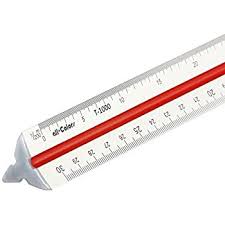
114.

Its main purpose is to reproduce, reduce or enlarge the dimension of size on a drawing.

a)

Ruler

b)

Triangle

c)

Triangular Scale

d)

Tape Ruler

115.
OSHA is the federal government agency that monitors safety standards in the workplace.
a)
true
b)
false
116.
When an engineering design specialist has technical skills, soft skills are not important for continued employment or promotion.
a)
true
b)
false
117.
What organization(s) provide(s) recognized standards for drafting procedures?
a)
ADDA
b)
ANSI and ISO
c)
SkillsUSA-VICA
d)
CAD/CAM
e)
OSHA
118.

What type of tolerance is this?

a)

Limit Dimension

b)

Bilateral Equal

c)

Unilateral

d)

Bilateral Unequal

119.

What type of tolerance is this?

a)

Limit Dimension

b)

Bilateral Equal

c)

Unilateral

d)

General Tolerance

120.

What type of tolerance is this?

a)

Limit Dimension

b)

Bilateral Equal

c)

Unilateral

d)

Bilateral Unequal

121.

This picture shows

a)

A counterbore hole, .375 inches in diameter

b)

A countersink hole, .375 inches in diameter

c)

A counterbore hole, .312 inches in diameter

d)

A countersnore

122.

Do these two pictures depict the same hole?

a)

yes

b)

no

c)

not enough information given

123.

What is the tolerance amount shown below?

a)

.03

b)

.04

c)

.06

d)

.09

124.

What is the tolerance amount shown below?

a)

.04

b)

.08

c)

.4

d)

.8

125.

The shaft is same diameter as the hole:

a)

Transition Fit

b)

Clearance Fit

c)

Interference Fit

d)

Stay Fit

126.

What bands was Harry Styles in?

a)

White Eskimo

b)

One Direction

c)

The Beatles

d)

Pink Floyd

e)

Red Hot Chili Peppers

127.

The best cryptid is

a)

Mothman

b)

Flatwoods Monster

c)

Ol' Nessie

d)

a Narwhal