
 Worksheets
Exam Review/Class
Total questions: 132
Worksheet time: 2hrs 39mins
atomic number
number of protons/stands for an element
number of neutrons
number of electrons
number of protons and neutrons
mass number
number of protons
number of electrons
number of protons and electrons
number of protons and neutrons
atomic symbol
capital letter
lowercase letter
2 capital letters
2 lowercase leters

What is the atomic mass of this element?
20
60
40
41

What is the symbol of this element?
Calcium
P
Ca
C
A molecule is
a singular particle of a particular element
another name for an element
2 or more atoms that are combined

What is the number of protons that the element in this image contain?
14
7
15
18
True or False? Neutrons have a negative charge
True
False


What is the charge of a sodium ion?
+2
+1
-1
-2


Silver
(a)
Xenon
(a)
Potassium
(a)

How many valence electrons does this Nitrogen atom have?
15
5
2
3
How many valence electrons does Magnesium(Mg) have?
1
2
3
4

How many valence electrons does this Nitrogen atom have?
7
5
15
2
How many protons does Lead(Pb) have?
207
82
14
124
Which is the correct molecular structure for carbon dioxide (CO2)?


What is the correct Lewis Dot Structure for ammonia NH3?


What coefficients does ____H2 + ____O2 -> ____H2O need to be balanced?
1,1,1
2,2,2
2,1,2
none of the above

How many hydrogen atoms?
1
2
6
not enough information
What type of reaction follows the form AX + BY -> AY + BX?
single replacement cationinc
double replacement
synthesis
decomposition
When balancing a combustion reaction what atoms do we balance second?
hydrogen
water
carbon
oxygen
A double replacement reaction produces either, a gas, water, or a ______________.
precipitate
isotopes
compounds
new elements
What happens to the atoms in a chemical reaction?
they are created
they are converted to energy
they are destroyed
they are rearranged
Balance the equation ___Fe(s) + ___CuSO4(aq) -> ____FeSO4(aq) + ____Cu(s)
1,2,2,1
2,3,6,3
2,4,2,4
already balnced
How many nitrogen atoms are on the reactants side of 3Mg(NO3)2 + 2K3PO4 -> Mg3(PO4)2 + 6KNO3?
6
3
18
1
Balance the equation Fe3O4+H2−>Fe+H2O.
3,1,4,2
1,4,3,4
2,8,6,8
none of the above
What forces us to balance chemical equations?
The Law of Balanced Equations
The Law of Conservation of Mass
The Law of Conservation of Energy
The Law of Science
Mg3N2 --> Mg + N2
Synthesis
Decomposition
Single Replacement
Double Replacement
Combustion
K + Li2O --> K2O + Li
Synthesis
Decomposition
Single Replacement
Double Replacement
Combustion
Al2O3 --> Al + O2
Synthesis
Decomposition
Single Replacement
Double Replacement
Combustion
C2H6 + O2 --> CO2 + H2O
Synthesis
Decomposition
Single Replacement
Double Replacement
Combustion
NO + O2 --> NO2
Synthesis
Decomposition
Single Replacement
Double Replacement
Combustion
Na2CO3 + HCl --> NaCl + H2O + CO2
Synthesis
Decomposition
Single Replacement
Double Replacement
Combustion

What type of chemical reaction is shown in the image?
Synthesis
Decomposition
Single Replacement
Double Replacement
Combustion
C6H12O6 + O2 --> CO2 + H2O
Synthesis
Decomposition
Single Replacement
Double Replacement
Combustion
Fe + CuNO3 --> Cu + Fe(NO3)2
Synthesis
Decomposition
Single Replacement
Double Replacement
Combustion

What type of chemical reaction is shown in the image?
Synthesis
Decomposition
Single Replacement
Double Replacement
Combustion
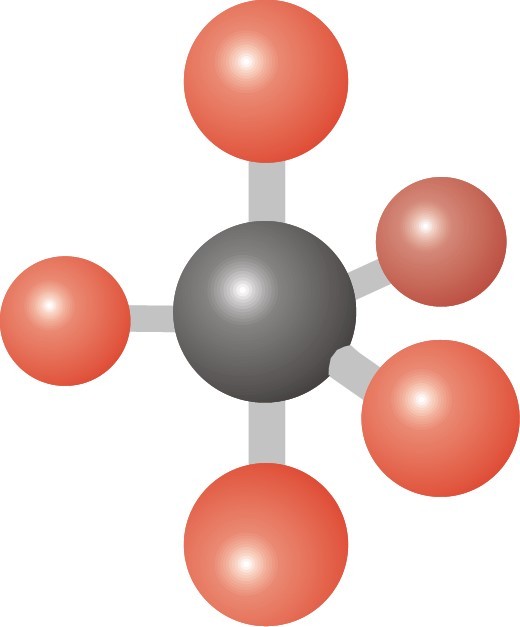
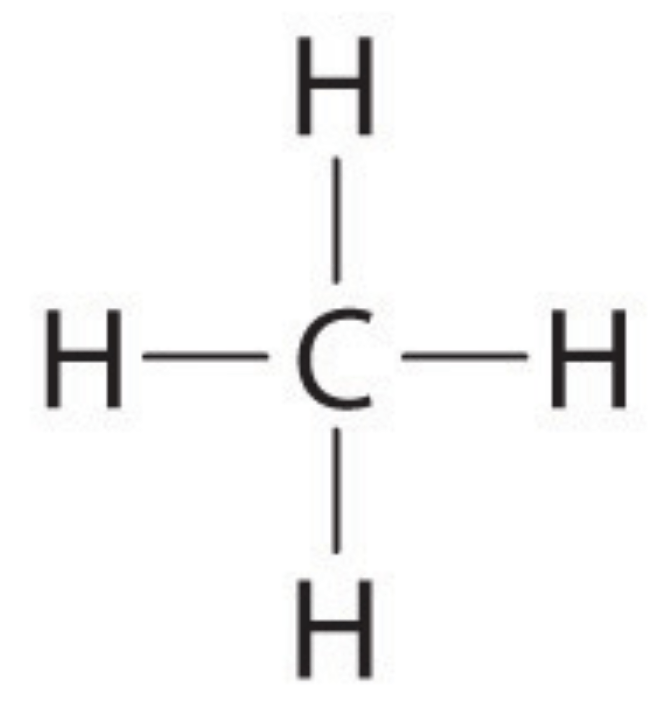
Classify the following molecule.
polar
nonpolar
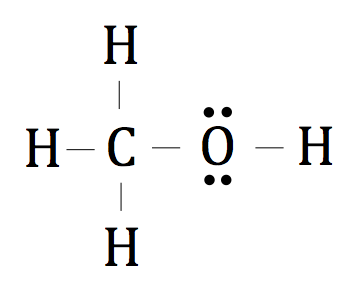
Is the following molecule polar or nonpolar?
polar
nonpolar
Electronegativity is a measurement of the ability of a nucleus to:
attract bonding electrons
attract other nuclei
attract electrons in the non-valence energy levels
Classify the following as polar or nonpolar: SiO2
polar
nonpolar
Ionic bond is present in which of the following species:
O2
CHCl3
NaBr
CCl4
Among the following compounds identify the compound that has all three bonds (ionic, covalent and
coordinate bond)
Ammonia
Ammonium chloride
Sodium hydroxide
Calcium chloride
The type of bonding in HCl molecule is:
Polar covalent bond
Pure covalent
Non-polar
Hydrogen bonding
Formation of a compound through ionic bond ____________ the ionization energy of the metal ion.
Does not depends on
Depend on
Is independent regarding
May or may not depend on
Why do atoms share electrons in covalent bonds?
To increase their atomic numbers
To attain a noble-gas electron configuration
To become more polar
To becomes ions and attract each other
Valency of aluminum is:
2
3
4
5
Identify the molecule with a single covalent bond.
CO2
CO
Cl2
N2
How many moles of oxygen are consumed if 8 moles H2 are used?
How many moles of oxygen are produced when 6.7 moles of KClO3 decompose completely?
10.05 mol
Stoichiometry is -
a balanced reaction with the same number of elements on both sides of the reaction
Calculating moles
using the balanced reaction and moles to calculate amounts needed and used
percentage yield
What are the coefficients to balance the following:
Fe + CuCl2 --> Cu + FeCl3
1,1,1,1
2,3,3,2
3,2,3,2
4,6,6,4
How many moles of water can be produced if 8 moles H2 are used?
What is the molar mass of Helium?
4.00g/mol
1.00g/mol
2.00g/mol
6.00g/mol
How many molecules are there in 4.00 moles of glucose? C6H12O6?
72g
2.408 × 1024
22.4L
4.56
What is the volume of 0.05mol of Neon gas at STP?
1.12L Ne
102g Ne
47L Ne
100 mol Ne
Which term describes a solution in which there is less than the maximum amount of solute dissolved for the given temperature?
Unsaturated
Saturated
Concentrated
Supersaturated

Besides stirring, which of the following should be done to make this powder dissolve faster in the liquid?
Add heat to the liquid
Cool the liquid in a freezer
Add more powder to the liquid
Store the mixture in a dark place
Since "like dissolves like", water and oil will not mix because
both of them are polar
both of them are nonpolar
oil is polar and water is nonpolar
oil is nonpolar and water is polar
Molarity is ...
grams of solute/deciliters of solvent.
grams of solute/liters of solution.
moles of solute/liters of solution.
moles of solute/milliliters of solvent.
If more solvent is added to a solution:
its molarity decreases
its molarity increases
it becomes more concentrated
it will saturate out
A mixture with more solute dissolved in the solvent than is usually soluble is called:
concentrated
supersaturated
saturated
unsaturated
When you have added as much solute as can dissolve in the solvent, the solution is called:
concentrated
supersaturated
saturated
unsaturated
Identify the solvent
Solubility refers to the ____ of solute that can dissolve in a certain volume or mass of solvent, at a certain temperature.
Mean
Range
Amount
Mode
Which of the following is the Dilution Formula?
V1M1 = V2M2
M = m/V
V = mT
PV = nRT
A dilution is when
solute is added to the volume of solution
water is added to the volume of solution
solute is removed from the volume of solution
water is removed from the volume of solution
Which of the following has the MOST surface area?
A single 5 gram ice cube
5 grams of crushed ice
5 grams of shaved ice

Monatomic Element
Diatomic Element

Which unit is used to measure mass in the metric system?
Pound
Slug
Ounce
Gram

Based on the image, what is the mass of the object being measured?
500.10 grams
501.00 grams
510.00 grams
600 grams
This is the smallest particle into which an element can be divided and still be the same substance.
Mixture
Compound
Element
Atom
The smallest particle in a chemical element or compound that has the chemical properties of that element or compound
atom
molecule
element
compound
An empirical formula:
is the simplest whole-number ratio of moles of elements in the compound,
is a formula that calculates the coefficients of a compound in a balanced equation.
Which pair has the same empirical formula?
NaCrO4 and Na2Cr2O7
C2H4O2 and C6H12O6
C3H6O3 and C2H6O2
CH4 and C2H6
What is the empirical formula if you have 36.84% nitrogen and 63.16% oxygen?
NO
N2O4
N2O3
N2O5
What is the percent composition of a compound that contains 40.8 g carbon and 54.4 g oxygen?
42.9 %; 57.1% oxygen
52.9 %; 57.1% oxygen
42.9 %; 45.23% oxygen
55.9 %; 99.1% oxygen

