
NEW
Font size
 Worksheets
DNA Replication and Genetics Review amoeba sisters
Total questions: 32
Worksheet time: 23mins
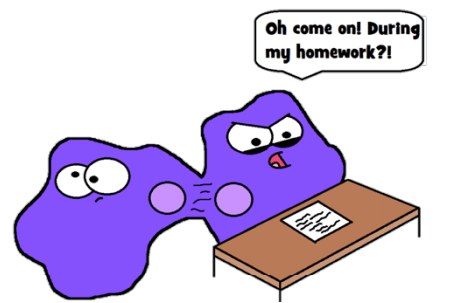
To understand DNA replication, we need to understand the “why.” Why does DNA need to replicate before cells divide?
So that each cell has a full copy of DNA
So that each cell has half a copy of DNA
So that each cell has a no copies of DNA
So that each cell has a different copies of DNA
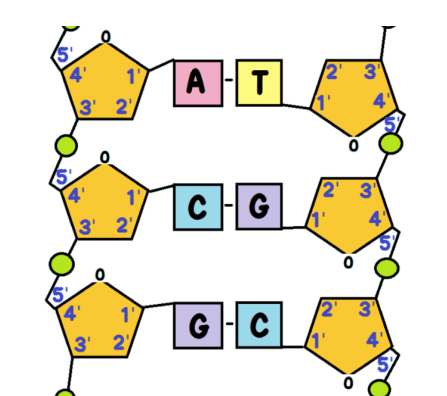
use the image to answer the questions
How many Deoxyribose (sugar).
Total number in image?
6
3
1
2
use the image to answer the questions
How many Hydrogen bonds?
Total number in image?
6
3
1
2
use the image to answer the questions
How many adenine?
Total number in image?
6
3
1
2
use the image to answer the questions
How many thymine?
Total number in image?
6
3
1
2
use the image to answer the questions
How many cytosine?
Total number in image?
6
3
1
2
use the image to answer the questions
How many guanine?
Total number in image?
6
3
1
2
is this an image of...
DNA
RNA
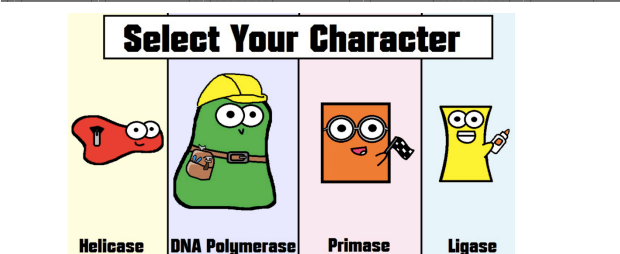
What does the enzyme Helicase do?
unzips the 2-strand DNA into single strand
builds a new set of DNA
shows way for Polymerase, creates primer
glues fragments of DNA together
What does the enzyme DNA Polymerase do?
unzips the 2-strand DNA into single strand
builds a new set of DNA
shows way for Polymerase, creates primer
glues fragments of DNA together
What does the enzyme Ligase do?
unzips the 2-strand DNA into single strand
builds a new set of DNA
shows way for Polymerase, creates primer
glues fragments of DNA together
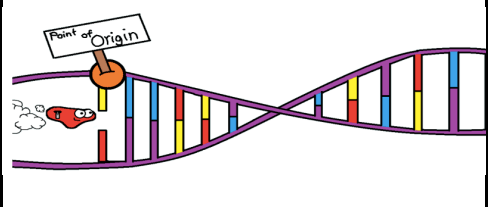
What is going on in this image of the events occurring in DNA replication?
helicase unwinds DNA strands
binds DNA strands
builds the complementary strands
gluing fragments
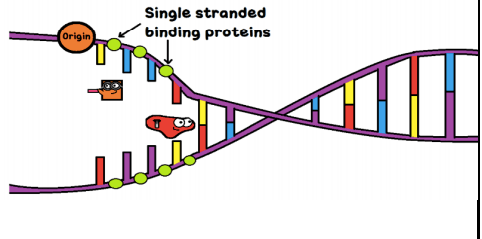
What is going on in this image of the events occurring in DNA replication?
helicase unwinds DNA strands
binds DNA strands
builds the complementary strands
gluing fragments
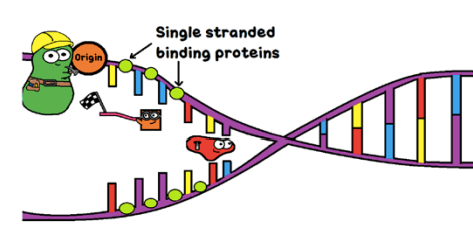
What is going on in this image of the events occurring in DNA replication?
helicase unwinds DNA strands
binds DNA strands
builds the complementary strands
gluing fragments
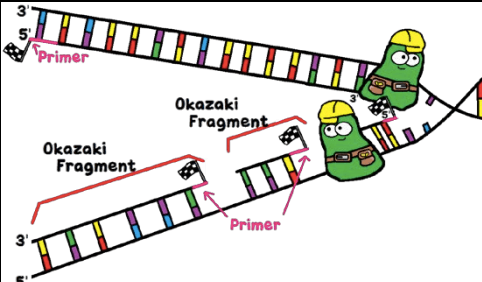
What is going on in this image of the events occurring in DNA replication?
helicase unwinds DNA strands
binds DNA strands
builds the complementary strands
gluing fragments
Explain what is meant by the "lagging" strand and why this occurs.
nothing happens
it replicates at a slower pace
it replicates at a faster pace
it replicates at a normal place
What is the function of primers?
Gives a place for helicase to start working.
Gives a place for primase to start working.
Gives a place for ligase to start working.
Gives a place for DNA polymerase to start working.
DNA replication is a semiconservative process. Why?
When DNA replicates, each new DNA molecule contains half of the original molecule.
When cells reproduce, the new cell needs a copy of the DNA.
The two DNA strands do not go in the same direction.
DNA polymerase can only add nucleotides to the 3’ end of the DNA strand.
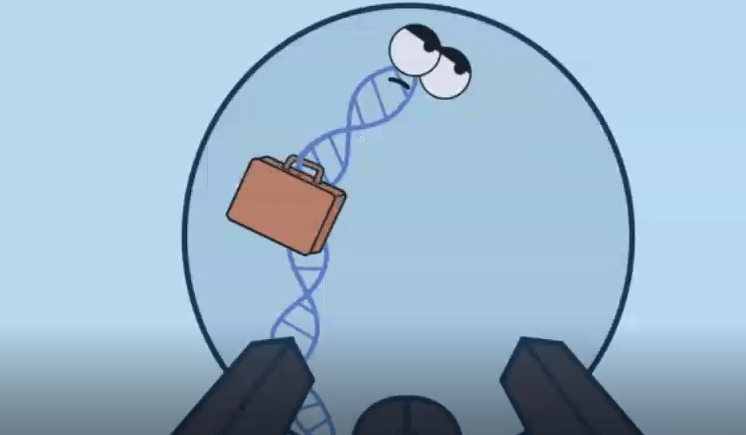
Which membrane-bound organelle contains the genetic material of the cell (such as DNA) ?
Cytoplasm
Nucleus
Endoplasmic Reticulum (ER)
Mitochondria
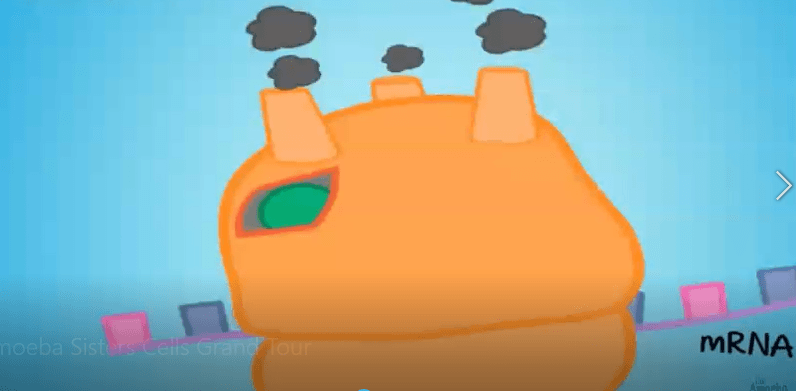
Which organelle in the cell is not a membrane-bound organelle and makes proteins?
Mitochondria
Golgi Apparatus
Nucleus
Ribosomes
A segment of DNA that has the ability to code for a specific trait.
gene
allele
chromosome
chromatid
Humans have _______ pairs of chromosomes, for a total of _______ chromosomes.
10, 20
25, 100
23, 46
46, 92
Genetically determined characteristic. For example: eye color.
Gene
Genetics
Heredity
Trait

Which of the following is correct?
A pairs with C
T pairs with C
A pairs with T
T pairs with G
Genes can be turned on or off.
Gene Control
Gene Regulation
Gene Switch
Genetics
Which of the following is correct?
A pairs with C
T pairs with C
C pairs with G
T pairs with G

