Worksheets
test 2 make up
Total questions: 38
Worksheet time: 29mins


NIPS
Homogeneous
Heterogeneous
Which of the following is a heterogeneous mixture?
brass
sand
Kool-aid
vanilla yogurt
Which of the following process is an example of condensation


______________ is a temperature at which the vapour pressure of a liquid equal to the atmospheric pressure.
Absolute zero
Boiling point
Critical point
melting point


What is the mass number of a nitrogen atom that has 8 neutrons?
15
14
22
8

Protium, Deuterium and Tritium are isotopes of the element Hydrogen.
Why does Tritium have a greater mass number than both Protium and Deuterium?
It has more protons
It has more neutrons
It is electrically neutral
It has more electrons
What is the mass number of an atom that contains 9 protons, 10 neutrons, and 9 electrons?
9
10
18
19

What is true about the carbon atom depicted in the image?
This carbon atom has 13 protons
There are 13 subatomic particles in the electron cloud
The mass number of this carbon atom is 13
The atomic number of this carbon atom is 13

What is the mass number of a calcium atom that has 21 neutrons?
20
21
41
40

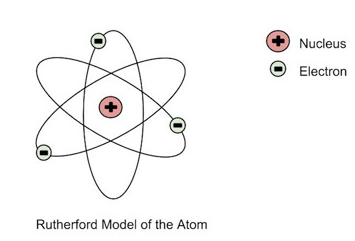

Democritus was known for
discovering the electron
discovering the proton
creating the term atom, meaning indivisible
discovering the nucleus

What did Aristotle say the five main elements were?
Earth, air, fire, water and aether
Ice, Water, Steam, clouds And slush
Dirt, rocks, sand, cement and soil
Silicon, Gold, Silver, Carbon and hydrogen

JJ Thomson discovered the
nucleus
proton
neutron
electron

James Chadwick discovered the
electron
proton
neutron
alpha particle

On the periodic table, Groups are
Horizontal rows
Vertical columns

On the periodic table, Periods are
Horizontal rows
Vertical columns
The innermost energy level has a maximum of how many electrons?
1
2
6
8

What does the Bohr Model represent?
The structure of molecules
The structure of the Solar System
The structure of an atom
The structure of East Hills

Which element is this?
Nickel
Neon
Sodium
Nitrogen

Name this element.
Argon
Chlorine
Aluminum
Boron

Name this element.
Neon
Magnesium
Sodium
Manganese

What is the mass number of this atom?
1
3
4
7

What is this element?
Beryllium (atomic #4)
Boron (atomic #5)
Carbon (atomic #6)
Nitrogen (atomic #7)

How many valence electrons?
2
4
6
8

Elements in Group number 17 are known as
Alkai Metals
Alkaline Metals
Halogens
Noble Gases

Which group includes soft, highly reactive metals with one electron in their outer shell?
Alkai metals (group 1)
Alkaline metals (group 2)
Halogens (group 17)
Noble gasses (group 18)
Elements in Group number 17 are known as
Alkai Metals
Alkaline Metals
Halogens
Noble Gases