
NEW
Font size
 Worksheets
Unit 3 Great Depression
Total questions: 20
Worksheet time: 12mins

What vocab word means "Paying a small percentage of stock's price on a down payment and borrowing the rest?"
Dow Jones Industrial Average
Speculation
Buying on Margin
Black Tuesday


What is another name for the day the stock market crashed?
Great Depression
Black Friday
Wall Street Ruins
Black Tuesday

How did the President respond to the Stock Market Crash?
Told people the government would set regulations on Wall Street
Told people that the government would set up unemployment programs
Told people that they would get through it without the governments help
Told people to panic and withdraw all their money from the bank now.

What happened in the 1930's with Banks in the US?
People raced to the bank to withdraw $ and were able to get all their savings
People raced to the bank to withdraw $ and often lost much of their $ due to bank failures
Banks failed and left people's savings boxes on their front doors
The banks invested in the stock market and forgave all loans due to them
Choose the picture that best fits with bank issues in the Depression


After the Stock Market Crash, many people lost their life savings because _______________.
Banks closed(failed)
banks gave away their money
they couldn't remember where they put it
They gave it away to charity to help those in need

Which answer below is NOT considered a cause of the Great Depression?
Stock Market Crash
Dust Bowl
Overspending and credit in the 1920's
Bank runs


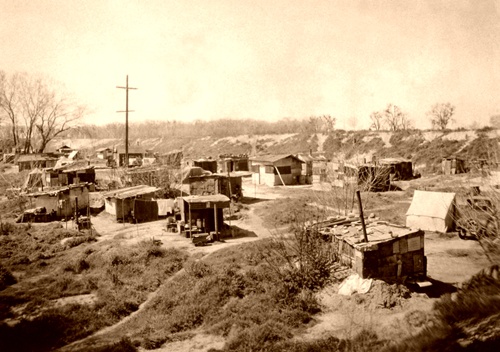
HoboTowns

Choose the picture that best fits with the Dust Bowl


What caused the Dust Bowl during the Great Depression?
Tornandos , hurricanes
Overfarming, drought
Overspeculation, tariffs
Too much snow & rain

In the Dust Bowl, what did some farmers do to try and survive?
Move south
Move to California
Move to the east coast
Change jobs

Many farms in the Midwest were not able to survive

What happened to unemployment rates during the Great Depression?
Unemployment reached a low of 5%
Unemployment reached a high of 25%
Unemployment reached a high of 50%
Unemployment reached a high of 40% but then lowered to 5%

Who suffered the highest unemployment rate in the Great Depression?
White men
Farmers
Black Americans
White women

