
 Worksheets
3rd Quarter Benchmark Review 2022
Total questions: 90
Worksheet time: 50mins
What navigation tool helped European sailors know how far they had sailed from the equator?
magnetic compass
astrolabe
telescope
maps


Which are elements found in a Free Enterprise? CLICK ALL
Profits
Controlled by central authority
Competition
Buy and sell freely
Economic System of the United States
Market Economy (free enterprise)
Communist Economy
Theocracy Economy
Which navigation tool helped European sailors know which direction they were going?
astrolabe
magnetic compass
maps
none of them
Who started a Portuguese navigation school around 1419?
Leif Ericsson
Vasco de Gama
Prince Henry
Bartolomeu Diaz
What item from the Columbian Exchange MOST helped the Native Americans?
corn and potatoes
gold and silver
horses
bananas and sugar cane
Which explorer's expedition was the first to circumnavigate the earth?
Columbus
Magellan
Cortes
Ponce de Leon

What were chinampas?
Deserts
Mountains
Floating gardens built by the Aztecs and used to grow crops
A special weapon used by the Aztecs
How were the Inca able to farm in the rugged Andes mountains?
They built chinampas
They dug canals
They used a technique called terrace farming
They did not know how to farm
What did the Aztecs collect from those they conquered?
Farmland
Sheep and goats
Guns
Tribute (taxes)

Where were the Aztecs located?
A
B
C

Where were the Inca located?
A
B
C

Where were the Maya located?
A
B
C

Where are the Andes mountains?
A
B
C
Who conquered the Aztecs?
Who conquered the Inca?
Vasco Da Gama
Columbus
Henry Hudson
John Cabot
Columbus
Magellan
Hernan Cortes
Francisco Pizarro
What was a continuity between the Maya, Aztec, and Inca civilizations?
Terrace Farming
Playing a ball game in a special built court
sacrificing humans to their gods
developing writing systems
How was the Inca practice of human sacrificing different that the Maya and Aztec practice of sacrificing?
The Maya and Aztec sacrificing rituals were performed in at their temples in public
The Inca ritual of sacrificing was done high on a mountain top away from the cities
Aztecs and Mayas sacrificed criminals or prisoners of war but the Inca chose to sacrifice children
None of these were differences in the Inca ritual of sacrifices from the Maya and Aztec ritual of sacrificing
12. The explorers and merchants were able to make a profit because there was a demand for silk and spices in Europe. What is the definition of demand?
financial gain
situation involving danger
desire for a product
short or small supply
What item from the Columbian Exchange MOST helped the Native Americans?
corn and potatoes
horses
bananas and sugar cane
Cattle
Which of the following was a motivation for European Exploration?
To find a faster route to Africa
To find a water route to Asia that was faster, safer, and less expensive than using the Silk Road
To find a trade route to the Americas
To find land to grow cash crops
Why were explorers like Columbus able to claim land and resources in North and South America for the Europeans even though it was inhabited by Native Americans?
The King and Queen offered to sail the Native Americans back to Europe if the Native Americans would let the white explorers use their land and natural resources.
The Native Americans were virtually defenseless against the Europeans advanced technology and weapons.
The Europeans promised to give the Native Americans food and shelter in exchange for their land.
The Native Americans thought the Europeans were gods and worshiped them.
What negative impact did the Columbian Exchange have on North and South America?
The adoption of religious beliefs from the native population weakened the role of churches in Europe
The introduction of new food crops weakened the diets of many native peoples.
The superior weapons of the native people weakened European expansion in the New World
The spread of diseases such as smallpox wiped out much of the native population.
What was the Triangular Trade System?
The journey to transport goods from China to the Black Sea and then to Europe
The system of trade that exchanged goods from the Americas with goods from Africa, Asia, and Europe
A three way system of trade during 1600-1800s Africa sent slaves to the Americas, America sent raw materials to Europe, and Europe sent manufactured goods to Africa
A system of shipping goods from one nation to another
What was the Middle Passage?
The 3rd and final leg of the Triangular Trade System
The 2nd leg of the Triangular Trade System. It was the voyage that transported slaves from Africa to the Americas
The final leg of the Triangular trade system
The trade route that went through the middle of the Atlantic ocean
How did the Catholic Church react to the heliocentric view of Copernicus and Galileo?
They accepted the idea of the heliocentric theory as truth
The Church asked Galileo to spread his ideas to all believers
The church condemned the ideas as heretical (against their teaching)
t

Which theory originally stated that the sun was the center of the solar system?
Geocentric Theory
Heliocentric Theory
Eurocentric Theory
Heliocentric Theory (with planets orbiting in ellipses)

“We hold these truths to be self-evident, that all men are created equal, that they are endowed by their Creator with certain inalienable rights, that among these are life, liberty, and the pursuit of happiness . . .”— The Declaration of Independence
Which Enlightenment thinker most directly influenced the notion expressed in this passage?
Thomas Hobbes
John Locke
Jacques Bossuet
Baron de Montesquieu

An agreement by which people give up their freedoms for an organized society.
laissez-faire
natural rights
social contract
natural law

Rights that belong to all humans at birth
laissez-faire
natural rights
social contract
natural law
The Enlightenment was a period of time where people focused on __________________.
Life, Liberty, Happiness
Reason, Liberty, Individual Rights
Math, Civics, Chemistry
Thought, questions, answers
The most radical leader during the French Revolution & was the leader during the Reign of Terror.
Robespierre
Napoleonic Code
bourgeoisie
Louis XVI
The King of France during the French Revolution. He was considered a weak, ineffective, & unprepared ruler.
Robespierre
Napoleonic Code
bourgeoisie
Louis XVI

One similarity between the French and American Revolutions is that they both started because of an unfair tax burden.
True
False

What impact does the Bill of Rights have on society in the United States?
U.S. citizens are obligated to vote during elections
U.S. citizens are provided employment opportunities
U.S. citizens are guaranteed specific legal protections
U.S. citizens are free from any government intervention in their lives
Montesquieu’s ideas influenced early leaders of the United States to create a government characterized by —
An amendment process
A separation of powers
Political rights for women
A powerful executive branch
A major contributing factor to the start of an independence movement in the American colonies was —
The failure of the colonists to follow the British laws
A disagreement over the use of enslaved labor in the colonies
A worsening famine brought about by poor harvests in the colonies
The lack of representation of the colonists in the British parliament
One similar result of the American and French Revolutions was that in both countries —
The citizens gained more political rights
The wealth of Catholic Church increased
The revolution produced a new social order
The kings were able to maintain absolute power
Both the Magna Carta and the English Bill of Rights had an impact on American government because both documents contained ideas about —
The creation of colonial assembles
The protection of individual rights
The power of government to make a social contract
The right to declare independence from an unjust ruler
How was Simón Bolívar influenced by the American and French Revolutions?
He wrote a Declaration of Rights for Latin American countries ruled by France.
He observed the American Revolution's successes and brought democracy to Cuba.
He adopted Enlightenment ideals and began revolutions against Spanish authority.
He fought in the French Revolution and returned to Mexico to lead a revolution himself.
Which legal precedent was established in England when King John signed the Magna Carta?
Judges may not impose cruel punishments.
No leader may be above the law of the land.
Individuals accused of a crime have a right to bail.
The chief executive has the right to veto legislation.
The writers of the U.S. Constitution created a government that is divided into three branches.Which constitutional principle does this reflect?
Individual Rights
Federalism
Control of the Media
Separation of Powers
Estate
The group that was the leader of the Reign of Terror was...
The time during the French Rev. when radicals were in charge and ordered mass executions
Why did the Haitian Revolution start?
The revolution started because of slaves wanting social equality and freedom.
Because of Robespierre
Started in 1791
Because of the important people
Why was it difficult for Haiti to have a stable economy after independence?
Haiti did not have crops that other countries wanted.
They were a republic and could not make effectively and easily decisions.
Former slaves did not want to work on the plantations they had just left.
Everybody left Haiti after the revolution.
Which crop made the French colony of Saint Domingue so rich?
Beets
Sugar Cane
Bananas
Avocado
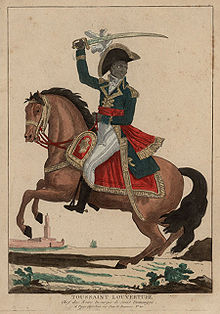
Who was the leading general of the Haitian Revolution?
Napoleon Bonaparte
Jean Jacques Dessalines
Hidalgo
Toussaint L'Ouverture
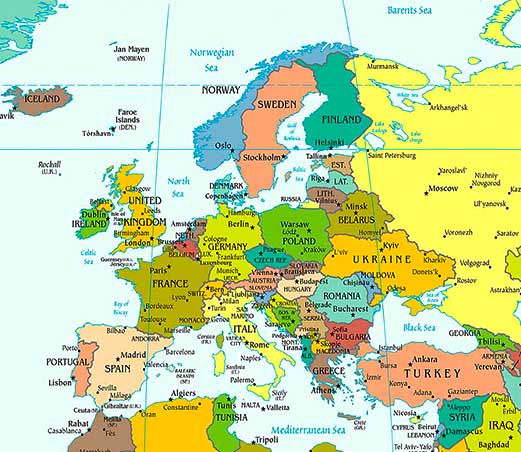


In the triangle trade, merchants brought __________ ________ from Europe to Africa.
raw materials
manufactured goods
laborers (slaves)
In the triangle trade, merchants brought ________ ________ from Africa to the New World (Americas)
raw materials
manufactured goods
laborers (slaves)
What continents did the Atlantic Slave Trade include?
North America, South America, and Brazil
North America, South America, Europe, and Africa
North America, Europe, and Africa
South America, Asia, and Europe
What were the cash crops grown in the colonies that demanded slave labor?
what is an indentured servant
A slave that works for a king
Slave that works off their debt
a military officer
a teacher
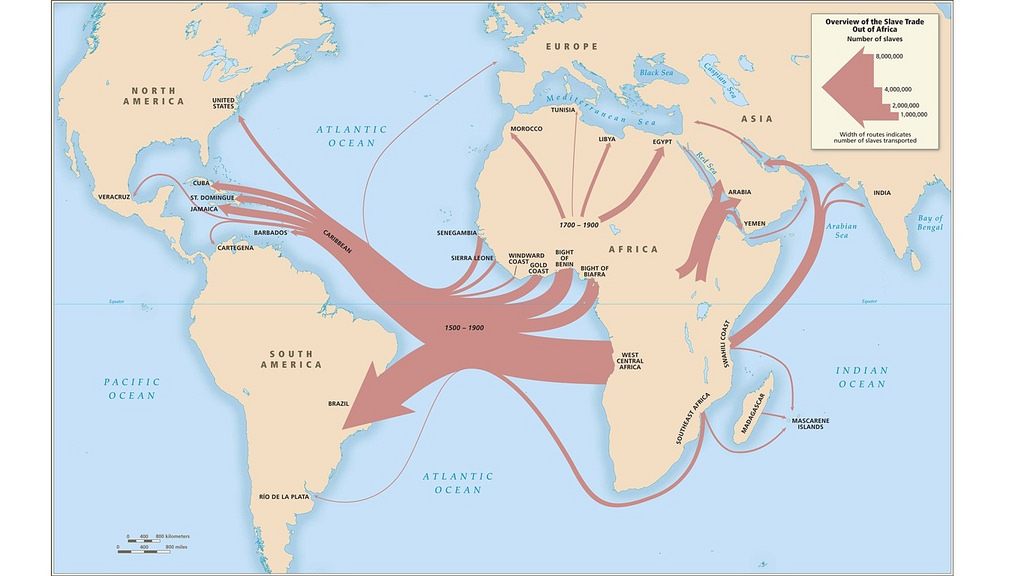
According to this map, most African slaves were brought to
North America
South America
Europe
Asia
How did the Maya civilization adapt to their environment?
They built a vast network of roads
They cleared land in the jungle and planted crops
They learned to terrace farm
They learned to live off the jungle and eat only what the jungle provided

