wayground logo

Free Printable Worksheets

Font size

S
M
L
XL
Worksheets

EOC: Ecology Recap (Human Impact)

Total questions: 20

Worksheet time: 12mins

Name
Class
Date
1.
Why do the populations of invasive species grow so quickly? 
a)
Invasive Species are native to an area. 
b)
Invasive species are prey to many animals.
c)
Invasive species have no predators.
d)
Invasive species keep the ecosystems in equilibrium.
2.
Increased carbon dioxide may cause global warming by trapping more ____________ in the atmosphere.
a)
water
b)
gases
c)
heat
d)
water vapor
3.

Which of these are fossil fuels? Select all fossil fuels listed.

a)

steam

b)

coal

c)

gas

d)

oil

4.

Which of the following is contributing to an INCREASE in carbon dioxide in the atmosphere?

a)

deforestation

b)

photosynthesis

c)

oceans

d)

fertilizer and pesticide use

5.

A group of the SAME SPECIES in an area makes up the

a)

community

b)

population

c)

ecosystem

d)

biome

6.

A community is

a)

all the same species in an area

b)

all the LIVING THINGS (biotic factors) in an area

c)

all the living AND non living things in an area

d)

a large area with many ecosystems

7.

Food is a limiting factor. What would happen to a snake population if all their food was killed off.

a)

the snake population would increase (go up)

b)

the snake population would stay the same

c)

the snake population would decrease

d)

there would be no change

8.

Carrying Capacity is the largest population an ecosystem can support. What is the carrying capacity of the species shown in this graph?

a)

2000

b)

100

c)

200

d)

50

9.

The phenomenon by which toxins concentrate in the organisms at higher trophic levels within an ecosystem is known as...

a)

Biotoxicity

b)

Biomagnification

c)

Eutrophication

d)

Predation

10.

Which is a MAJOR cause of acid rain?

a)

spraying pesticides on crops

b)

burning fossil fuels for energy

c)

dumping sewage in rivers

d)

using Nuclear power stations

11.

Acid rain can damage

a)

Drinking water sources

b)

Aquatic (water) life

c)

Architecture / buildings

d)

All options are correct

12.
A community is concerned about the water quality of a nearby lake. Increased sedimentation in the lake is endangering the native habitat. The increased sedimentation is most likely caused by which of the following?
a)
trees planted along the shore of the lake
b)
construction of homes along the lake
c)
the amount of sunlight on the lake
d)
the amount of fish in the lake
13.
When fertilizers run off farmland into streams and ponds, the nitrogen content of the water increases. This can lead to rapid growth of algae in a process called eutrophication. How can this process affect other organisms in the water?
a)
Oxygen is used up as algae is decomposed, reducing the amount available to other organisms.
b)
The water becomes better able to support aerobic organisms.
c)
The algae provide food for fishes and other organisms, leading to decreased algae populations.
d)
The extra nitrogen provides additional food for the other organisms, increasing their population.
14.
A strip mining company wants to lease some land that is currently part of a national park. They promise to reclaim the land should any minerals be mined from the area, and they are willing to pay top dollar for the rights. As an ecologist, what factors would you raise with the local government?
a)
the threat to local biodiversity
b)
management of the land after the company leaves
c)
the new jobs that would be created
d)
the increased traffic in the area
15.
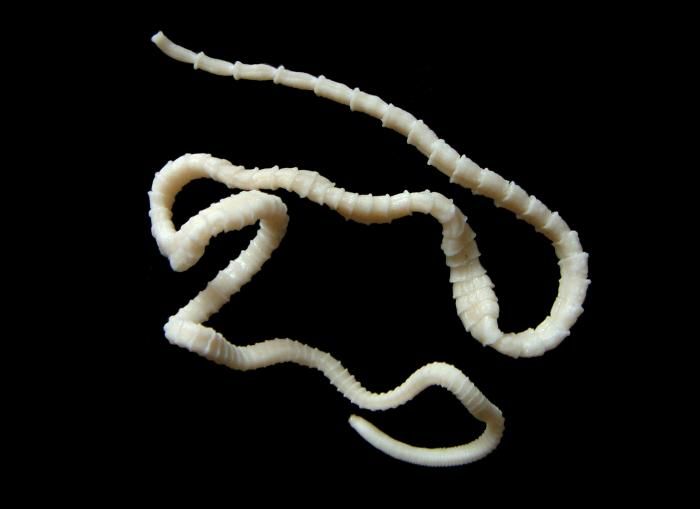
A tapeworm and a cat have this type of relationship.
a)
mutualism
b)
parasitism
c)
commensalism
d)
competition
16.
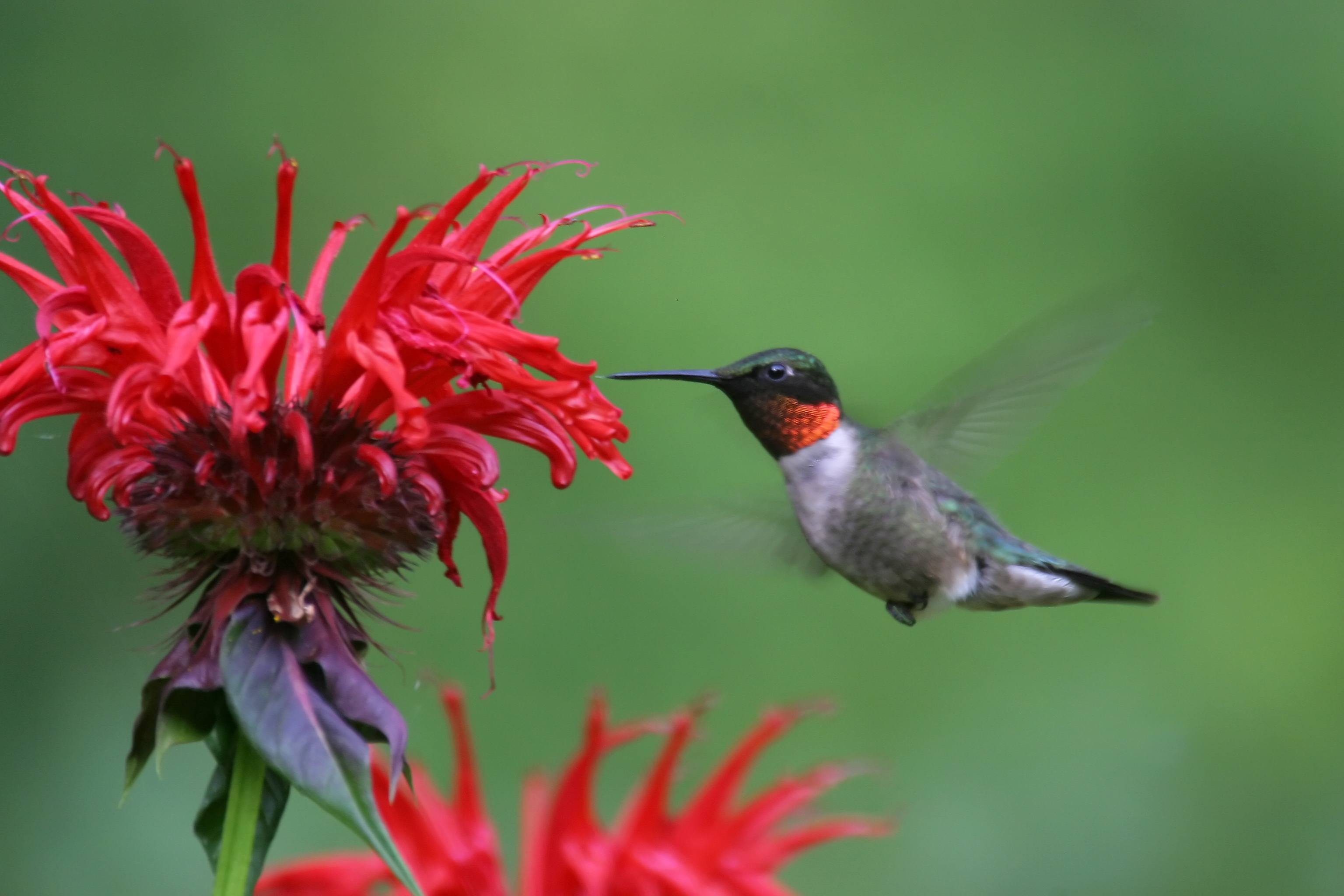
What type of symbiosis?  Hummingbirds feed on nectar from flowers.  The flowers are pollinated by hummingbirds as they move from flower to flower.
a)
commensalism
b)
mutualism
c)
parasitism
d)
predation
17.
In lakes that are exposed to acid rain, fish populations are declining. This is primarily due to changes in which lake condition?
a)
A) size
b)
B) temperature
c)
C) pH
d)
D) location
18.
Some time ago, there were thousands of California condors in North America. Large numbers were poisoned from lead in bullets that were used to kill the animals the condors fed on. An effort was made to help save this large scavenger. There are now more than 350 California condors in North America. The condors most likely increased in number because humans decided to
a)
A) produce lead-resistant condors through asexual reproduction
b)
B) pass laws against using lead bullets to kill animals used by condors for food
c)
C) introduce plants that didn't absorb the lead from discharged bullets
d)
D) produce lead-resistant prey for the condors through genetic engineering
19.
Many scientists are worried about some of Earth’s finite resources because humans are
a)
A) using carbon dioxide faster than it is being produced
b)
B) placing industrial wastes in landfills
c)
C) interfering with energy flow from consumers to producers
d)
D) using large amounts of some materials that cannot be renewed
20.
The overuse of chemical fertilizers has resulted in the growth of some lawns in which decomposers cannot live. This would interfere most directly with the ability of the lawn ecosystem to
a)
A) recycle energy
b)
B) recycle nutrients
c)
C) maintain atmospheric pH
d)
D) reduce biodiversity