
 Worksheets
Quantum Leap
Total questions: 25
Worksheet time: 15mins

What does the observer do?
The observer collapses the wave function into particle.
The observer collapses the particle into a wave function.
The observer collapses the whole system simply by observing.
The observer collapses the wave function into a wave.
It is a branch of physics that includes various areas of study based on quantum theory which deals with matter and electromagnetic radiation, and the interactions between them.
Optics
Nuclear Physics
Thermodynamics
Quantum Physics

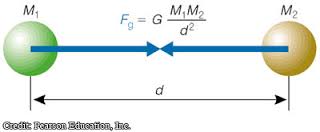
He is the one who created the principle of gravity.
Isaac Newton (1643-1727)
Galileo Galilei (1564-1642)
Albert Einstein (1879-1955)
James Clerk Maxwell (1831-1871)
What is the shape of the s orbital?
dumbbell
sphere
clover
flat
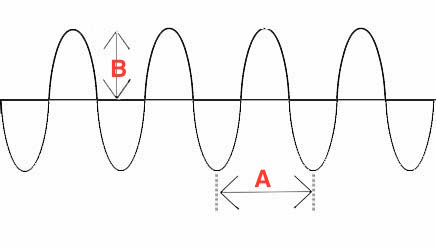
What property of this wave is represented by the letter A?
Amplitude
Crest
Trough
Wavelength
When the frequency of a wave increases, what happens to the wavelength?
The wavelength stays the same.
The wavelength increases.
The wavelength decreases.
The wavelength is not related to the frequency.
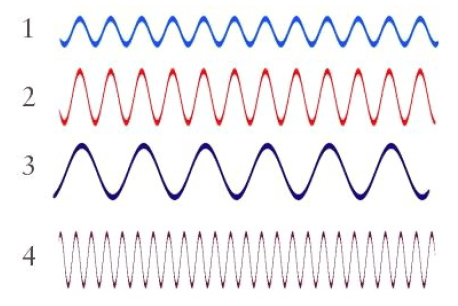
Which wave in the diagram has the greatest frequency?
1
2
3
4
Which has the longest wavelength and, therefore, the lowest energy?
Gamma Rays
Radio Waves
Visible Light
Infrared rays
Which has the shortest wavelength and, therefore, the highest frequency?
Radio waves
Ultraviolet Rays
Gamma Rays
X-rays
Which color has the highest frequency?
Red
Orange
Green
Blue
Which color has the least amount of energy?
Red
Orange
Green
Blue
The common between classical and quantum mechanical fundamental distribution function is :
they all depend upon the quantity that define state only
they all depend only upon the energy of the state
they all depend both on energy and quantity defining state
nothing is common in them
The wave function of the particle lies in which region?
x > 0
x < 0
0 < X < L
x > L
What is meant by orbital?
a 2-d region around nucleus whereby the probability of finding electron is highest
a 3-d region around orbit whereby the probability of finding electron is highest
a 2-d region around nucleus whereby the probability of finding electron is lowest
a 3-d region around nucleus whereby the probability of finding electron is highest
How many 5d orbitals are there in an atom?
3
5
7
10

