
 Worksheets
Honors Unit 10 Review
Total questions: 40
Worksheet time: 27mins
What changes in a parallel circuit?
Current can change in the different branches depending on the resistance
Voltage changes
What changes in a series circuit?
Current / amperage drops in each resistor
Voltage changes / drops in each resistor

What is true of voltage in a parallel circuit?
Voltage remains the same throughout
The voltage changes depending on energy demand in the circuit
Current is the same as voltage in a parallel circuit
If there are light bulbs, they will be progressively dimmer on each branch

At point x on the series circuit, the current will be:
The same as the rest of the circuit
Less than what it was at the first resistor
3x higher after running through the three resistors
A battery demonstrates this type of current:
Alternating
Direct
What would the current flowing through an alternator (a device that changes the flow of electrons at regular intervals) look like?
Electrons moving in one direction only (DC)
Electrons spiraling around the outside of a wire
Electrons moving in one direction, then in the other direction (AC)
Slow electron flow that can be captured and used later
What would adding more light bulbs do to this type of circuit?
Reduce the amount of resistance
Reduce the overall voltage, resulting in less intense lights
Change nothing within the circuit
A battery with 3V is plugged into a circuit with 9 ohms of total resistance. What is the current in this circuit?
1
3 A
27 A
0.3 A
How does a maglev (magnetic levitation) train work?
A large electromagnet generates a field that pulls the train to its' destignation
electricity creates a magnetic field that pulls the train along the tracks
opposite poles / like charges repel along the track, alternating current pulls the train
Electricity causes a magnetic field opposite that of the train so it is repelled along the track

If the resistance in the resistor increases from 3 to 6 ohms, but no change in voltage takes place, what happens to the current?
It will increase by a factor of 2
It will decrease by a factor of 2
It will decrease by a factor of 6
It will increase by a factor of 3

If more lights were added to the circuit, what would happen to the voltage?
As more lights are added, the voltage decreases
As more lights are added, the current increases
As more lights are added, more lights will turn off
The addition of new light bulbs decreases resistance

Choose the graph that represents the relationship between the number of lights and voltage.


A parallel circuit connects three light bulbs to a single power source. As each lightbulb is turned on, which graph represents the voltage to each light bulb?


How would an electrical engineer plan for a house to have power to one room while not affecting another?
They should wire each room in series with one another
They should wire each room parallel with the next
They should make sure each room's lights have the same resistance
They should wire the room with the most lights to the breaker box directly

How are the poles oriented?
Opposite poles facing eachother
Positive to negative
The south pole of a magnet is facing the north pole of the next
Similar / same poles are facing one another
What changes to a circuit could increase the current Select all that apply.
Thickness of the wire increases
Length of the wire decreases
The wire is cooled down so the wire's particles are closer together
Reducing resistance in the wire

zig zag
Resistor
Ammeter

resistor
Ammeter
Voltmeter
Switch

Battery
Lines
Resistor
bulb
An example of an insulator of electricity is.....
Rubber
Silver
Iron
Copper
A material that allows electricity to flow through the circuit without disruption is known as a _______________.
Switch
Transformer
Conductor
Source
Voltage divided by Resistance
(V / R)
Current
Power
Ohms
Watts

Where is Earth's magnetic field strongest?
Along the outside lines
Along the inside lines on either side
Where the lines are close together at the poles
In the space outside of the lines
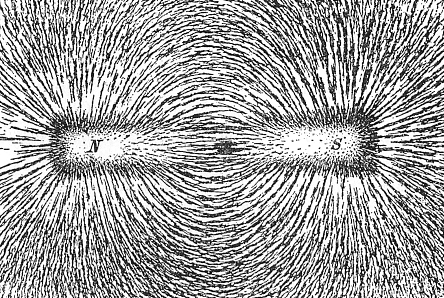
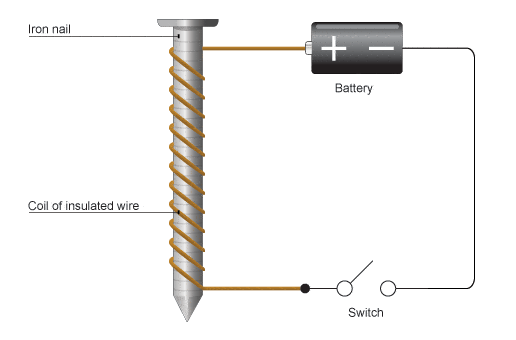
What are some ways to make an electromagnets' field stronger? Select all that apply.
Swap iron for an aluminum core
Add more voltage or a larger power source
Increase the number of times wire is wrapped around a core
Decrease the power source
Add resistance
Select all the answers that apply to a series circuit:
Current across each component is the same
Total resistance is the sum of individual resistors
Voltage is the same throughout each component
Voltage is dependent on the resistance of the components
Total resistance is the sum of the inverses of the individual resistances
Select all the answers that apply to a parallel circuit:
Current across each branch depends on the resistance of each branch
Total resistance is the sum of individual resistors
Voltage is the same throughout each component
Voltage is dependent on the resistance of the components
Total resistance is the sum of the inverses of the individual resistances
A machine that converts electrical to mechanical energy
Motor
Magnetic field
Magnetic domain
Generator
The alignment of magnetic atoms
Magnetic domain
Magnetic field
Generator
Motor
A generator is
A strong, short lived magnet
A force of attraction or repulsion due to the spin of electrons
An area in which objects will interact with a magnet
A machine that will convert mechanical, nuclear, or chemical energy into electrical energy
A circuit with a gap or an open switch is an:
Open circuit
Closed circuit
Parallel circuit
Series circuit
A measure of an object's ability to transmit electricity
Resistance
Voltage
The potential energy per unit charge
Resistance
Voltage
Charging something that is not in direct contact using an electrical field
Induction
Conduction

