

wayground logo

Free Printable Worksheets

NEW

Font size

S
M
L
XL
Worksheets

S8P1 QUIZIZZ Matter

Total questions: 35

Worksheet time: 40mins

Name
Class
Date
1.

What is a heterogeneous mixture?

a)

a type of mixture in which the composition is uniform and every part of the solution has the same properties.

b)

a mixture of two or more chemical substances where the various components can be visually distinguished.
2.
Which of these is an example of a molecule?
a)
a small nugget of pure gold
b)
the smallest grain of salt in a salt shaker
c)
 a small drop of sugar water
d)
two oxygen atoms joined to a carbon atom
3.
Atoms of an element always have a certain number of
a)
neutrons
b)
protons
c)
electrons
d)
ions
4.
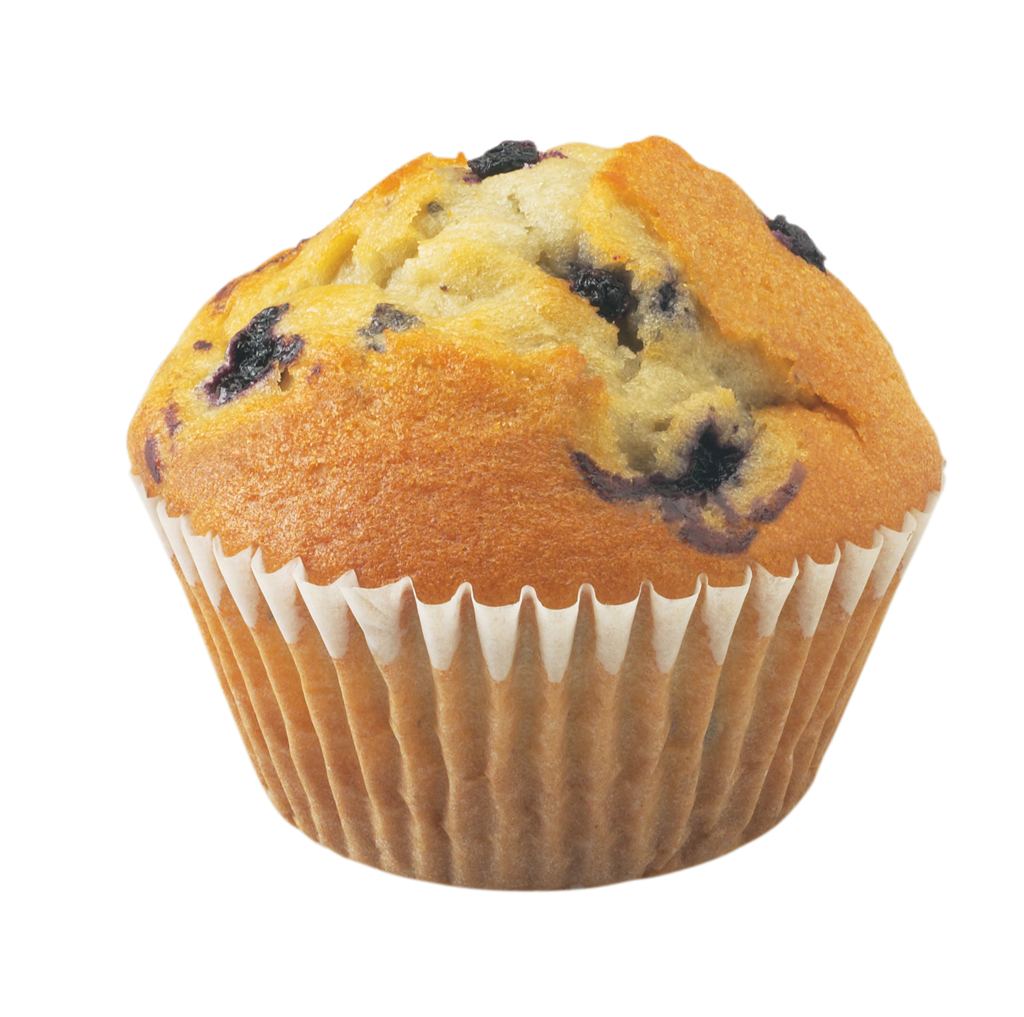
 blue berry muffin
a)
heterogeneous mixture
b)
homogeneous mixture
5.
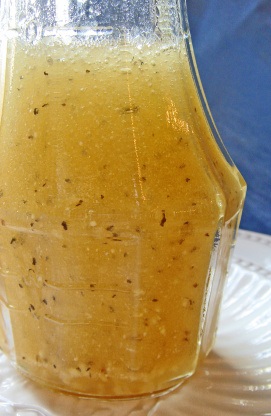
Italian Salad Dressing
a)
heterogeneous mixture
b)
homogeneous mixture
6.

Carbon is a(n) ______

a)

compound

b)

element

c)

mixture

7.
Carbon Dioxide is a ______ 
a)
compound 
b)
element 
c)
mixtures 
d)
Battle of Bunker Hill 
8.

What phase is represented in sample 3?

a)

solid

b)

plasma

c)

liquid

d)

gas

9.

Which of the following statements best describes the atoms and molecules that make up a glass filled with water?

a)

The atoms and molecules of both the liquid water and the glass are moving.

b)

The atoms and molecules of neither the liquid water nor the glass are moving

c)

The atoms and molecules of the liquid water are moving, while the atoms and molecules of the glass are not moving

d)

The atoms and molecules of the liquid water are not moving, while the atoms and molecules of the glass are moving

10.

A sample of a substance in a square container has a volume of 3 liters (L) and a square shape. When placed into round container, the sample has a volume of 3 L and a round shape. In which state is the sample substance?

a)

gas

b)

liquid

c)

plasma

d)

solid

11.

Which particle does this diagram most likely shows?

a)

solid

b)

gas

c)

plasma

d)

liquid

12.

What is the phase change of a solid to a liquid?

a)

freezing

b)

melting

c)

boiling

d)

condensation

13.

Change from liquid to gas is called....

a)

expansion

b)

evaporation

c)

condensation

d)

sublimation

14.
What is sublimation?
a)
phase change between solid and liquid
b)
pahse change from gas to solid
c)
phase change from solid to gas
d)
phase change from solid to solid
15.

What happens to particles when energy is added (heated)?

a)

They speed up and spread out

b)

They slow down and compress

c)

They stop moving

d)

They move closer together and speed up

16.
Which of the following is NOT an example of a physical change?
a)
crumpled paper
b)
pencil sharpening
c)
shrunken clothing
d)
sour milk
17.
Is melting butter for popcorn a chemical or physical change?
a)
chemical
b)
physical
18.
Is a rusting bicycle a chemical or physical change?
a)
chemcial
b)
physical
19.
A change in phase or state of matter ...
a)
Chemical
b)
Physical
20.

Neutral charge particle

a)

proton

b)

neutron

c)

electron

21.
What does the nucleus consist of?
a)
Protons + Electrons
b)
Neutrons + Electrons
c)
Atoms
d)
Protons + Neutrons
22.
Most of the mass in an atom is concentrated in the...
a)
electrons
b)
nucleus
c)
protons
d)
empty space
23.

The vertical (up and down) columns in the Periodic Table are called

a)

groups

b)

towers

c)

periods

d)

atomic numbers

24.
Which is an alkali metal?
a)
Magnesium
b)
Iron
c)
Sodium
d)
Europium
25.
Elements in the same column of the periodic table always have the same # of _______ as one another.
a)
Protons
b)
Neutrons
c)
Electrons
d)
Valence Electrons
26.
How many valence electrons are in an atom of K?
a)
3
b)
8
c)
4
d)
1
27.
Which of the following will have a larger radius than Zinc?
a)
Gallium
b)
Aluminum
c)
Magnesium
d)
Strontium
28.
How many atoms of aluminum are on each side of the following equation: 4Al + 3O--> 2AlO3
a)
2
b)
6
c)
1
d)
4
29.
Balance this equation:
MgCl2 --> Mg4+ Cl2
a)
It's already balanced.
b)
4MgCl2 --> Mg4+ 4Cl2
c)
4MgCl2 --> Mg4+ 5Cl2
30.
How many hydrogen atoms are in 2 H2?
a)
1
b)
2
c)
3
d)
4
31.
In the following equation, what are the reactants?
CaO + 3 C → CaC2 + CO
a)
CaO + 3 C
b)
CaC2 + CO
c)
3 C → CaC2
d)
the stuff on the outside
32.
This appears on the left side of a chemical formula, and represents how many molecules there are.... What is highlighted in yellow?
a)
Atom
b)
Subscript
c)
Molecule
d)
Coefficient
33.
If reaction starts with 20g of reactants it should produce 
a)
a total of 40g of products
b)
a total of 10g of products
c)
a total of 80 g of products
d)
a total of 20g of products
34.
What will weigh more when a chemical change is complete?  The reactants before the chemical reaction, or the product after the reaction is complete?
a)
They both will weigh the same
b)
The product always weighs more than the reactant
c)
The reactant will weigh more than the product
d)
They both will loose mass after the reaction
35.

What do we call the chemicals that result from a chemical reaction?

a)

reactants

b)

products

c)

subscripts

d)

coefficients

