
 Worksheets
9 weeks science review
Total questions: 30
Worksheet time: 35mins
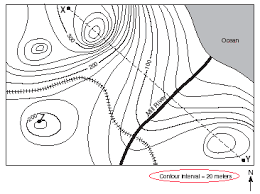

The dropping of rock and sediment that changes landforms is called -
Weathering
Erosion
Deposition

Dunes are mounds of sand that are created by -
Strong winds
Warm ocean water
Precipitation such as rain, snow and sleet
Gravity
Which type of plate boundary would cause mountains to form?
Transform
Convergent
Divergent
Reform
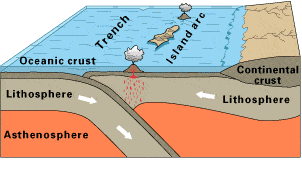
Observe this diagram of a plate boundary. One statement BEST describes what is happening. It is that
the oceanic crust is melting.
the denser oceanic crust is subducting under the less dense oceanic crust
volcanic islands are forming.
the tectonic plates are moving away from each other.
Volcanoes are usually found
in the middle of the ocean
along plate boundaries
at the edge of continents
in the southern hemisphere
Which feature is formed when two oceanic plates collide?
mid-ocean ridge
volcanic island arc
folded mountains

Crustal Plate movement can cause what type of landforms?
Mountain Ranges
Weathering
Deposition
Ocean Water
What are the three main types of crustal plate movements?
Hint: Addams Family Song

What type of plate boundary causes folded mountains? Explain how this happens
Which way do transform boundaries move
Toward each other
Away from each other
Slide past each other
Go around each other
What event is likely to happen at a transform boundary
floods
Rift valley
Seafloor spreading
Earthquakes


Match the topographic map to its profile.


Which side of the map is the flattest ?
The left side of the hill
The right side of the hill

The flatter area on a topographic map is where __________.
lines are closest together
a river flows into a lake
contours bend
contours are far apart
Alfred Wegener proposed Continental Drift Theory that lead to the geological theory that states that pieces of Earth's lithosphere are in constant, slow motion. This is now known the theory of
climate
plate tectonics
evolution
soil composition
The theories of Continental Drift and Seafloor Spreading led to the modern theory of ________________.
fault lines
plate drift
plate tectonics
lithospheric shift

Fossils can also give evidence for a plate tectonics movement
True
False
The largest threat to biodiversity is
bacteria
humans
fungi
plants
Which threat to biodiversity causes all of the others?
population growth
pollution
habitat destruction
invasive species

A
B
C
D
TRUE or FALSE? Invasive species grow quickly due to the lack of predators. This leads to a decline or extinction of the native population.
True
False
Can the introduction of an invasive species cause genetic trait changes in a population of an isolated species?


How confident are you going into our 9 weeks exam?
Super confident
I think I am good
A little nervous
I don't know what I am doing

