wayground logo

Free Printable Worksheets

NEW

Font size

S
M
L
XL
Worksheets

Stoichiometry and Ideal Gas Laws

Total questions: 78

Worksheet time: 13hrs 30mins

Name
Class
Date
1.

What is the molar mass of B2(CO3)3?

a)

81.632 g/mol

b)

94.842 g/mol

c)

38.822 g/mol

d)

201.648 g/mol

2.
2H2  +   O2  →  2H2O
How many moles of oxygen are consumed if 8 moles H2 are used?
a)
2
b)
4
c)
6
d)
8
3.
For the Balanced Reaction: 3 Mg + 1 Fe2O3 → 3 MgO + 2 Fe; What is the Ratio of moles of MgO to moles Fe?
a)
3mol Mg / 2 mol Fe
b)
2 mol Mg/ 3 mol Fe
c)
1 mol Fe/ 2 mol Fe
d)
3 mol MgO / 2 mol Fe
4.
2 KClO3 → 2 KCl + 3 O2
How many moles of oxygen are produced when 6.7 moles of KClO3 decompose completely?
a)
6.7 mol
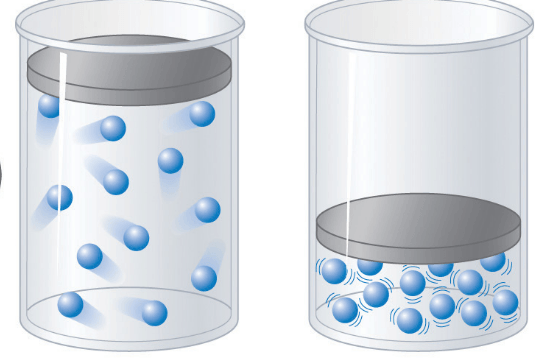
b)
1.0 mol
c)
10.1 mol
d)
4.5 mol
5.
2Na + 2H2O → 2NaOH+ H2
How many grams of hydrogen are produced if 120 g of Na are available?
a)
5.2 g
b)
2.6 g
c)
690 g
d)
45 g
6.
How many particles are in 13.5 grams of Beryllium?
a)
1.5 particles
b)
9 particles
c)
4x10²³ particles
d)
9x10²³ particles
7.
2 NaClO3 (s) --> 2NaCl (s) +3 O2 (g)  
12.00 moles of NaClO3 will produce how many grams of O2?
a)
256 g of O2
b)
576 g of O2
c)
288 g O2
8.
B2H6 + 3O2 -->2 HBO2 + 2 H2O
 What mass of O2 will be needed to burn 36.1 g of B2H6?
a)
13.8 g O2
b)
3.86 mol of O2
c)
124 g O2
9.
2CO  +  O2  −-> 2CO2
How many liters of carbon dioxide are produced from 10L of carbon monoxide?
a)
10
b)
20
c)
1
d)
5
10.
In a lab, a scientist calculate he should produce 12.3 grams of product in his experiment. When he is finished collecting his product it weighs 10.1 grams. What is his percent yield?
a)
82%
b)
0.82%
c)
10.1 %
d)
100%
11.
When 12 moles of O2 reacts with 1.1 mole of C10H8 what is the limiting reactant?  C10H8 + 12 O2 --> 10 CO2 + 4 H2O
a)
Oxygen
b)
C10H8
c)
Water
d)
Carbon Dioxide
12.
4 Al + 3 O2 –> 2 Al2O How much aluminum would be needed to completely react with 45 grams of O2?
a)
1.05 moles
b)
3.75 moles
c)
1.875 grams
d)
1.875 moles
13.
What is the percent yield of the following reaction if 145g of P2Oreacts with 40 grams of water, but you only collected 112 grams of phosphoric acid? 3 H2O + P2O5 -> 2H3PO4
a)
80%
b)
85%
c)
77%
d)
58%
14.
2Al + 3H2SO4 -> Al2(SO4)3 + 3H2
How many grams of aluminum sulfate would be formed if 250g H2SO4 completely reacted with aluminum?
a)
0.85 g
b)
290 g
c)
450 g
d)
870 g
15.
How many liters of NH3 are needed to react completely with 30.0L of NO?
4NH3+6NO --> 5N2 + 6H2O
a)
5.0 L
b)
20.0 L
c)
7.5 L
d)
120.0 L
16.
The molar mass of an element is equal to its...
a)
Atomic mass
b)
Atomic number
c)
Oxidation number
d)
Valence electrons
17.
The mass of one mole of substance is called...
a)
molecular mass
b)
mole constant
c)
molar mass
d)
atomic weight
18.

Silicon dioxide, also known as silica, is an oxide of silicon with the chemical formula SiO2. Silica is one of the most complex and most abundant families of materials, existing as a compound of several minerals and as synthetic product. What is the formula mass of the covalent compound silicon dioxide (SiO2)?

a)

7193.6 amu

b)

30.0 amu

c)

44.1 amu

d)

60.1 amu

19.

Fluorine is added to city water supplies in the proportion of about one part per million to help prevent tooth decay. Several fluoride compounds are added to toothpaste, also to help prevent tooth decay. What is the molar mass of fluorine gas?

a)

18.998 amu

b)

38 amu

c)

9 amu

d)

18 amu

20.
What is the molar mass of table salt (NaCl)?
a)
116.886 g/mol
b)
35.453 g/mol
c)
22.990 g/mol
d)
58.443 g/mol
21.
What is the mass of one mole of aluminum chloride (remember to determine the correct formula first)?
a)
62.435g
b)
116.399g
c)
133.341g
d)
97.888g
22.
What is the mole ratio of H2O to H3PO4 in the following chemical equation?   P4O10 + 6 H2O --> 4 H3PO
a)
6:4
b)
4:6
c)
1:3
d)
3:1
23.
2Al + 3H2SO4 -> Al2(SO4)3 + 3H2
How many grams of aluminum sulfate would be formed if 250g H2SO4 completely reacted with aluminum?
a)
0.85 g
b)
290 g
c)
450 g
d)
870 g
24.
For the reaction represented by the equation Cl2 + 2KBr → Br2 + 2KCl, how many grams of potassium chloride can be produced from 356 grams potassium bromide?
a)
749 g
b)
225 g
c)
479 g
d)
814 g
25.

How many grams are in 7.8 moles of NaCl?

a)

476 grams

b)

460 grams

c)

452 grams

d)

462 grams

26.
Using the following equation:
Fe2O3(s) + 3H2(g) → 2Fe(s) + 3H2O(l)
How many moles of iron can be made from  6 moles H2
a)
4 moles Fe
b)
6 moles Fe
c)
9 moles Fe
d)
2 moles Fe
27.
What is the mole to mole ratio of propane to carbon dioxide in the equation?
a)
1:3
b)
1:5
c)
1:4
d)
1:1
28.
Balance this reaction: ____ RbNO3 + ____ BeF2 ----> ____ Be(NO3)2 + ____ RbF
a)
1,1,1,1
b)
1,2,1,1
c)
2,1,1,2
d)
2,1,2,1
29.
The first step in stoichiometry is to
a)
Determine a balanced equation
b)
convert grams to moles
c)
convert grams to liters
d)
use the mole ratio
30.
B2H6 + 3O2 -->2 HBO2 + 2 H2O
 What mass of O2 will be needed to burn 36.1 g of B2H6?
a)
13.8 g O2
b)
3.86 mol of O2
c)
124 g O2
31.
2H2   +   O2  →  2H2O
How many moles of water can be produced if 8 moles H2 are used?
a)
4 moles
b)
8 moles
c)
16 moles
d)
2 moles
32.
How many grams is 1.2 moles of Neon?
a)
0.05 grams
b)
16.6 grams
c)
21.2 grams
d)
24 grams
33.
How many grams are in 5.6 moles of sodium bromide?
a)
36.8 g/mol
b)
18.4 g
c)
576 g/mol
d)
576 g
34.
Convert 28.0 grams of O2 to moles.
a)
1.14 moles
b)
1.75 moles
c)
0.571 moles
d)
0.875 moles
35.
Change 7.00 moles of Na2SO4 into grams.
a)
20.3 grams
b)
994 grams
c)
770 grams
d)
0.0493 grams
36.
How many moles are in 16.94g of H2O?
a)
16.94
b)
0.9403
c)
305.2
d)
1.063
37.
How many molecules are in 9.4 moles of AlCl3?
a)
5.66
b)
5.66x1024
c)
0.705
d)
1.25x10²³
38.
How many molecules are there in 31.8 moles of water?
a)
5.28 x 10⁻²³ molecules
b)
1.91 x 1025 molecules
39.
How many total molecules are there in 2HNO3?
a)
2
b)
6
c)
8
d)
10
40.

Determine the number of moles of AlNO3 that are in 264 g of the compound.

a)

2.97 mol

b)

3.45 mol

c)

2.73 mol

d)

1.86 mol

41.

Determine the amount of moles in CuBr that are in 276.9 g of the compound.

a)

3.2 mol

b)

1.7 mol

c)

2.1 mol

d)

1.9 mol

42.

Find the mass of 5.82 mol of MgCl2. Round to the nearest tenth.

a)

552.9 g

b)

436.8 g

c)

55.2 g

d)

555.9 g

43.

Determine the amount of moles of BaCl2 that are in 436 g of the compound.

a)

3.5 mol

b)

2.1 mol

c)

4.6 mol

d)

2.7 mol

44.

Find the mass of 3.6 mol of Au.

a)

843.6 g

b)

709.2 g

c)

435.9 g

d)

196.9 g

45.
What is the mass of 0.75 moles of (NH4)3PO4?
a)
101.75 g
b)
121.75 g
c)
111.75 g
d)
131.75 g
46.

What is the formula for Boyle's Law?

a)

P1V1=P2V2

b)

P1V1/P2V2

c)

P1V2=P2V1

d)

P1/V1=P2/V2

47.
When Pressure increases then the Volume must...
a)
Increase
b)
decrease
48.
When Volume increases then Pressure must...
a)
Increase
b)
Decrease
49.
A gas occupies 4.98 L at 2.6 atm of pressure. What volume does it occupy at 1.8 atm pressure?
a)
12.9 L
b)
0.72 L
c)
7.2 L
d)
3.44 L
50.
A gas at a volume of 4 liters is at a pressure of 2 atm. The volume is changed to 16 Liters, what must the new pressure be?
a)
2 atm
b)
12 atm
c)
10 atm
d)
0.5 atm
51.
Which container will have a lower pressure?
a)
left
b)
right
c)
they both have the same pressure
d)
I don't know
52.

IF we are using Boyles' law and our Pressure goes UP, what must our volume do?

a)

Go UP

b)

Go DOWN

c)

Stay the same

d)

Wrong law.

53.

Which best explains why increasing the pressure on a gas decreases the volume of the gas sample?

a)

Increasing the pressure causes the gas particles to hit the container walls more often.

b)

Increasing the pressure on a gas sample moves the gas particles closer together.

c)

Increasing the pressure on a gas sample causes the kinetic energy to increase.

54.
What is the variable for this number 22.4 L
a)
P
b)
T
c)
n
d)
V
55.
What is the variable for this number 32oC
a)
P
b)
T
c)
n
d)
V
56.
What is the variable for this number 9.10 atm
a)
P
b)
T
c)
n
d)
V
57.
What is the variable for this number 1.5 mol
a)
P
b)
T
c)
n
d)
V
58.
PV=nRT
a)
Charles Law
b)
Boyle's Law
c)
Combined Gas Law
d)
Ideal Gas Law
59.
Calculate the volume that a 0.323-mol sample of a gas will occupy at 265 K and a pressure of 0.900 atm.
a)
7.18 L 
b)
7.81 L
c)
4.63 L
d)
4.36 L
60.
Determine the Kelvin temperature required for 0.0470 mol of gas to fill a balloon to 1.20 L under .998 atm pressure. 
a)
0 K 
b)
107 K 
c)
207 K 
d)
307 K 
61.

What does R stand for

a)

Ideal gas constant

b)

Real gas constant

c)

Temperature constant

d)

Ideal gas law

62.
What pressure, in atm, is exerted by 2.50 L of gas containing 1.35 mol at 320 K?
PV=nRT
a)
14.19 atm
b)
16.53 atm
c)
18.42 atm
d)
22.54 atm
63.

At constant pressure, a balloon's volume changed from 15L to 45L. If the final temperature was 350K, what was the initial temperature?

a)

2 K

b)

1050 K

c)

117 K

d)

not enough information

64.
Determine the Celsius temperature of 2.49 moles of gas contained in a 1.00-L vessel at a pressure of 143 kPa. 
a)
-266 degrees C
b)
-622 degrees C
c)
622 degrees C 
d)
266 degrees C
65.
Determine the number of moles in a container of gas at STP with a volume of 99.2 L. 
a)
2222.08 moles
b)
4.43 moles
c)
22.4 moles 
d)
76.8 moles
66.
What about gasses can be measured?
a)
Pressure and Volume
b)
Temperature, Volume, and Pressure
c)
Volume and Temperature
d)
Pressure, Temperature, Volume, and Moles
67.
If the pressure exerted by a gas at 25 degrees C in a volume of 0.044 L is 3.81 atm, how many moles of gas are present?
a)
.002766 mole
b)
.0069 mol
c)
2.766 mol
d)
9.887 mol
68.
At STP, what is pressure in atmospheres?
a)
1 atm
b)
10 atm
c)
0 atm
d)
100 atm
69.
Calculate the volume that a 0.323-mol sample of a gas will occupy at 265 K and a pressure of 0.900 atm.
a)
7.18 L 
b)
7.81 L
c)
4.63 L
d)
4.36 L
70.

2Al + 6HCl --> 2AlCl3 + 3H2

Aluminium reacts with hydrochloric acid. How many grams of aluminum are necessary to produce 11 L of hydrogen gas at STP?

a)

13

b)

8.8

c)

0.99

d)

1.0

71.

Mg3N2 + 3H2O ––> 3 MgO + 2NH3

If 10.3 g of magnesium nitride is used, what volume of ammonia gas would be collected at 20˚C and 0.989 atm?

a)

4.9 L NH3

b)

4.96 L NH3

c)

0.261 L NH3

d)

0.26 L NH3

72.

2CO + O2 −-> 2CO2

How many liters of carbon monoxide at 25.0oC and 8.56 mmHg are needed to react with 12.30 L of oxygen gas at STP?

a)

3.14 L

b)

318 L

c)

2390 L

d)

200 L

73.
What is the limiting reactant if 10 moles of NH3  react  with 30.0 moles of NO?
4NH3+6NO --> 5N2 + 6H2O
a)
NH3
b)
NO
c)
N2
d)
water
74.
4NH+ 5O--> 4NO + 6H2O
How many grams of NO are formed if 6.30g of ammonia react with 1.80g of oxygen? 
a)
0.37g
b)
0.045g
c)
1.35g
d)
11.1g
75.
P+ 6Cl--> 4PCl
The reaction of 75.0g P4 with excess chlorine gas produces 110g PClin lab. Find the theoretical yield and calculate percent yield for the reaction. 
a)
78%
b)
64%
c)
27%
d)
33%
76.
Theoretical yield = 73g
Actual yield = 62g
Calculate the percent yield.

a)
1.16%
b)
116%
c)
85%
d)
76%
77.
In a lab, a scientist calculate he should produce 12.3 grams of product in his experiment. When he is finished collecting his product it weighs 10.1 grams. What is his percent yield?
a)
82%
b)
0.82%
c)
10.1 %
d)
100%
78.
Your percent yield is 80%. The actual amount of product produced was 29.1 grams. What is the theoretical yield?
a)
25.2 grams
b)
37.3 grams
c)
37.1 grams
d)
36.3 grams