
 Worksheets
Matter Review
Total questions: 80
Worksheet time: 1hrs 24mins

Which of the following is NOT a part of the Kinetic Theory of Matter?
All matter is made up of tiny particles.
Particles are always moving in random paths
Occasionally, particles stop moving.
The type of movement of particles depends on the amount of energy.
The energy of an object as it is in motion is defined as
Potential Energy
Elastic Energy
Electric Energy
Kinetic Energy
The random motion of the particles in a substance is greatest when the substance is:
condensed
gas
frozen
liquid
What is the measure of the average kinetic energy of the particles in an object?
Heat
Motion
Thermal Energy
Temperature
Absolute zero is the temperature (in Kelvin), at which, only in theory...
space and time merge together
energy goes to infinity
time stands still
all particles stop moving
What leads to a change of phase in matter?
A change in the number of particles
A change in the amount of kinetic energy
A change in the direction of particle movement
A change in the shape of the container
What does the kinetic theory of matter state?
Matter is in constant motion
All matter has the same amount of kinetic energy
Gases have the least amount of kinetic energy
Matter stops moving at absolute zero

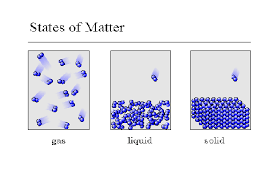
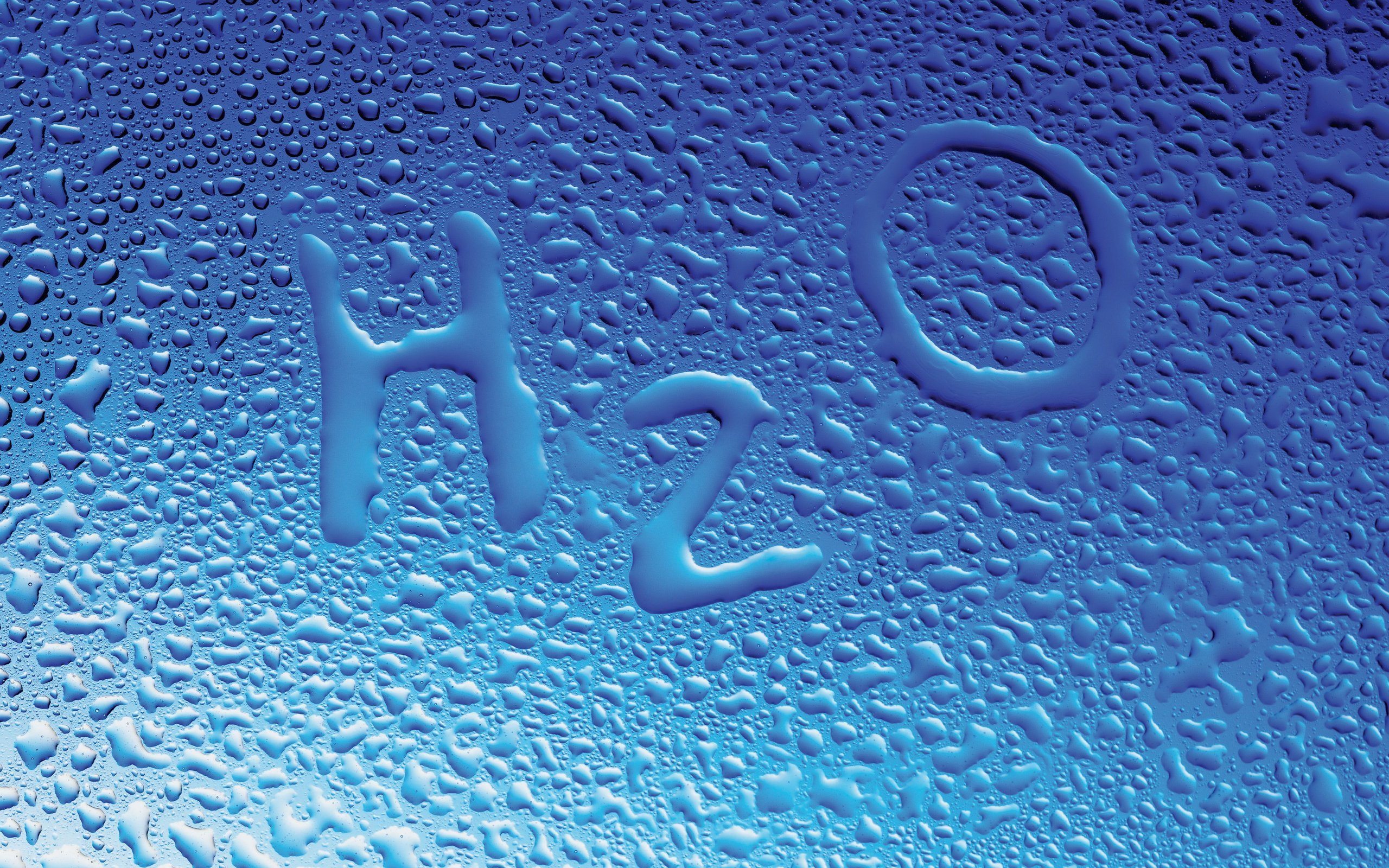


The lemonade in this glass is what type of mixture?
Heterogeneous
Homogeneous
A mixture in which the composition is NOT uniform throughout is called a _____ mixture.
Heterogeneous
Homogeneous

What type of mixture is shown?
Homogeneous
Heterogeneous

What type of substance is shown?
compound
heterogeneous mixture
homogeneous mixture
element

What type of material is pictured?
Element
Compound
Homogeneous mixture
Heterogeneous mixture

What type of material is pictured?
Element
Compound
Heterogeneous mixture
Homogeneous mixture

Classify milk as one of these 4 types of matter.
Element
Compound
Homogeneous mixture
Heterogeneous mixture
A physical blend of 2 or more components is called a ____.
type of element
mixture
chemical reaction
physical property
Cu
Element
Compound
Homogeneous Mixture
Heterogeneous Mixture
CaCO3
Element
Compound
Homogeneous Mixture
Heterogeneous Mixture
H2O
Element
Compound
Homogeneous Mixture
Heterogeneous Mixture
Al
Element
Compound
Homogeneous Mixture
Heterogeneous Mixture
C6H22O11
Element
Compound
Homogeneous Mixture
Heterogeneous Mixture
Which of the following is a compound?
Co
O2
C
CO2

What type of matter is shown in this particle diagram?
Element
Compound
Mixture of Elements
Mixture of Compounds
Mixture of Elements and Compounds

What type of matter is shown in this particle diagram?
Element
Compound
Mixture of Elements
Mixture of Compounds
Mixture of Elements and Compounds

What type of matter is shown in this particle diagram?
Element
Compound
Mixture of Elements
Mixture of Compounds
Mixture of Elements and Compounds

What type of matter is shown in this particle diagram?
Element
Compound
Mixture of Elements
Mixture of Compounds
Mixture of Elements and Compounds

What type of matter is shown in this particle diagram?
Element
Compound
Mixture of Elements
Mixture of Compounds
Mixture of Elements and Compounds
ZnCl2 + Mg
Mixture
Element
Compound
Pure Substance
NaCl + KOH
Mixture of Compounds
Mixture of Elements
Compound
Element
Cl2 + 2SnI4
Element
Compound
Mixture of Compounds
Mixture of Elements
Mixture of Elements & Compounds
H2O2
Mixture
Element
Compound
C7H14 + O₂
Mixture of Element & Compound
Compound
Mixture of Elements
Mixture of Compounds
Elements
Carbon is considered an element, while carbon dioxide is considered a compound. This is because carbon dioxide is
A a gas at room temperature.
made of two different elements.
given off by green plants.
useful to human beings.
The smallest particle of any particular type of matter is known by which of the following terms?
Element
Chemical
Atom
Compound
A pure substance that can not be broken down into a simpler substance is known by what term?
Molecule
Crystal
Element
Compound
Which of the following is composed of two or more different substances, each of which retains its own individual properties, that are physically combined?
Element
Atom
Molecule
Mixture
Which of the following is the best description of an element?
A substance that cannot be broken down into simpler substances .
B A naturally occurring mineral made of more than one substance.
C A small particle of a substance with properties that change when heated.
D A collection of atoms that have different abilities when joined together.
How are elements and compounds different?
A compound is a combination of two or more types of matter, an element is one type.
B Compounds are represented by chemical symbols of one letter, elements by two.
C There are an infinite number of elements, but a limited number of compounds.
D Elements are always larger units of matter, and compounds are smaller.
In the following illustrations, different colors represent different kinds of atoms. Which one correctly labels an element, a compound, and a mixture?


When elements combine to form a compound, it is reasonable to predict that the compound -
A. will have a greater total volume than the elements.
B will have physical properties different from the elements.
C will have less mass than the element.
D will have the same characteristics as the elements.

Which diagram represents an element?
Diagram (a)
Diagram (b)
Diagram (c)
None of the diagrams represent the parts of an element.

Which of the following represents a compound?
Diagram (a)
Diagram (b)
Diagram (c)
All of the diagrams represent the parts of a compound.
Which diagram represents a mixture?
Diagram (a)
Diagram (b)
Diagram (c)
None of the diagrams represent the parts of a mixture.
Anything that has mass and takes up space.
atom
mixture
element
matter
Which item is a pure substance?
aluminum (Al)
apple juice
muddy water
brass

What type of material is pictured?
Heterogeneous mixture
Homogeneous mixture
Element
Compound
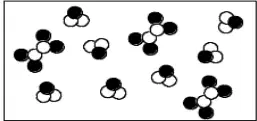
Mixture of Elements
Mixture of Compounds
Compound
Mixture of Elements & Compounds

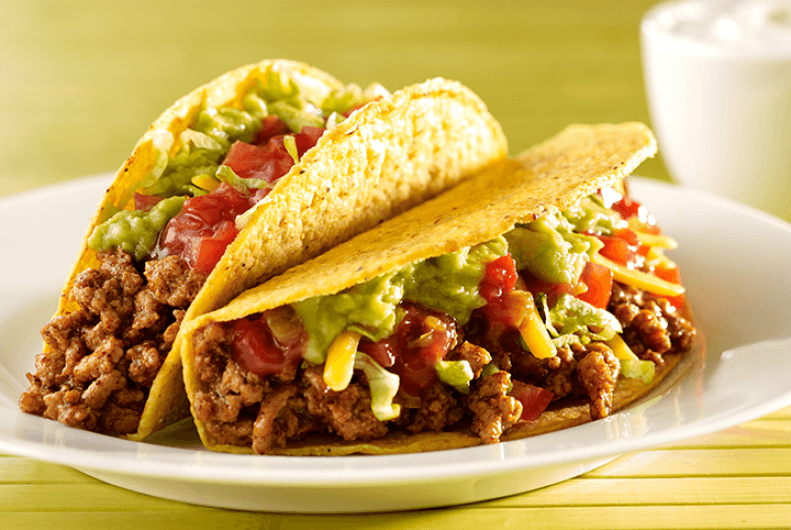
A Taco is an example of a
Homogeneous Mixture
Heterogeneous Mixture
How do chemical properties of matter differ from physical properties?
Chemical properties are observable, while physical properties are not
Chemical properties involve changes in state, while physical properties do not
Chemical properties are affected by temperature, while physical properties are not
Chemical properties involve the ability of a substance to undergo chemical reactions and form new substances, while physical properties are characteristics that can be observed or measured without changing the substance's composition.
Give an example of a chemical property of matter.
Conductivity
Melting point
Flammability
Density
What is the difference between an element and a compound?
An element can be broken down into simpler substances, whereas a compound cannot be broken down.
An element consists of two or more types of atoms, whereas a compound consists of only one type of atom.
An element consists of only one type of atom, whereas a compound consists of two or more different types of atoms bonded together.
An element is a mixture of different atoms, whereas a compound is a pure substance.
Explain the concept of phase changes in matter.
Phase changes occur when a substance changes its shape
Phase changes occur when a substance gains or loses energy, causing its particles to rearrange into a different structure or state.
Phase changes happen due to changes in color
Phase changes are caused by the rotation of Earth
Describe the physical properties of a solid.
Solids have definite shape and volume, closely packed particles, fixed positions, not easily compressible, high density.
Solids have indefinite shape and volume
Solids have loosely packed particles
Solids are easily compressible

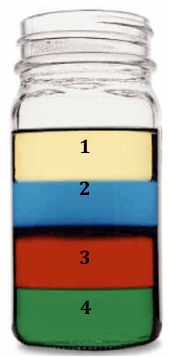
Match the following to the correct units
Volume
mL or cm3
Mass
g
Density
g/cm3 or g/mL
What describes the amount of matter in an object
Mass
Matter
Weight

