
 Worksheets
science grade 5 term 3 quiz 2
Total questions: 44
Worksheet time: 23mins
_____ is electromagnetic waves that can be detected by the eye.
Energy
Matter
Sound
Light
Refraction occurs when
light bounces off an object, changing direction
light bends as it passes from one medium to another
light is absorbed by an object
Never! Light is never refracted!
Lights are always reflected off the surface of objects.
True
False

This is showing
light absorption
echolocation
light refraction
light reflection
Light waves do NOT need a medium to travel.
True
False
Reflected light goes into the cornea and it _______ light onto the lens!
transferred
refracted
eliminated
blocked
The _____________ is the organization of all the different types of electromagnetic waves by their varying wavelengths!
transverse wave
electromagnetic hierarchy
light energy
electromagnetic spectrum
________ transfer electromagnetic energy or light energy; also known as electromagnetic waves!
sound waves
energy
light waves
magnitude

What type of lens is shown?
concave
convex
opaque
translucent

What is happening when the light passes through the lens?
compression
magnification
reflection
refraction
A solid glass or plastic object that light can pass through that refracts light and splits it into the colors of the rainbow
prism
lens
mirror
magnify
Which is an example of a transparent object?
clear plastic
spoon
wax paper
curtain
Which is an example of an opaque object?
glass
wax paper
clear plastic
tree
Which is an example of a translucent object?
a person
clear plastic
dog
wax paper

SOME light passes through an object that is ......
translucent
transparent
opaque
shadow
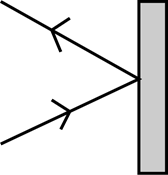
In the illustration, the light ray striking the object is-


Which type of mirrors ?
plane
concave
convex

which type of mirrors ?
plane
concave
convex
2. The concave parts make things look smaller.
True
False
3. Driving mirrors are ________.
Convex
Concave
Plane
4. Driving mirrors produce an image that is ________ in size.
Bigger
Smaller
Average
Materials that allow only SOME light to pass through are called
transparent
translucent
opaque

Based on the picture, the material that the flashlight is shining on can be classified as
translucent
transparent
opaque
Light travels in
particles
waves
molecules
circles
Reflection is
when light bends
when light strikes a surface and bounces back
when light shines in your eyes
when light goes through a surface

The following pictures shows
refraction of light
scattering of light
reflection of light
absorbing of light
A mirror, still water, and aluminum would all reflect light.
True
False
You can see colors with or without light.
True
False
A window is opaque, which means it stops all light.
True
False
Which of the following are able to refract light? Select ALL that apply.
prism
mirror
water
lenses

Lenses always________light.
reflect
refract
transmit
absorb
Reflect means_________.
light bounces back
light goes through and bends.
light goes straight through.
light gets taken in.
Refract means________.
light gets taken in
Light goes straight through
light goes through and bends
light bounces back
Transmit means___________
light goes through and bends
light bounces back
light gets taken in
light goes straight through
Absorb means______.
light bounces back
light goes through and bends
light gets taken in
light goes straight through

When you look on the surface of a lake, the light is______.
refracted
transmitted
absorbed
reflected

When you look through water, the light is_______.
reflected
refracted
transmitted
absorbed

When looking through a window, light is _______.
reflected
transmitted
refracted
absorbed

When light hits a dark colored shirt, it is_________.
absorbed
reflected
refracted
transmitted

What is happening in this picture?
the light is being refracted from mirror to mirror
the light is being transmitted
the light is being reflected off each mirror
the light is being absorbed by each mirror
What is a difference between reflection and refraction?
In reflection the light goes through and in refraction the light does not go through
In reflection the light does not go through, in refraction it does go through
reflection means to bend and refraction means to bounce off of
refraction means to stop and reflection means to go
Which of the following could be used to show refraction?
prism
mirror
aluminum foil
a ziploc bag
Which of the following could be used to show reflection?
prism
lens
mirror
wooden table

