
 Worksheets
T1 Solar System Review
Total questions: 42
Worksheet time: 15mins
What is the correct order of the planets in the Solar System, starting closest to the Sun?
Mars, Mercury, Earth, Venus, Jupiter, Saturn, Uranus, Neptune,
Mercury, Venus, Earth, Mars, Jupiter, Saturn, Uranus, Neptune
Mercury, Mars, Venus, Earth, Jupiter, Saturn, Uranus, Neptune,
Mercury, Venus, Earth, Mars, Jupiter, Neptune, Uranus, Saturn
What do Mercury, Venus, Earth, and Mars all have in common?
They are all very cold planets.
They are considered terrestrial planets, that is rocky or have metals with hard surface.
They are about the same size.
They are considered gas giants
The four inner planets are rocky and small. Which description best fits the next four outer planets?
They are also rocky and small.
They are very large and has no moons
They are small and made of ice.
They are very large, made of gases with no solid surface
Which planet is the largest planet in the solar system and is the fifth planet?
the sun
Uranus
Jupiter
Earth
Which of the following is ordered from largest to smallest?
Universe -> Galaxy -> Solar System -> Planet
Planet -> Galaxy -> Solar System -> Universe
Planet -> Solar System -> Galaxy -> Universe D.) Universe
Universe -> Solar System -> Galaxy -> Planet
Which planet is home to the tallest mountain , has the largest dust storms in the solar system and is also known as the 'Red Planet' because of the presence of iron oxide in it's rock.
Earth
Venus
Jupiter
Mars
What is the object that all planets in our solar system orbit?
The moon
The sun
The Milky Way
Mercury
Which best explains why models are useful when studying the Solar System?
A model of the Solar System can show how the Solar System actually operates.
Models cannot be proven wrong, so all scientists accept them
A model of the Solar System can show the relationship between objects in the Solar System.
A model of the Solar System is fun to create.
The asteroid belt is located between
Jupiter and Saturn
Earth and Mars
Mars and Jupiter
Mercury and Venus
A dwarf planet cannot be called a regular planet because it is to small and doesn't have all of the qualities.
True
False
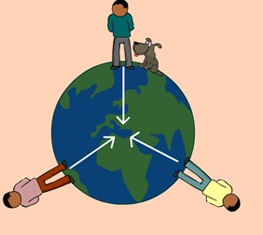
When will the forces of gravity between two objects be the GREATEST?
when the masses of both objects are small and the objects are far apart
when the masses of both objects are large and the objects are close together
when the masses of both objects are small and the objects are close together
when the masses of both objects are large and the objects are far apart
What is a the space rock that collides into Earth's surface?
meteor
asteroid
meteorite
How does a meteor compare to a meteorite?
A meteor is moving through Earth's atmosphere and the meteorite actually lands on Earth
Meteors are made up of Carbon and meteorites are made of ice
A meteorite is moving through the Earth's atmosphere and the meteor actually lands on Earth
They are the same thing
Which planet is the hottest planet (860 degrees F)!
Venus
Mercury
Earth
Mars
A celestial body that moves elliptically orbit around a star is called
asteroid
planet
comet
moon
Which of the following is NOT a physical characteristic of the Inner planets?
Terrestrial, rocky
shorter revolutions
less dense
closer together
A small body of ice, dust, and rock that elliptically orbits the sun is
asteroid
metorite
asteroid belt
comet
Which of the following is NOT a physical characteristic of the Gas Giants?
Longer revolutions, deep atmospheres
all of the gas giants have rings
Shorter revolutions, located inside asteroid belt
less known about them
How many moons are combined totally in the inner planets?
four
three
five
thirty
Second largest planet in the solar system that is known for its rings.
Venus
Earth
Jupiter
Saturn
Identify the planet:
surface always covered by thick clouds
Mercury
Venus
Earth
Mars
True or False: The outer planets have small solid cores.
False
Only some of them
True
A Group of stars, and or star systems, star clusters, dust and gas held together by gravity is known as:
Universe
Galaxy
Solar System
Planet
A galaxy that does not have a regular shape?
Spiral
Elliptical
Irregular
Quasar

Uranus has a turquoise-ish color to it because of traces of ______ in its atmosphere.
Oxygen (O2)
Nitrogen (N2)
Helium (He)
Methane (CH4)

Which of the outer planets has the lowest density?
Saturn
Uranus
Neptune
Jupiter

Which planet is shown as Y?
Neptune
Saturn
Jupiter
Uranus

Which Outer Planet(s) has/have rings?
Jupiter
Uranus
Neptune
All of the Above
None of the Above

What makes a meteoroid, meteor, and a meteorite different? (best answer)
color
size
location
texture
Choose the best description for a comet...
icy small body with a tail
chunky rock
rock moving body
Peter has learned that many stars are actually larger than the sun. If this is true, why do these stars appear like tiny points of light in the night sky?
These stars are hotter than the sun.
These stars are farther away from Earth than the sun.
These stars have less mass than the sun
These stars are made of different chemicals than the sun.
Huge balls oh hot , glowing gases that produces their heat and light
planets
moons
stars
From Earth we can see some celestial objects in the sky at night. Which of the following is least likely to be seen?
dust
stars
planets
Constellations
What do the Earth, Moon, and Sun have in common?
They all produce light.
They all have a rocky composition.
They all rotate.
They all are primarily composed of gases.
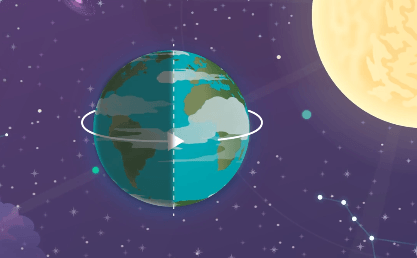
Many objects revolve around the sun. Which object is most likely to revolve around a planet?
Star
Moon
Asteroid
Comet
I am a rock entering a planet's atmosphere.
meteor
moon
asteroid
comet
The shape of comet's paths are ________________.
circular
elliptical
irregular

A representation that explains an object, theory or complex process
design
model
black box
collaboration

