

wayground logo

Free Printable Worksheets

Font size

S
M
L
XL
Worksheets

Electricity and Magnetism SPS10

Total questions: 37

Worksheet time: 24mins

Name
Class
Date
1.

This is a picture of a simple electromagnet. How can the electromagnet be made stronger?

a)

Add more coils of wire to the nail.

b)

Use a smaller battery (less potential difference).

c)

Reverse the poles of the magnet.

d)

Flip the battery around so the current runs in the opposite direction.

2.

I'm thinking of a circuit has more than one loop. When one light goes out, the others stay on.

a)

closed circuit

b)

series circuit

c)

parallel circuit

d)

open circuit

3.

Use your equation sheet.

What size resistor would produce a 3 Amp current flow with a 12 Volt battery

a)

1 Ohm

b)

3 Ohms

c)

4 Ohms

d)

12 Ohms

4.

Use your equation sheet.

If the battery produced 12 Volts what would be the current flow for a 6 Ohm resistor?

a)

2 Amps

b)

0.5 Amps

c)

72 Amps

d)

18 Amps

5.

Potential Difference and Current are ____ related.

a)

directly

b)

inversely

c)

not

6.

Resistance and Current are ____ related.

a)

directly

b)

inversely

c)

not

7.

Choose the options that will increase the current flow.

a)

Increase the resistance

b)

decrease the resistance

c)

increase the voltage

d)

decrease the voltage

8.

This type of circuit has one path and the current everywhere is the same.

a)

alternating

b)

series

c)

parallel

d)

direct

9.

What do the arrows in the circuit represent?

a)

conventional current flow

b)

actual electron flow

c)

voltage

d)

resistance

10.

By convention, current is defined as flowing from ______________ to ______________.

a)

positive, negative

b)

positive, positive

c)

negative, positive

d)

negative, negative

11.

Magnetic fields flow

a)

only inside the magnet.

b)

in circles around the magnet.

c)

from the north pole to the south pole.

d)

in random directions from all parts of the magnet.

12.
Movement of electrons through a circuit
a)
electricity
b)
static
c)
friction
d)
induction
13.
_____ electricity results from the buildup of electric charges on an object
a)
friction
b)
conduction
c)
static
14.
Rubbing two objects together
a)
friction
b)
induction
c)
conduction
15.
Transfer by not touching
a)
friction
b)
induction
c)
conduction
16.
Electrons changed directions at regular intervals
EX: Gas driven generator or lights in our house
a)
alternating current
b)
direct current
17.
electrons move in same directions
EX: Batteries in your car or batteries in your flashlight
a)
alternating current
b)
direct current
18.
Ohms Law: 
a)
V=IR
b)
V=OR
19.
To get electrons flowing through a circuit, a _____ is applied.  ____, which is measured in volts (V), is the potential difference in electrical potential energy between two places in a circuit.  In other words, ____ is the energy per unit of charge that causes charges to move.
a)
Resistence (R)
b)
Electric Current (I)
c)
Voltage (V)
20.
When charged particles flow through the wire in a circuit, an ______ results.  The ___ current is measured in amperes (A).  The electron is the charged particle that most likely moves through the circuit.
a)
Resistence (R)
b)
Electric Current (I)
c)
Voltage (V)
21.
The opposition to current is called ____, which is measured in ohms (Ω).  Light bulbs and reistors are examples of objects with a __.
a)
Resistence (R)
b)
Electric Current (I)
c)
Voltage (V)
22.
a)
Electric motor
b)
electromagnet
23.
a)
Electromagnet
b)
Electric Motor
24.
An electric current will also produce a ___.  A ___ is a region around a magent or current-carryin wire where magnetic forces can be measured.
a)
magnetism
b)
electromagnetic induction
c)
magnetic domains
d)
magnectic fields
25.
Groups of atoms with magnetic poles aligned are called ____. Materials with most of these domains lined up are considered magnetized.
a)
magnetism
b)
electromagnetic induction
c)
magnetic domains
d)
magnectic fields
26.
A ___ is a device that converts mechanical energy to electrical energy.  In a commerical ___, an electric current is produced when a large coil of wire is rotated in a strong magnetic field.
a)
battery
b)
generator
c)
magnetic domain
27.
When an electric current is used to produce a magnetic field in a coil of wire, the coil become an electromagnet.  A rotating electromaged is used in ____ motors to convert electrical energy to mechanical energy.
a)
aquatic
b)
permanent
c)
gas
d)
electric
28.

A region around a charged object where the object's electric force is exerted on other charged objects in an electric

a)

field

b)

outlet

c)

socket

d)

power plant

29.
Charges that are different _____________ each other.
a)
attract 
b)
repel
c)
equal
d)
move opposite to
30.

Does this statement best describe a parallel or a series circuit.


Different voltages are found across each resistor.

a)

Parallel circuit

b)

Series circuit

31.
Which of the two circuits would have the brightest bulbs? 
a)
A
b)
B
32.

what is this symbol for?

a)

light bulb

b)

switch

c)

battery

d)

resistor

33.
Unit for resistance
a)
Ampere
b)
Ohm
c)
Volt
d)
Watt
34.

In a battery cell, which form of energy is converted into electrical energy?

a)

Chemical energy

b)

Solar energy

c)

Mechanical energy

d)

Electrical energy

35.

Which of the following answers the best explains electromagnets?

a)

If the wire is coiled more times around the nail, THEN the strength of the electromagnet will decrease.

b)

A. IF the piece of iron is bigger, THEN the strength of the electromagnet will decrease.

c)

A. IF the wire is coiled fewer times around the nail, THEN the strength of the electromagnet will increase

d)

A. IF the wire is coiled more times around the nail, THEN the strength of the electromagnet will increase
36.
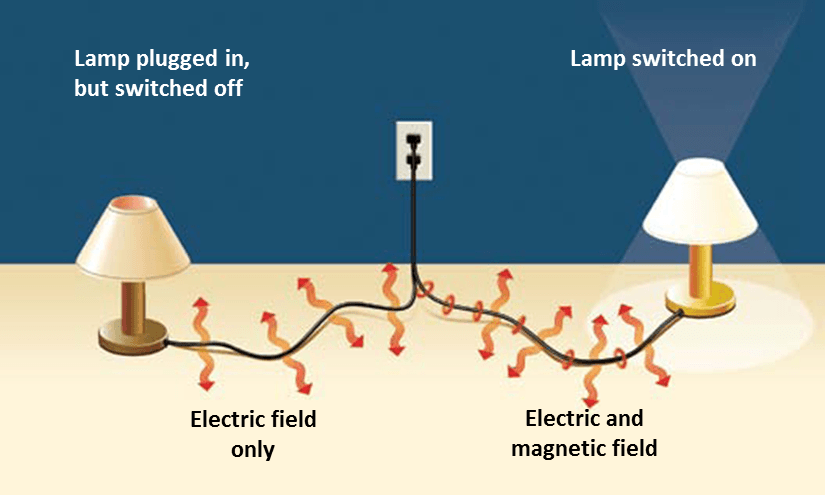
Electric fields are often associated with what other kind of field? 
a)
Magnetic Fields 
b)
Nuclear Fields 
c)
Particle Fields 
d)
Corn Fields 
37.
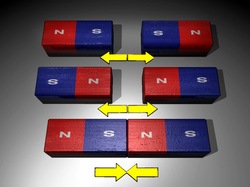
What force does a magnetic field apply without actually touching the object? 
a)
a push or pull
b)
gravity 
c)
friction 
d)
pressure
