
 Worksheets
L.2 What are forces that affect motion?
Total questions: 40
Worksheet time: 38mins


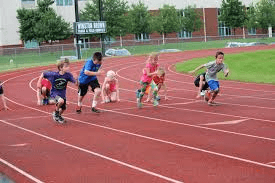

Force can change the ___________ of a moving object.
smell
direction
On being pushed, the object moves __________ us.
towards
away from
A pull is _____.
a force to move something towards you
a force to move something away
when a magnet attracts metals

This is an example of ____.
forces
gravity
magnetism

This is an example of what force?
pull
push
gravity

This is an example of what force?
push
pull
magnetism

Gravity _________ everything downwards.
pushes
pulls
heavy

It can cause a moving object to slow or stop.
Force
Friction
Motion
The amount of friction depends on how hard objects are pressing together.
True
False
Which would create more friction?
carpet
Glass
If you kick a ball, what stops the ball?
the grass
sand
your foot
friction

What does friction cause?
It makes things speed up.
It makes things slow down or stop.
It make things fall to the ground.

Without friction a toy car would ----
keep going and going.
stop right away.
stay at rest all the time.

Smooth surfaces such as ice, usually produce less friction.
true
false
you can walk because there is friction between your __________ and ______________
ground and air
feet and ground
feet and air
air and ground
Friction does NOT help in ______.
putting brakes on vehicles
stopping vehicles from slipping
in maintaining balance while walking
ice skating
Different types of surfaces create different amount of friction.
True
False
Rubbing your hands together creates _____.
gravity
heat
mass
volume
If you pour water on a floor, friction will be ________.
increased
decreased
nothing happens
broken

What will happen if you walk over a wet floor?
I will walk properly
I will jump
I will slip down
All of the above


The forces are ___
balanced
unbalanced
The net force is
1000 N TO THE RIGHT
1000 N TO THE LEFT
ZERO
There is ___
motion
no motion

The forces are ___
balanced
unbalanced
Motion is to the ______
right
left

What force is this an example of?
Unbalanced force
Balanced Force
When I add a small force to an object it will move far
True
False
A balanced force has two equal forces working in the opposite directions
True
False
An unbalanced force is?
An object sitting still
A king of bird
A way to collect data
When one force is greater then the other causing the object to move or change directions.

