wayground logo

Free Printable Worksheets

Font size

S
M
L
XL
Worksheets

Test review

Total questions: 64

Worksheet time: 48mins

Name
Class
Date
1.

Heat transfer by convection is caused by differences in what two things:

a)

Thickness and material

b)

Weight and electricity

c)

Temperature and density

2.
The cycle that powers the ocean currents, weather, and tectonic plates it called
a)
conduction current
b)
radiation
c)
condition current
d)
convection current
3.
The main reason that we have currents in the ocean and air is
a)
the sun heats the air and ocean evenly everywhere
b)
the heat inside the earth heats the ocean and the ocean heats the air
c)
the sun cannot heat both the air and water, so one must heat the other
d)
the sun heats air and water more at the equator because it receives more direct sunlight
4.
Energy for convection on the Earth comes from...
a)
The sun
b)
The moon
c)
Solar winds
d)
The ocean
5.
In convection, COOL air
a)
Rises
b)
Sinks
6.
In convection, WARM air
a)
Rises
b)
Sinks
7.

Which is the correct order of the Earth's layers?

Outer most layer first.

a)

Crust, Outer Core, Mantle, Inner Core

b)

Crust, Mantle, Outer Core, Inner Core

c)

Inner core, Outer core, Mantle, Crust

8.
What layer has a solid inner part and a liquid outer part?
a)
Crust
b)
Mantle
c)
Core
d)
none
9.
Which layer has a part that is thick  with a clay-like consistency that transfers heat through convection?
a)
Crust
b)
Mantle
c)
Core
d)
All of them
10.

What layer is where "Plate tectonics work"?

a)

Asthenosphere

b)

Lithosphere

c)

Crust

d)

Mantle

11.
Pressure ______________________ as you go deeper into the Earth
a)
increases
b)
decreases 
c)
goes up or down depending on the layer
d)
stays the same
12.

Plate tectonics is our current theory of how the movement of continental masses relates to the movement of ocean basins. This movement explains many phenomena, such as

a)

Earthquakes

b)

Volcanoes

c)

Tsunamis

d)

All of the above

13.

Plate tectonics, or the movement of pieces of Earth's crust, is thought to be caused by

a)

Hot spots

b)

Convection currents in Earth's crust

c)

Convection currents in Earth's mantle

d)

Convection currents in Earth's core

14.

This is a __________ boundary.

a)

Convergent

b)

Divergent

c)

Transform

15.

This is a ________ boundary.

a)

Convergent

b)

Divergent

c)

Transform

16.
In which type of boundary do the plates move away from each other?
a)
convergent
b)
normal
c)
divergent
d)
transform
17.
This type of plate boundary is when two plates slide past each other.
a)
Convergent
b)
Transform
c)
Divergent
d)
Subductive
18.
Which of the following is a term for a group of similar organisms that can reproduce fertile offspring?
a)
individual
b)
population
c)
species
d)
fossil
19.
Finches on the Galapagos Islands had different beaks in order to help them do what?
a)
Build nests
b)
Fight off predators
c)
Collect food sources
d)
Compete with rivals
20.
This scientist came up with the idea of natural selection.
a)
Jean Baptiste Lamarck
b)
Gregor Mendel
c)
Charles Darwin
d)
Thomas Malthus
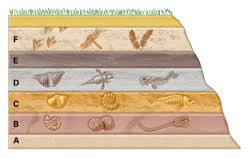
21.
According to the diagram, which organism is older?
a)
ammonite
b)
coral
c)
gastropod
d)
trilobite
22.
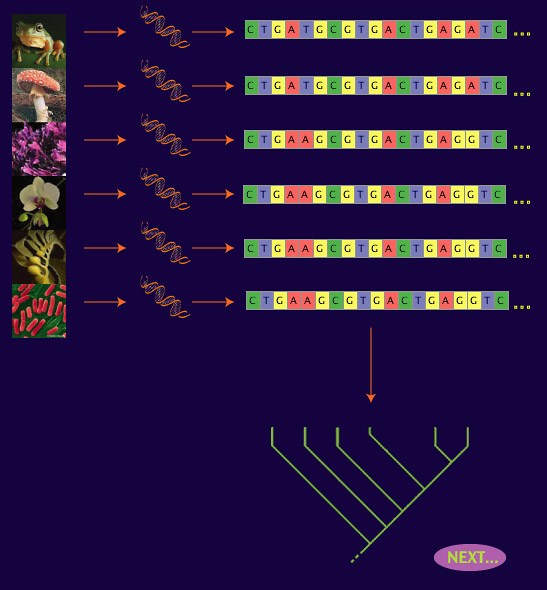
Two organisms that are closely related would have
a)
very similar DNA sequence
b)
exactly the same DNA sequences
c)
no proteins in common
d)
completely different DNA sequence
23.
Mutations are important because they bring about
a)
death of the organism in which they develop
b)
genetic variation needed for a population to evolve
c)
benefits for the individual, not for the population
d)
Hardey-Weinberg equilibrium within a population
24.

Which rock layer contains the newest fossils?

a)
F
b)
E
c)
B
d)
C
25.

Beak shape, camouflage, and webbed feet are all examples of which type of adaptation?

a)

Behavioral Adaptation

b)

Physical Adaptation

26.
A tick and a dog have this type of relationship.
a)
mutualism
b)
commensalism
c)
neutralism
d)
parasitism
27.
A tapeworm and a cat have this type of relationship.
a)
mutualism
b)
parasitism
c)
commensalism
d)
competition
28.
Cattle egrets are birds that forage in fields among cattle. The egrets get easy access to food and the cattle don't care if they are there or not.
a)
mutualism
b)
commensalism
c)
competition
d)
parasitism
29.
A relationship between two organisms in which one organism benefits and the other is harmed.
a)
Mutualism 
b)
Competition
c)
Parasitsm 
d)
Commensalism 
30.

A relationship between two organisms in which one organism benefits and the other is unharmed.

a)

Mutualism

b)

Competition

c)

Parasitsm

d)

Commensalism

31.
A relationship between two organisms in which both organisms benefit. 
a)
Mutualism 
b)
Competition
c)
Parasitsm 
d)
Commensalism 
32.
Mistletoe extracts water and nutrients from the spruce tree to the tree's detriment (harm). 
a)
Mutualsim 
b)
Parasitism 
c)
Commensalism 
33.
Barnacles create home sites by attaching themselves to whales. This neither harms nor benefits the whales.
a)
Mutualsim 
b)
Parasitism 
c)
Commensalism 
34.

The name of the process that producers use to make their own food…

a)

respiration

b)

commensalism

c)

food chains

d)

photosynthesis

e)

symbiosis

35.
Limiting factors are sometimes helpful because they can keep the population from getting too large.
a)
True
b)
False
36.
A snake is eaten by a hawk. The hawk is the _______.
a)
prey
b)
parasite
c)
predator
d)
all of these
37.
Food, water, sunlight, shelter, and space are resources that are  __________.
a)
limiting factors
b)
wet
c)
messy
d)
found in rocks
38.
If there is more food than usual in an ecosystem, then...
a)
Populations will stay the same
b)
Populations will decrease
c)
Populations will increase
39.
Any thing or organism that regulates the size of a population of another organism is known as __________.
a)
a limiting measure
b)
a limiting factor
c)
factorization
d)
materialization of precipitation
40.

The BREAKING DOWN into small pieces of rock or sand

a)

deposition

b)

erosion

c)

weathering

41.

The MOVEMENT of small pieces of rock or sand

a)

deposition

b)

erosion

c)

weathering

42.

The PILING UP or GATHERING of small pieces of rock or sand.

a)

deposition

b)

erosion

c)

weathering

43.

_____________________ is the movement of soil and rock by wind, water, ice, and gravity.

a)

Weathering

b)

Erosion

c)

Deposition

44.

_____________________ happens when rocks on Earth's surface break apart or change without moving anywhere.

a)

Erosion

b)

Weathering

c)

Deposition

45.

______________________ occurs when eroded materials stop moving and begin to build up.

a)

Weathering

b)

Erosion

c)

Deposition

46.

The movement of water in a river causes the rocks to become ______________ over time.

a)

smaller/smoother

b)

larger/rougher

47.
If heat and pressure inside the Earth cause a rock to melt, the material that formed would be
a)
Metamorphic
b)
Magma
c)
Sedimentary
d)
Igneous
48.
This rock was another type of rock that was heated and compressed over time. What type of rock is this?
a)
Sedimentary
b)
Igneous
c)
Metamorphic
49.

What type of rock might contain evidence of past life?

a)

Sedimentary Rock

b)

Igneous Rock

c)

Metamorphic Rock

50.

Select the example where the hydrosphere interacts with the geosphere.

a)

birds feeding on worms

b)

mushrooms and flowers growing

c)

soil getting full of water and creating streams

d)

plants being less wilted

51.

What is the difference between erosion and weathering?

a)

Erosion is the carrying away of particles, where weathering is the breaking down of rocks

b)

Erosion is the breaking down of rocks, where weathering is the carrying away of particles

c)

Erosion is water evaporating into the sky, where weathering is the falling of water from the sky

d)

Erosion is the hydrosphere, where weathering is the atmosphere

52.

How does the hydrosphere shape the geosphere?

a)

The hydrosphere evaporates into the geosphere

b)

The hydrosphere blows particles away from the geosphere

c)

The hydrosphere erodes or weathers the geosphere to create canyons, streams, and other formations

d)

The hydrosphere creates mountains

53.
Composed of all the water on or near the earth
a)
Hydrosphere 
b)
Biosphere 
c)
Atmosphere 
d)
Geosphere 
54.
This sphere is composed of all the living things 
a)
Hydrosphere 
b)
Biosphere 
c)
Atmosphere 
d)
Geosphere 
55.

A divergent boundary occurs when plates ....

a)

Pull apart

b)

Come together

c)

Slide past each other

d)

subducting

56.
What are the puzzle pieces of the Earth's surface called?
a)
Tectonic plates
b)
Puzzles
c)
Earthquakes
57.
Pangaea was an ancient supercontinent made up of...
a)
America, Greenland, and Europe.
b)
Antarctica, India, and America.
c)
all of Earth’s continents.
d)
South Africa, India, Australia, and South America.
58.

Day-to-day variation of the atmosphere's condition locally.

a)

Weather

b)

Climate

59.

Which of the following best describes climate?

a)

day to day conditions of the atmosphere at a place in regards to heat, dryness, sunshine, wind, rain, etc.

b)

long-term conditions (months/years) of the atmosphere at a place in regards to heat, dryness, sunshine, wind, rain, etc.

60.
The high temperature today will be near 75 C.
a)
weather
b)
climate
61.

The meteorologist predicts that tomorrow, it will be very windy outside.

a)

Weather

b)

Climate

62.

Sandra visited her grandma in Florida over Thanksgiving. She noticed that they were selling bathing suits at the stores. Her grandma said they sell bathing suits all year because Florida is warm.

a)

climate

b)

weather

63.
What can change entire ecosystems and create extinctions in species?
a)
Climate
b)
Weather
64.
Blizzards, Heatwaves, High winds are all examples of __________________ events.
a)
Climate
b)
Weather