
 Worksheets
IGCSE Physics - Electricity
Total questions: 140
Worksheet time: 3hrs 45mins
Which one is a series circuit?


Which one is a parallel circuit?


What happens to the current in a series circuit?
The current stays the same
The current is added
The current is reduced
The current is split between the light bulbs
What happens to the current in a parallel circuit?
The current stays the same
The current is added
The current is reduced
The current is split between the light bulbs
What happens to the voltage in a series circuit?
The voltage stays the same
The voltage is added
The voltage is reduced
The voltage is split between the light bulbs
What happens to the voltage in a parallel circuit?
The voltage stays the same
The voltage is added
The voltage is reduced
The voltage is split between the light bulbs
What is resistor?
Electrical component that is specially made to have a specific resistance
The measure of the difference in how much energy the electrons receive to move around at different points in a circuit
The flow of electrical charges
The movement or presence of electrons
Why voltage is important?
Because it is the pressure that causes the electrons to move around in a circuit and make the current flow and make appliances work
To supply energy to be able to make the current flow in electric circuit and make appliances work
To control the resistance in the circuit
To reduce the current in the circuit
What is the unit used for voltage?
Ampere
Ohm
Volt
Meter


The resistance of each resistor is 0.5 Ω . What would the voltmeter read?
Which is the symbol for AC?


Which is the symbol for DC?

(I X R)
Voltage divided by Resistance
(V / R)
Current
Power
Ohms
Watts
Voltage divided by Current
(V / I)
Current
Power
Resistance
Watts

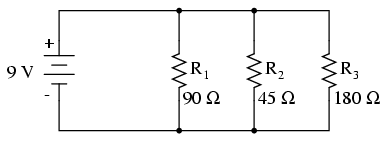
A current of 0.5 A flows in a circuit. Calculate the charge flowing through the circuit in one minute.
0.5 C
30 C
120 C
Which equation links current, charge flow, and time?
Current = Time / Charge flow
Charge flow = current x time
Current = charge flow x time
Time = charge flow x current
The current in a wire is 1.2kA. What is the current in Amps?
120A
12A
0.12A
1200A
How much charge flows through a wire in 80s if the current is a constant 5.4A?
432C
360C
524C
344C
A 3A current flows through a television. How long would it take for 1500C to flow through it?
4500s
500s
50s
450s
Quantity of charge can be measured in
time (s)
Ampere (A)
coulombs (C)
Joule (J)
Calculate the quantity of charge, Q, obtained when a current of 25 amps runs for 1 minute
Q = 1,800 C
Q = 1,500 C
Q = 1000 C
Q = 3000 C

A potential difference of 24 V is applied to a 150 resistor. How much current flows through the resistor?
0.15 A
3600 A
6.25 A
0.16 A

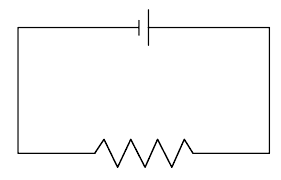
This is an example of a _______ circuit
open
series
parallel
square

This is an example of a ______ circuit
Series
Parallel
Open
Dihexihedral

What is the equivalent or total resistance (Re) across this circuit?
3 kΩ
10 kΩ
13 kΩ
18 kΩ

Power outlets in your home are arranged ...
In series so that it's simpler
In parallel so that they all receive the same current
In parallel so that they all receive the same voltage


The winding of wire around a core which is connected to a source of energy is called the ....... coil.
primary
secondary
tertiary
Calculate potential difference in the secondary coil based on the information given below.
Vp = 240 V
Np = 20
Ns = 125
Vs ?
1500
500
1000
2000
Why transformers work with A.C. current but not D.C.
A.C current produces changing magnetic field.
D.C current produces changing magnetic field.
D.C current is weak
A.C current is powerful
A transformer has 100 turns in the primary coil and 25 turns in the secondary coil. When a 120 V is applied to the primary coil, what is the voltage in the secondary coil?
480V
30V
20V
450V

If the transformer shown is 80% efficient, calculate the power at the primary coil.
30W
24W
36.5W
19.2W
Transformer is always connected to ___________ supply.
A.C.
D.C.
For increasing the voltage ___________ is used.
Step up transformer
Step down transformer
Current transformer
A transformer has primary voltage 200V and secondary voltage 100V , the transformer is called _______ .
Step up
Step Down
None
Electrical symbol of a TRANSFORMER


A transformer consists of
Metal Core
Metal core and coiled wire
Metal core and polymer wire
Polymer core and metal wire
Which description best applies to Lenz's Law?
An induced current occurs when a magnet passes through a tube.
When a change in magnetic field occurs to a coil the direction of current goes in the in the other direction to this change.
The direction of an induced current is such to align with the change that created it.
A magnet is a tube is always slowed by its magnetic field.

What happens to the galvanometer if the copper rod is moved upwards?
No change
Deflect to the right
Deflect to the left
Deflect to the right and left

Which activity will produce the highest current?
Move the magnet bar into the coil while the coil remains stationery
Move the coil into the magnet bar while the magnet remains stationery
Move the coil and magnet towards each other
Move the coil and magnet away from each other

Which action will increase the deflection of the galvanometer pointer?
The magnetic pole is reversed
The number of turns of coils is increased
The coil is made from insulated wire
The magnet is slowly pushed into the coil

When a conductor is moved to cut through the magnetic flux, an _______________ is produced.
induced current
electromotive force
electromagnetic induction
internal resistance

In Fleming's Right Hand Rule, First finger and center finger represent
current, magnetic field
magnetic field, current
force, current
magnetic field, force

____________law states that the direction of the induced current is such that it always _______ ___ the change producing it.
Lenz's Law, oppose
Faraday's Law, oppose
Lez's Law, follow
Faraday's Law, follow
Faraday’s Law states that the magnitude of the induced e.m.f. is _________________ to the rate of change of magnetic flux linkage with the solenoid.
equal
inversely proportional
directly proportional
The d.c generator and a.c generator make use of electromagnetic induction to produce _______________________
force
electricity
energy
power
Which device uses slip rings?
a cathode-ray tube
a d.c. generator
an a.c. generator
a solenoid
Which of the following increases frequency of AC?
increasing number of turns on the coil
using a stronger magnet
rotating the coil faster
increase area of the coil
No EMF is induced when?
When the wire is not moving
When the wire is parallel to magnetic field direction
When no lines are cut by the wire
all of the above
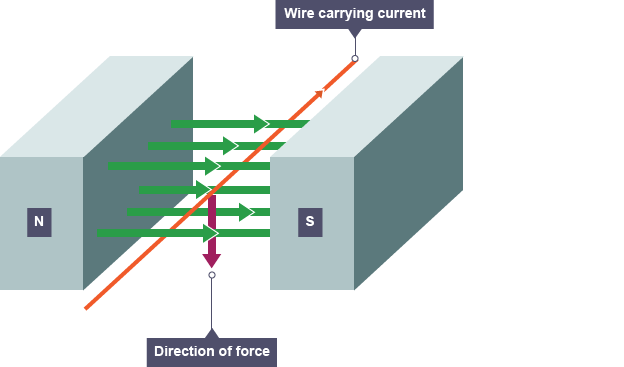
Why might a current-carrying wire be placed between a magnetic field?
To increase the current from the interaction of magnetic fields
To increase the voltage from the interaction of magnetic fields
To produce a force from the interaction of magnetic fields
What does the thumb indicate in flemings left hand rule?
Force
Motion
Current
Magnetic field direction
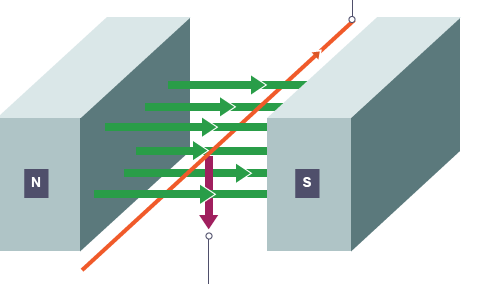
What direction is the force/motion in the following diagram?
Perpendicular to the magnets
Downwards
Parallel and through the magnets

What angle must there be between a magnetic field and a conductor in order for the maximum force to be exerted?
180
45
90
270
Name one factor that does not affect the size of a force in on a current-carrying conductor placed in a magnetic field?
Gravity
Magnetic flux density/size of magnetic field
Size of the current
Length of the conductor
Name the effect that causes a coil of current-carrying wire in an electric motor to move.
The electromagnetism effect
The magnetic effect
The motor effect
Which rule can be used to work out which way a coil of wire rotates in a motor?
Fleming's left-hand rule
Fleming's right-hand rule
Give two ways you can reverse the direction of a basic dc motor?
Reverse the current
Keep the current the same
Reverse the magnetic field
Keep the magnetic field the same
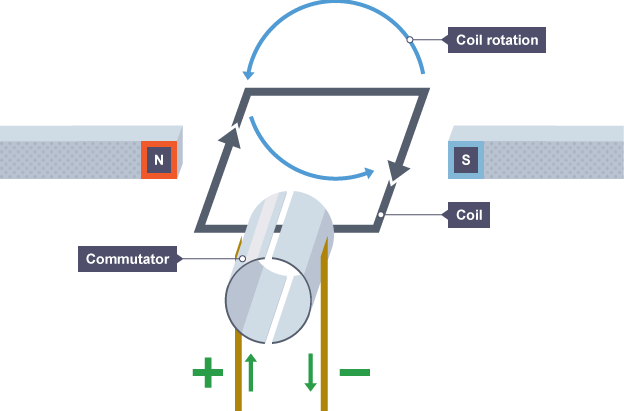
How does a split ring commutator work?
Swaps the contact evert full turn, so that the left-hand and right-hand arms of the coil always experience a force in the same direction.
Swaps the contact evert half turn, so that the left-hand and right-hand arms of the coil do not experience a force in the same direction.
Swaps the contact evert half turn, so that the left-hand and right-hand arms of the coil always experience a force in the same direction.
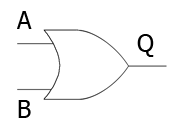

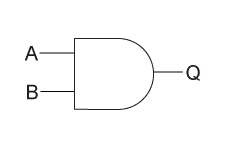
Which logic gate is this?
AND
OR
XOR
NOT
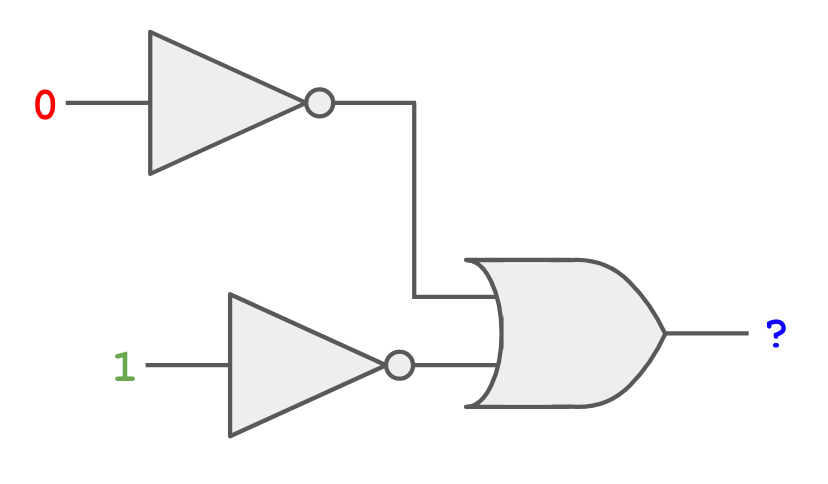
What will the circuit's output be?
1
0

what is the meaning of rectification?
a process of smoothing using a capacitor
a process of adding impurities to pure materials
a process of converting an alternating current into a direct current by using a diode.

This is the symbol for a...
Light Dependent Resistor
Light Emitting Diode
Thermistor
Cell

During night, the output voltage is
Low
High

True or False:
AND gates output a 1 if both inputs are 0
True
False
True or False:
NOT gates can only have one input
True
False
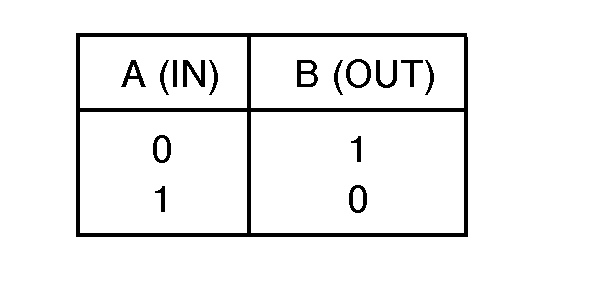
What type of logic gate is this table showing?
AND
OR
NOT

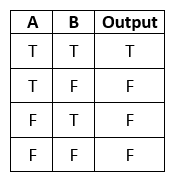
What type of logic is this table showing:
AND
OR
NOR
XOR
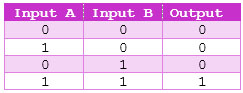
Which logic gate is represented by this truth table?
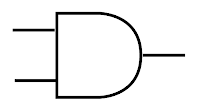
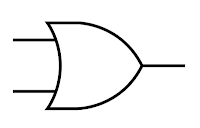
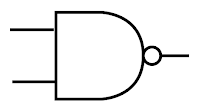
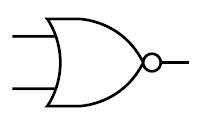
"The burglar alarm will go off if either the door or the window or both are opened". This is an example of which type of Logic?
AND
OR
NOT
NOR

Determine the output expression for output X if given
A =1
B = 0
C = 1
X= 0
X= 1
What will the circuit's output be?
1
0

What will the circuit's output be?
1
0

What will the circuit's output be?
1
0
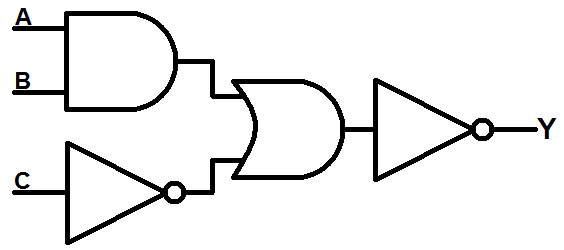
What is the output Y of this logic cricuit if A = 1, B = 1, and C = 1
0
1
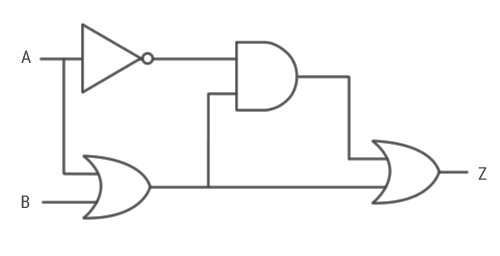
What is the output Z of this logic cricuit if A = 1 and B = 1
0
1
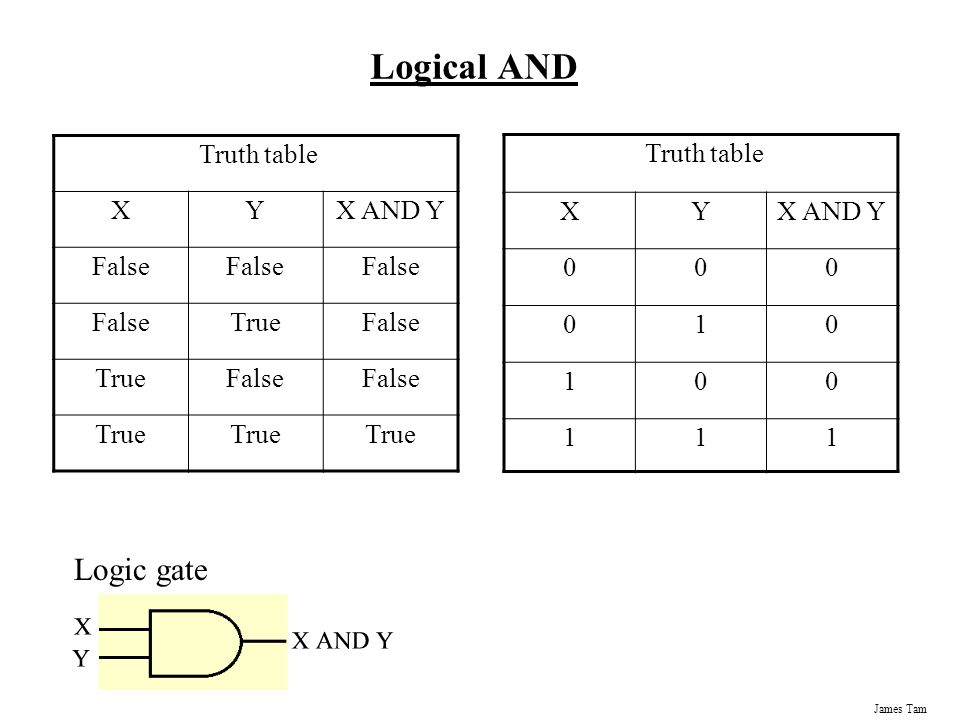
For AND, when is it TRUE?
false AND false
true AND false
false AND true
true AND true
For AND, when is it FALSE?
false AND false
true AND false
false AND true
true AND true

