
 Worksheets
Review for Test 3
Total questions: 113
Worksheet time: 6hrs 39mins

R: {0, 1, 2, -4}
R:{-4, -3, 1}
R:{1, -3, -4}
R: {1, -3, -4, 1}
(9, -2) (4, 3) ( 8, 10) ( -4, 8)


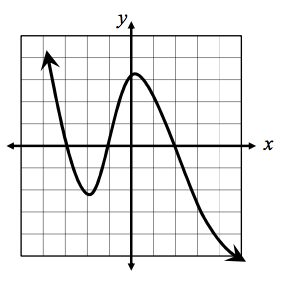
Does the graph represent a function?
No
Yes

Which graph is not a function?
Graph A
Graph B
Graph C
Graph D

Given f(x)=3x2−2x+1 and g(x)=x−4 , find (f×g)(x)
3x3−10x2−7x−4
3x3−14x2+9x−4
3x2−x−3
3x3+14x2−9x−4
Given f(x)=x2+5 and g(x)=2x3−1 , find (gf)(−3) .
-14/55
14/55
2
-2
Find f(3) + g(2) if f(x)= x+2 and g(x)=5x-1
(a)
Find (f−g)(2) if f(x)=4x+10 and g(x)=3x−7
(a)
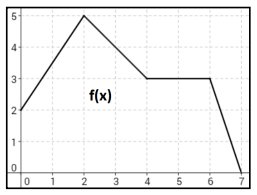
Find f(2)
5
4
3
0

Find f(-1)
-3
15
19
17

A
B
C
D

A
B
C
D
R: {0, 1, 2, -4}
R:{-4, -3, 1}
R:{1, -3, -4}
Which mapping diagram is not a function?


Domain of the function f(x)=5x4+3x3+4x+7
[0,∞)
R because f is a polynomial function
(0,∞)
none of these
Domain of the function f(x)= ∣3x−1∣
[0,∞) because f is a modulus function
All real numbers because f is a modulus function
[0,1] because f is defined for these values of x.
none of these
Domain of the function f(x) = [x-2] where [ ] is greatest integer function is
All integers
All natural numbers
All real numbers
Non negative numbers
Domain of f(x)=x+2 is
[0,∞)
(0,∞)
All real numbers
[−2, ∞)
Domain of f(x)=x2−4 is
[4,∞)
[2,∞)
(−∞,−2)∪(2,∞)
[0,∞)
f(x)=25−x2
Domain of f(x) is
[5,∞)
[0,∞)
All real numbers
[−5,5]
f(x)= 49−x21
Domain of f(x) is
(0,∞)
[-6,6]
(-7,7)
[-7,7]
f(x)=x−21 is Domain of
[2,∞)
(2,∞)
All real numbers
R−{2}
f(x)=(x−3)(x−5) is domain of
[5,∞)
[3,∞)
(−∞,3]∪[5,∞)
All real numbers
f(x)=x−3x−5 is Domain of
[5,∞)
[3,∞)
[3,5]
(−∞,3]∪[5,∞)

Write a quadratic equation given the x intercepts and one other point.
Step 1: Write the factors.
The intercepts of this function are (6, 0) and (8, 0). Write the factors.
(x-6) and (x-8)
(x+6) and (x+8)
(x-6) and (x+8)
(x+6) and (x-8)

Write a quadratic equation given the x intercepts and one other point.
Step 2: Find a.
Now that you know that the factors are (x-6) and (x-8), you must find a. Plug the coordinates of the vertex (7, 1) in for x and y and solve for a.
y = a(x-6)(x-8)
What is the value of a?
a = 1
a = -1
a = 7
a = -7

Write a quadratic equation given the x intercepts and one other point.
Step 3: Write the equation in factored form.
Now, you know that the factors are (x-6) and (x-8) and a = -1. Write the equation of the graph in factored form.
-(x-6)(x-8)
-(x+6)(x+8)
(x-6)(x+8)
(x+6)(x-8)
Now, take the factored form and write it in Standard Form (ax2+bx+c=0) by double distributing (or FOIL).
-(x-6)(x-8)=0
x2+2x-15=0
-x2+14x -48=0
- x2+8x-15=0
x2 + 5x -16=0
Write a quadratic equation given the x intercepts and one other point.
Put the steps together.
- Find the factors.
- Solve for a by substituting in the extra point.
- Write the equation in factored form.
The roots of the function are (-3, 0) and (5, 0).
The point (4, -3) is also on the graph.
y=4(x+3)(x-5)
y=3/7(x-3)(x+5)
y=-3(x-3)(x+5)
y=3/7(x+3)(x-5)

Write a quadratic equation in vertex form given the vertex and another point.
- Substitute the coordinates of the vertex (1, -4) in for h and k.
Vertex form: y=a(x-h)2+k
(x+1)2-4=y
(x-1)2-4=y
(x + 1)(x - 3)=y
x2 +2x - 3=y
Convert this equation in vertex form to standard form.
(x-1)2 -1
x2 -2x - 2
x2+x-2
x2+2
x2-2x

Review: What are the vertex and axis of symmetry for the given graph?
Vertex (1, -4) Axis of Symmetry: x=1
Vertex (1, -4) Axis of Symmetry x = -4
Vertex (-4, 1) Axis of Symmetry x=-4
Vertex (-4, 1) Axis of Symmetry x = 1
Which parabola would open down?
f(x)=x2
f(x)=-x2+3x-6
f(x) = x2-16
f(x)=2x2-5x+7
Use any method (graph, factor, complete the square, quadratic formula) to solve the function:
f(x)=x2-7x+10
No solutions
x=-2 and x=-5
x=2 and x=5
x = 2/5
Quadratic equations take the shape of a _______ when graphed.
parabola
straight line
snaked line
elliptical


A parabola has a vertex at (-3,2).
What is the axis of symmetry?
y = -2
x = 3
x = -3
y = 2

Use the picture to find the vertex and axis of symmetry
Vertex (3,8) Axis x = 3
Vertex (3,8) Axis y = 3
Vertex (8,3) Axis x = 3
Vertex (8,3) Axis y = 3


What is another name for the x-intercepts and solutions of a quadratic?
y-intercept
Zeros
x-axis
They don't have another name


Range : 0 ≤ y ≤ 4
Range : -2 ≤ y ≤ 2
Range : y ≤ 4
Range : y ≤ 4

Determine the domain and range of the function
Domain: All real numbers
Range: All real numbers
Domain: x ≥ -4
Range: All real numbers
Domain: All real numbers
Range: y ≥ -4
Domain: -1 ≤ x ≤ 5
Range: y ≥ -4
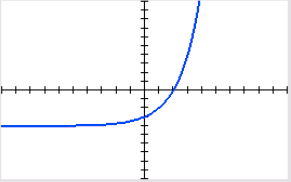
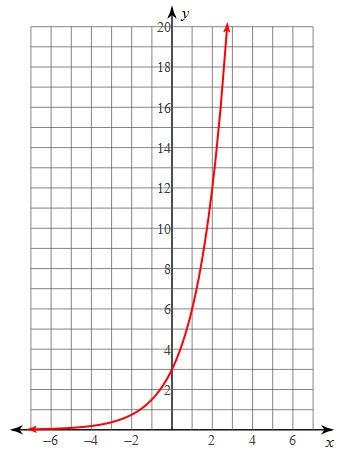
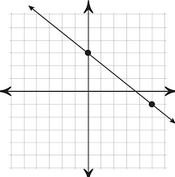
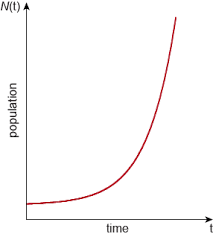
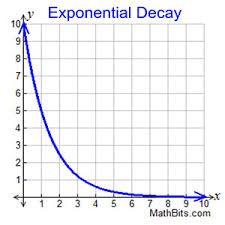

Does the equation represent an exponential function?
Yes
No

Does the equation represent an exponential function?
Yes
No

Does the equation represent an exponential function?
Yes
No

Does the equation represent an exponential function?
Yes
No
1 The discriminant is
aX2 + bX + c
b - 4ac
b2 - 4ac
b2 + 4ac
1 In the equation
y = x2 +5x +7,
match each leading coefficient with its correct letter.
a=0, b=5, c=7
a=1, b=5, c=7
a=7, b=5, c=1
1 What does the discriminant tell us?
The maximum or minimum
The y-intercept
The number and type of solutions
The axis of symmetry
2 For the function below, is the discriminant positive, negative, or zero?
y = x² + 4x + 4
Positive
Negative
Zero
2 A function has a discriminant of 4.
How many x-intercepts does it have?
0
1
2
4
2 A function has a discriminant of 0.
How many x-intercepts does it have?
0
1
2
5
3 What is the discriminant of
-2x2 − x − 1 = 0 ?
76
-7
9
none of these

3 For the function above, is the discriminant positive, negative, or zero?
Positive
Negative
Zero

3 For the function above, is the discriminant positive, negative, or zero?
Positive
Negative
Zero
4 Determine the value of the discriminant and name the nature of the solution for the following:
x2 + 2x - 63
Remember: b2 - 4ac
256 - 2 reals - Rational
√(-256 - 2 imaginary solutions
√(137) - 2 reals - Irrational
123 - 2 reals - Rational

What is the maximum height of the parabola?
h = 0.563
h = 10.063
h = 5
h = 1.356
What is the initial height of the parabola?
h = 0.563
h = 10.063
h = 5
h = 1.356
How long does it take the parabola to reach the ground?
t = 0.563
t = 10.063
t = 5
t = 1.356
The pathway of an arrow can be represented by the equation h = -16t2 + 80t + 25, where h is the height in feet and t is the time in seconds. What is the maximum height?
h = 125 feet
h = 80 feet
h = 95 feet
h = 140 feet
A rock is dropped from a bridge 320 feet above a river. The pathway that the rock takes can be modeled by the equation h = -16t2 + 320. How long will it take the rock to reach the river (ground)?
4.5 seconds
2.5 seconds
3.8 seconds
3.5 seconds
Joe Mauer hits a fly ball. You can track the height of the ball using the equation: h(t) = -16t2 + 140t + 2. What is the starting height of the ball?
-16 feet
140 feet
2 feet
0 feet
A baseball was thrown from a height of 5 feet with an initial velocity of 24 feet per second at an angle above the horizontal. Write an equation to represent the situation.
y= -16x2 + 24x + 5
y= -16x2 + 24x - 5
y= 16x2 + 24x + 5
y= x2 + 24x + 5
Charlie shoots a basketball from a height of 6 feet with an initial upward velocity of 18 feet per second. How long will it take the ball to reach the maximum height?
0.6 seconds
11 seconds
6 second
this graph has a minimum
Charlie shoots a basketball from a height of 6 feet with an initial upward velocity of 18 feet per second. How long will it take the ball to hit the floor if it doesn't hit the basket?
1.39 seconds
0.6 seconds
6 second
11 seconds
(x - 4)2 + (y - 3)2 = 25 ?
Radius = 5 units
Radius = 25 units
Radius = 25 units
Radius = 5 units
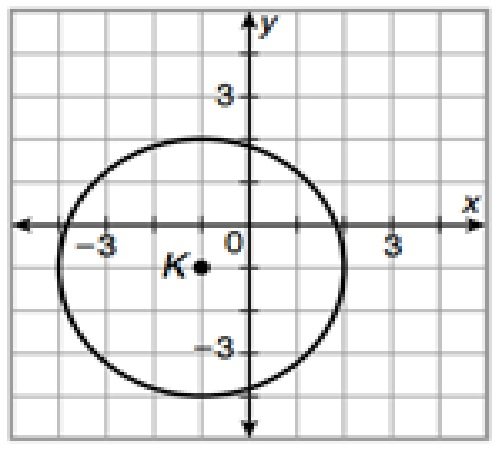
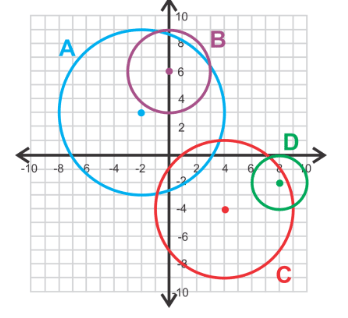
(x-8)2+ (y+2)2=

Write the equation of the circle with center C( -5 , 8 ) and radius = 7
( x - 5 )2 + ( y + 8 )2 = 14
( x - 5 )2 + ( y - 8 )2 = 49
( x - 5 )2 + ( y + 8 )2 = 49
( x + 5 )2 + ( y - 8 )2 = 49

The graph is


The graph is


The graph is


The graph is


The correct graph is


The graph is


The graph is


a, b, and c for
the quadratic equation:
4x2 – 8x = 3
Use the quadratic formula to find the solutions for
y = -x2 - 5x + 12
-4.9 and -0.1
-8.54 and 8.54
-0.45 and 3.55
-6.77 and 1.77
2x2 - 9x - 35 = 0

y = 2x2 - 9x + 5
Write the circumference of a circle as a function of its radius.
C(r)= 2Πr
C(r)= dΠ
C(r)= 2Π
C(r)= 2r
Write the circumference of a circle as a function of its diameter.
d(c)=Πd
C(d)=Πd
(d)(c)=2Πr
C(d)=2r
Write the diameter of a circle as a function of its circumference.
d(C)=r
C(d)=2Πr
d(C)=ΠC
d(C)=2r
Write the area of a square as a function of its side.
A(s)=4s
A(s)=4s
A(s)=4s2
A(s)=s2

